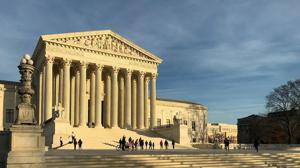
WATCH: Report says national student debt is over $1.6 trillion
The college student loan balance in the United States is $1.66 trillion, according to a WalletHub report.
To determine the best and worst states with student debt, the WalletHub’s report compared all 50 states and the District of Columbia. WalletHub also graded on a 100-point scale focusing on metrics such as the state’s cost of living, unemployment rates and paid internship opportunities for students.
The state with the most student debt is Mississippi.
The average amount of student loans owed, according to the report, equals 56% of the median income in the state. Mississippi residents hold a total of $17 billion in student loan debt.
Additionally, Mississippi has the 14th-highest default rate of debt, meaning people are having trouble paying the loans they borrow, the report stated.
The report indicates Mississippi has the fourth-worst availability of jobs to students, and the second-lowest share of paid internships, behind Louisiana.
“In a state like Mississippi, they may not have the highest balance, student loan balance per resident, but because it’s such a low-income state, the economy is in pretty poor shape right now, so they’re devoting more of their income towards student loan debt,” WalletHub Analyst Chip Lupo told The Center Square. “Now juxtapose that with a state like, say, California at 49. They have the highest student loan debt, the highest amount of debt, but because it’s a pretty high-income state, residents aren’t allocating as much of their income towards the debt.”
In California, $151.5 billion in student debt is owed by state residents. At the same time, the state has a multitude of grant and loan forgiveness programs.
Following Mississippi, states with the most student debt, with the average amount owed per student, are New Hampshire, $34,860; Pennsylvania, $36,120; Delaware, $38,856, and South Dakota, $31,171.
The states with the least amount of student debt are Washington, with the average student owing $36,709; New Mexico, $34,246; California, $38,300; Utah, $33,872; and Hawaii, with $38,929.
Lupo said the rise in student debt has been a cause of the rise in the cost of tuition, which has doubled in the past two decades.
“I do think that in a lot of states if we shift more of the student loan programs back to the banks, create some more competition, I do think that college would be a little bit more affordable, and students would have a little bit more leeway and maybe not have to borrow as much,” Lupo said.
In recent years, the student loan forgiveness program, strongly advocated by the Biden administration, provided relief for over 5 million borrowers, upward of $190 billion. That is only 11% of the current national student loan debt relieved.
“I think there were all kinds of legal issues involved with the Biden administration’s effort to forgive student loans,” Lupo said. “You can’t erase the debt.”






Slight Chance Rain Showers then Slight Chance Showers And Thunderstorms
Latest News Stories

Universities warn state funding delays are wasting millions in taxpayer investment

Illinois Quick Hits: Loyola student’s alleged killer faces federal firearm charge

Will County Kicks Off Comprehensive Land Resource Management Plan Update with Focus on Proactive Zoning and Environmental Justice
Infighting and Calls for Resignation Disrupt Will County Board Meeting

S. Klawitter’s 15 Strikeouts Power Peotone Past Prairie Central 6-2
Will County Land Use Committee Splits Votes on Massive Earthrise Solar Projects Amid Intense Public Opposition

Report: Coordinated resilience infrastructure is needed in age of AI

Will County P&Z Recommends Denial of 6,000-Acre “Pride of the Prairie” Solar Project After Contentious Hearing

U.S., NATO alliance on the line as Trump set to meet with Rutte

BREAKING: Trump fires Bondi, Blanche to lead DOJ

States sue Trump administration over rollback of some air pollution regulations

Energy affordability report ranks Illinois 31st, warns of ‘burdensome’ mandates