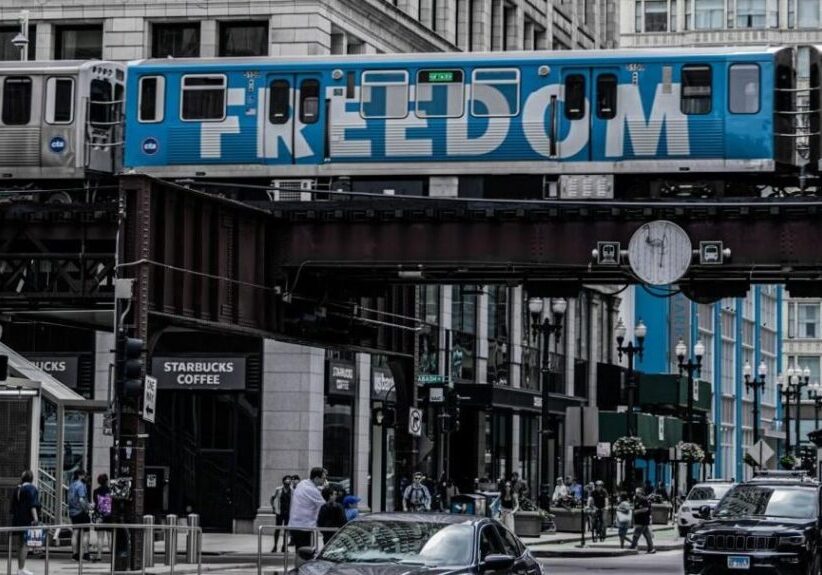
With potential mass transit service cuts looming, IL legislators seek reforms
(The Center Square) – Illinois taxpayers may be put on the hook to pay for a more than three-quarters of a billion dollar fiscal cliff for mass transit in the Chicago region.
Regional Transportation Authority officials point to a combined $771 million budget shortfall in annual spending. Authorities warn if the fiscal cliff isn’t addressed, changes the system’s more than one million daily riders could face are cuts that limit now 24-hour daily bus and rail service to operating only between the hours of 6 a.m. and 9 p.m.
With officials also warning cuts could eventually add up to millions of lost hours for riders suddenly forced to rely on less frequent service, state Rep. La Shawn Ford, D-Chicago, is looking for a solution.
“We could not collect enough fares to have the most safe, efficient transit system,” Ford told The Center Square. “The answer has to be a combination of fares, public and private support. I think what we are missing out of the whole equation is bringing in the business community that needs public transit as much as the individuals.”
With RTA officials seeking up to $1.5 billion in new state funding, Ford said he sees little chance of that happening without a complete overall aimed at making the system more efficient.
“I think that the way we operate will change and we’re going to have to get it right because it’s clearly a big change that’s about to take place and we cannot afford to fumble this ball,” he said. “This is not a quick fix. This is a fix for future generations, the restructuring of how we’re going to have a seamless system for all our transit deliveries.”
House Minority Leader Tony McCombie, R-Savanna, said legislators already attempted to increase taxes on all Illinoisans to address the fiscal cliff, but the measure didn’t advance out of the Illinois House in May.
“I don’t believe it’s fair to put a tax on the entire state to bail out Chicago,” McCombie told The Center Square.
McCombie said there needs to be an overhaul.
“We just can’t continue to throw money at a problem and expect it to be fixed. We’ve seen that time and time again, but that’s the way of the government. But it’s not fair to taxpayers,” she said.
Lawmakers are set to meet again in Springfield in October for veto session.
Greg Bishop contributed to this report.
Latest News Stories
Report: Human Rights Campaign pressures transgender procedures on minors

Everyday Economics: Housing market and Fed policy in focus in the week ahead
Executive Committee Considers $12,000 Strategic Planning Initiative with University of St. Francis

Businesses brace for new tax challenges amid global tariff focus
WATCH: IL state reps challenge IEMA-OHS responses to local agencies

Illinois takes over health insurance marketplace in 2026 amid skepticism
Judge expands restraining order against ‘Beto’ O’Rourke, adds ActBlue
Executive Committee Members Decry Roadside Litter, Call for Action Against Garbage Haulers

Reversing Biden’s precedent, students complete FAFSA in minutes at beta-testing event

Trump, Zelenskyy to meet Monday in steps toward peace with Russia

Possible ‘agreement’ reached in Trump-Putin meeting; more discussion likely

WATCH: Gun rights supporters celebrate 9th Circuit’s ruling against CA gun rationing law