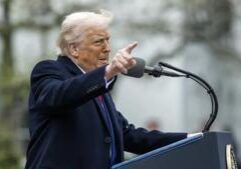
Trump confirms Nvidia chip agreement
Nvidia will pay the United States 15% of the money it makes from selling artificial intelligence chips to China, President Donald Trump said in a press conference on Monday.
Trump said he allowed Nvidia CEO Jensen Huang to sell H20 chips to China while the company provides the U.S. government with a kickback of the profits.
“The H20 is obsolete,” Trump said. “So we negotiate a little deal so he’s, essentially, selling an old chip,” Trump added, referring to Huang.
Trump said he initially asked for a 20% cut from sales of Nvidia’s chips but the two landed on 15%.
In April, Trump banned Nvidia from selling H20 chips to China. The administration later reversed the ban in July.
A coalition of democratic lawmakers, including Sen. Chuck Schumer, D-N.Y., criticized the administration’s July reversal.
“Limiting the PRC’s access to advanced compute has been a focus of Congress: one with a strong bipartisan commitment across both chambers and both parties,” The letter read.
“The PRC’s development of advanced AI capabilities represents a clear risk to the United States’ national and economic security, and the administration’s willingness to trade away that security is extremely troubling,” the letter continued.



Sunny
Latest News Stories

HHS won’t use taxpayer dollars for research using aborted fetal tissue
Education Department issues Title 1 consolidation guidance

U.S. Senate postpones Monday votes ahead of govt funding deadline

Illinois lawmakers clash over ICE funding as DHS bill advances
Leaders highlight policies to end taxpayer-funded abortions at march for life

Illinois Quick Hits: End of tax credit causes another Catholic school to close

Chicago inspector general hopes for urgency to address OT mistakes
Poll shows most Americans support legal limits to abortion

Bill would give parents access to expulsion evidence

WATCH: Pritzker IDs half billion in ‘reserves;’ SCOTUS considering gun ban challenge
Proposed Illinois bill would let local voters approve rent control, drawing sharp criticism

Businesses close in Minnesota for anti-ICE ‘economic blackout’