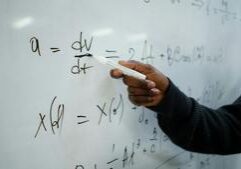
Education groups propose alternative standards for math and science
The latest national test scores in reading, math and science reflect more of the same pattern in American education: Far too many students are underperforming.
In fact, in some ways, 2024’s scores are the worst yet – and schools seem to be largely unable to reverse the trend.
The most recent National Assessment of Educational Progress showed that close to half of American high school seniors don’t have a basic working knowledge of math. Only 35% were proficient in reading – 65% scored at or below basic. Nearly 40% of eighth graders scored below basic in science.
In light of consistently poor reading scores and partly due to some influential reporting, more than 40 states since 2013 have passed legislation attempting to reform their literacy education based on a body of research called “the science of reading.” The movement has been particularly pronounced in the past six years, with eight states passing literacy education reform laws in 2019, 13 in 2021 and 17 in 2023, according to Education Week.
Math and science haven’t experienced the same kind of feverish reform lately, but a group of teachers, professors and industry insiders have developed new math and science standards they believe are a step in the right direction.
Most states currently use Next Generation Science Standards – or their precursor – along with Common Core State Standards for math, both created through multi-state collaboration and introduced between 2010 and 2013. A central goal of both was to bring greater consistency across grade levels, districts and states and to equip students to solve “real-world” problems. Both focus on teaching fewer concepts to promote content mastery and avoid content that’s “a mile wide and an inch deep.”
Both sets of standards also wanted to move away from rote memorization of facts and foster deeper conceptual learning. Common Core math aims to teach students how math “really works,” versus just teaching them math problems.
“They wanted to teach kids how mathematics really does work, and how mathematicians see math,” said Nathan Gwinn, one of the contributors to The Archimedes Standards, alternative standards to the Common Core. Gwinn is a Catholic school principal and the senior advisor for science at Freedom in Education, a nonprofit that works to provide K-12 educational resources promoting academic freedom and knowledge of America’s founding values.
“They felt like the standard way of doing math was too rigid, and they should give kids more options on how to learn,” Gwinn told The Center Square in an interview.
Gwinn believes the intentions were good behind Common Core math, but that its methods – which include moving away from mental math and routinely teaching multiple ways to solve a problem – often aren’t what is most helpful to students.
“What you’ll hear from people in this argument is they’ll say, ‘no, we want students having a better conceptual understanding of math.’ And my argument has always been like, ‘Okay, well, an eight-year-old does not need to have a conceptual understanding of math,’” Gwinn said. “And in fact, that’s probably not developmentally appropriate.”
So Freedom in Education paired with the National Association of Scholars, which focuses on reforming higher education, and others to craft The Archimedes Standards. In contrast to the Common Core, these standards defend and promote mental math, not only as an essential part of early instruction but as integral to more complex math later on.
“While mathematics is fundamentally a creative endeavor that cannot be reduced to a set of memorizable processes, math instruction cannot be divorced from the art of memory. Mental math also greatly facilitates the ability to engage in higher-level mathematics, providing a solid foundation from which to explore advanced concepts,” the standards read. “Every classroom should develop a culture of mental math that helps make mathematical reasoning second nature for students.”
The Archimedes Standards also aren’t structured to exclusively facilitate “inquiry-based learning.” Inquiry-based learning is when learning is driven by students’ curiosity and intellectual exploration, rather than direct instruction. The standards don’t prohibit any particular kind of teaching style as long as the requisite content is delivered.
“While not bad in and of themselves, such pedagogies,” like inquiry-based learning, “too often encourage teachers to replace robust instruction in content with hollow instruction in ‘skills,’” they read.
Common Core is not exclusively an inquiry-based model, but Next Generation Science Standards are meant to be delivered in an inquiry-based format.
Freedom in Education and the National Association of Scholars also partnered to develop The Franklin Standards, an alternative to the NGSS.
Perhaps the most fundamental difference between the two is emphasis on the scientific method. The NGSS focuses less on the scientific method as the foundation of all scientific endeavor and more on scientific practice and inquiry skills.
The NGSS calls “the notion that there is a single scientific method” a “myth perpetuated … by many textbooks.”
The authors of The Franklin Standards take issue with this.
“Unfortunately, the scientific method is nowhere to be found in the actual standards of the NGSS; instead, it is merely given a nod in the NGSS appendices,” the standards read.
“Science still relies on the scientific method, which is indeed distinct from all other methods that inquire into truth, as the basic approach by which to inquire, collect, and analyze data, and thereby generate reproducible results,” they later explain.
Freedom in Education and the National Association of Scholars are working with some states as they seek to make changes to their state math and science standards, according to Gwinn and NAS’ director of research, David Randall. Randall told The Center Square that no one expects states or school districts to adopt their standards without putting their own stamp on them, but he does hope they can serve as a model for those seeking reform.
“We want these to be models to inform what states do, what school districts do, what private schools do, what homeschooling parents do. We’re trying to provide the best possible model for states to use as they will,” Randall said. “We don’t want a national straight jacket. We don’t want to impose.”
Randall added that the standards’ creators are “delighted and honored” when states use even part of the standards they produced.






Showers And Thunderstorms Likely then Chance Showers And Thunderstorms
Latest News Stories
Public Works Committee: Approves $1.59 Million Contract for Scheer Road Bridge Replacement in Green Garden Township
Will County Board Backs $10 Million State Public Health Grant Increase Amid Funding Cuts
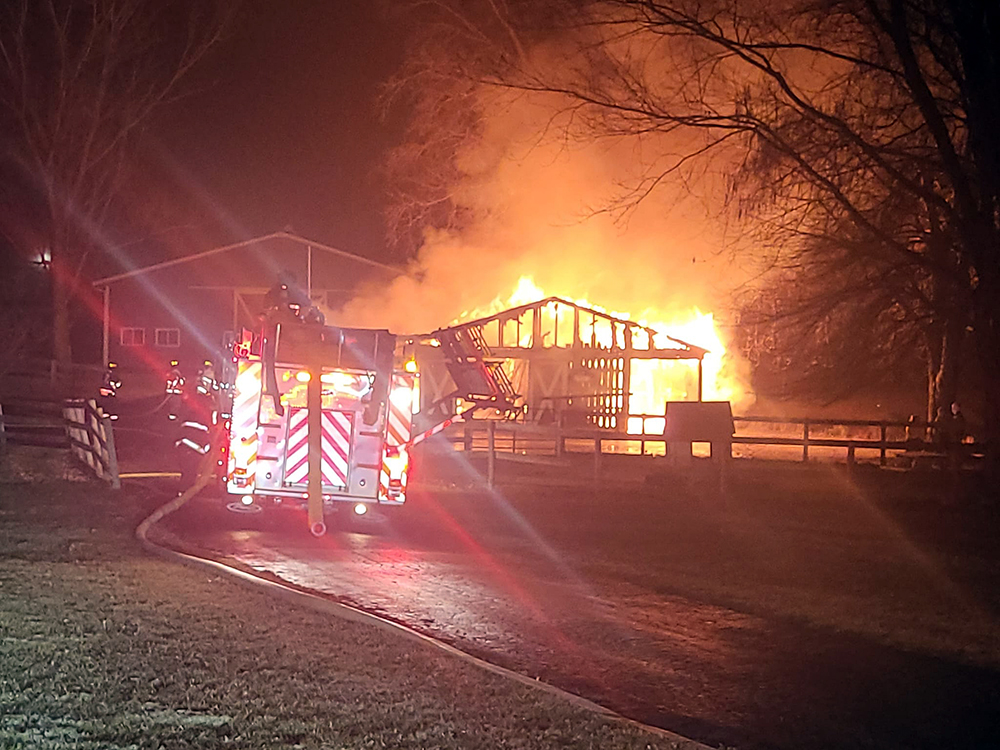
Barn Fire on Whispering Hills Lane Claims Livestock, Draws Extensive Mutual Aid Response
Will County Public Works Committee Shelves License Plate Reader Agreement Amid Bipartisan Privacy Concerns
Will County Planning and Zoning Commission Overrides Staff to Approve New Lenox Accessory Building Variance
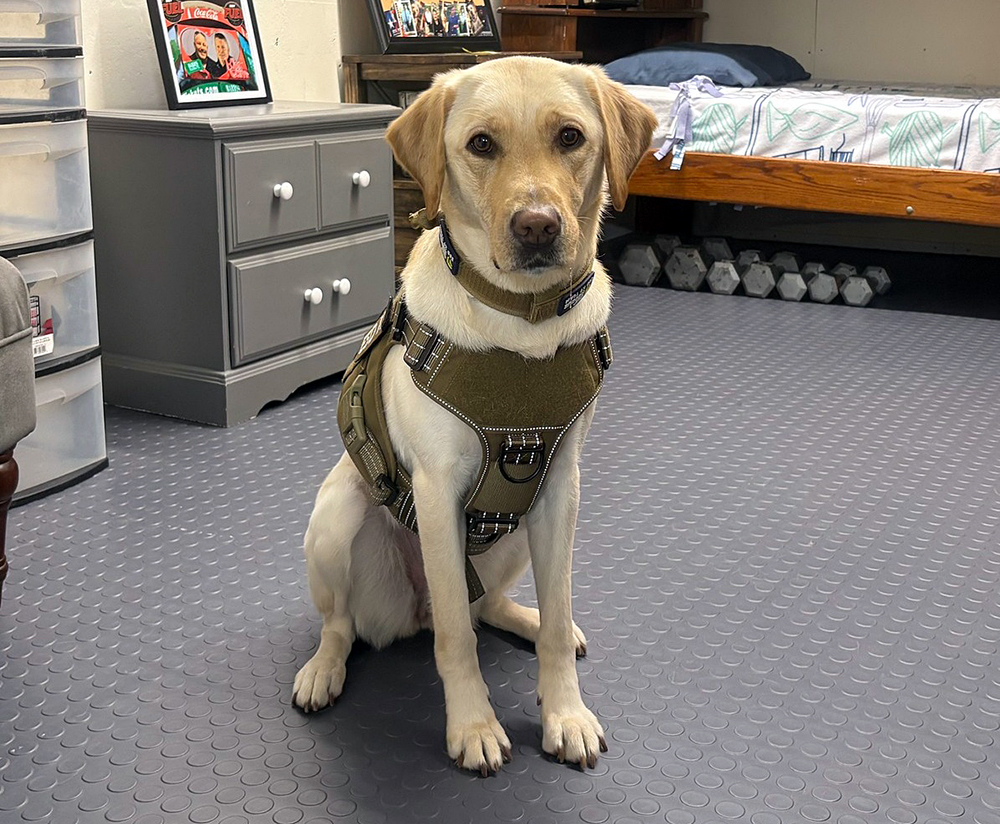
Will County Sheriff’s Office Welcomes Remi, First Electronic Scent Detection Dog
Will County Transportation Department Announces Open House for Manhattan-Monee Road Expansion
Will County Community Mental Health Board Faces $5 Million Shortfall in 2026 Grant Requests
Meeting Summary and Briefs: Public Health & Safety Committee for March 5, 2026

Will County Officials Warn of Zoom Court Scam Targeting Defendants for Fraudulent Dismissal Fees

Will Land Use Committee Evaluates Multi-Million Dollar Buyout for Flooded Harris Drive Homes
Behavioral Health Division Drops Wait Times, Reports Zero Opioid Deaths in February
Harris Drive Residents Plead for County Intervention Amid Failing Septic Systems and Flooding

Will County Sheriff’s Office Investigates Fatal Hit-and-Run in Homer Glen