Welfare reform pilot to reduce government dependency is ‘step forward’, scholar says
(The Center Square ) – A Cato scholar called the Department of Health and Human Service’s redesigned welfare pilot that intends to reduce government dependency and incentivize work in five selected states a “step forward,” but said that welfare should eventually be wholly returned to the states to “shrink Washington’s role.”
Director of Budget and Entitlement Policy at the Cato Institute Romina Boccia told The Center Square that “the federal government has long struggled to help people escape poverty.”
“The new [Administration for Children and Families] pilot’s focus on replacing [Work Participation Rate’s] simple ‘countable work activities’ metrics (which primarily serve federal compliance) with outcome-based measurements, like employment, earnings, and family stability, is a step forward,” Boccia said.
“However, the long-term solution is returning responsibility for welfare programs to the states,” Boccia said. “Federal rules and metrics often create paperwork and incentives for gaming, rather than better results for families or taxpayers.”
“Closing WPR loopholes and improving the focus on outcome measures is reasonable in the short term, but long-term success depends on letting states innovate and be accountable to their citizens,” Boccia said.
Boccia told The Center Square: “As currently structured, the federal welfare state functions as a stopgap that alleviates financial hardship for many recipients, but it imposes top-down one-size-fits-all ‘solutions’ that fail to adequately facilitate pathways to independence.”
“Welfare reform should shrink Washington’s role and give states the freedom to design programs that meet local needs,” Boccia said.
An HHS official told The Center Square that “the whole idea” of the welfare redesign is to “reduce dependency on benefits and move folks into long-term sustainable employment.”
“This administration really wants a strong working America,” the HHS official told The Center Square. “We value the contributions of working families and want to make sure that we are doing anything and everything to incentivize work and the dignity of work – the power of the paycheck – instead of government assistance and government dependency.”
The redesigned Temporary Assistance for Needy Families (TANF) pilot will go for six years, the official told The Center Square, and is intended to “promote work, reduce government dependency, and strengthen families,” according to an Administration for Children and Families (ACF) press release.
States selected for participation in the pilot are Arizona, Iowa, Nebraska, Ohio and Virginia, according to the ACF news release.
As Boccia alluded to, the pilot will “replace the Work Participation Rate (WPR) and instead measure state success using new, outcome-based metrics that aim to deliver real results for families and taxpayers,” the press release said.
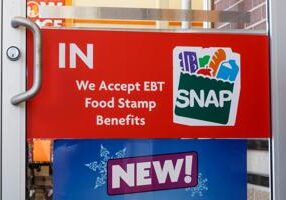
“For example, states will now be held accountable for improving employment outcomes, supporting earnings growth, and reducing reliance on cash assistance, Medicaid, and Supplemental Nutrition Assistance Program (SNAP) benefits,” the release said.
“This new cohort of pilot states builds on ACF’s commitment to reshaping human services programs to promote personal responsibility and strengthen families,” the release said.
Each state will additionally focus on specific, unique strategies to “reduce dependency” the release said.
ACF Acting Assistant Secretary Andrew Gradison said in the release: “The Trump Administration is returning to the original promise of welfare reform – ensuring our programs are laser-focused on helping families achieve lasting self-sufficiency while delivering results for taxpayers.”
Boccia informed The Center Square that “the 1996 welfare reforms demonstrated the effectiveness of work requirements and better targeted welfare programs.”
“The welfare overhaul dramatically reduced caseloads, while simultaneously putting millions of poor Americans on the path to self-sufficiency,” Boccia said. “A job, not endless aid, is the best anti-poverty program there is.”
Boccia told The Center Square that “America’s federal anti-poverty safety net now costs more [than] $1 trillion annually, making direct accountability crucial.”
“It would be better if the federal government returned responsibility for welfare to the states, rather than experiment with new federal rules.”





Showers And Thunderstorms
Latest News Stories

Watseka Tops Peotone 54-35 in Tough Shooting Night

Land Use Committee: Monee Solar Projects Granted Extensions; Battery Storage Plans Dropped

P&Z Commission: New Women’s Recovery Center Proposed for Patterson Road Receives Support

WATCH: ‘Unfortunate accident’: Miss. senator blasted for comment on Guard troop shootings

Judge rules against Trump’s freeze on wind energy
WATCH: House Homeland Security hearing filled with tense exchanges

Illinois’ new paint fee takes effect, with critics calling it another burden on taxpayers

Pritzker decision looms for energy bill ‘on ratepayers’ backs’
WATCH: Use of National Guard debated in U.S. Senate as Illinois case lingers

Illinois quick hits: Senator’s deferred prosecution deal approved; Indiana Senate votes against new maps

Suspect in Charlie Kirk assassination makes first in-person appearance in court

Pro-life orgs call out FDA, Makary for not fulfilling promise to review abortion drug