With potential mass transit service cuts looming, IL legislators seek reforms
(The Center Square) – Illinois taxpayers may be put on the hook to pay for a more than three-quarters of a billion dollar fiscal cliff for mass transit in the Chicago region.
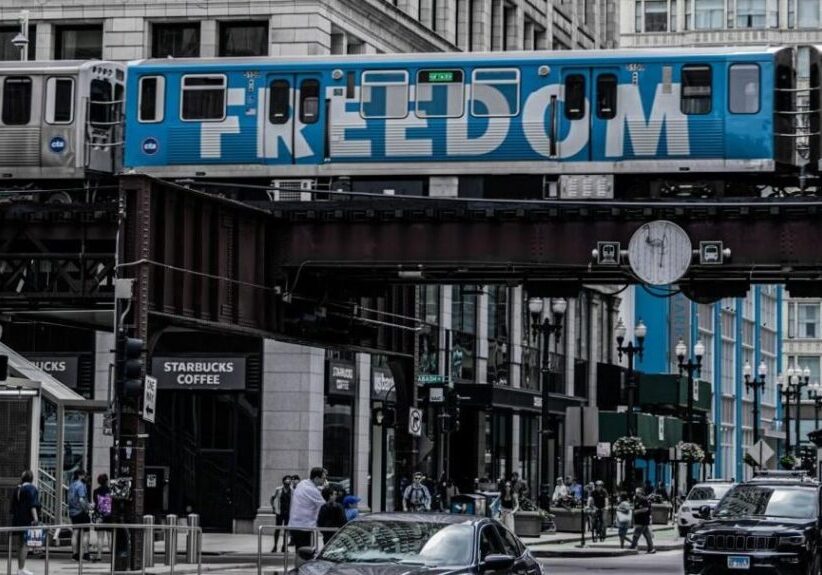
Regional Transportation Authority officials point to a combined $771 million budget shortfall in annual spending. Authorities warn if the fiscal cliff isn’t addressed, changes the system’s more than one million daily riders could face are cuts that limit now 24-hour daily bus and rail service to operating only between the hours of 6 a.m. and 9 p.m.
With officials also warning cuts could eventually add up to millions of lost hours for riders suddenly forced to rely on less frequent service, state Rep. La Shawn Ford, D-Chicago, is looking for a solution.
“We could not collect enough fares to have the most safe, efficient transit system,” Ford told The Center Square. “The answer has to be a combination of fares, public and private support. I think what we are missing out of the whole equation is bringing in the business community that needs public transit as much as the individuals.”
With RTA officials seeking up to $1.5 billion in new state funding, Ford said he sees little chance of that happening without a complete overall aimed at making the system more efficient.
“I think that the way we operate will change and we’re going to have to get it right because it’s clearly a big change that’s about to take place and we cannot afford to fumble this ball,” he said. “This is not a quick fix. This is a fix for future generations, the restructuring of how we’re going to have a seamless system for all our transit deliveries.”
House Minority Leader Tony McCombie, R-Savanna, said legislators already attempted to increase taxes on all Illinoisans to address the fiscal cliff, but the measure didn’t advance out of the Illinois House in May.
“I don’t believe it’s fair to put a tax on the entire state to bail out Chicago,” McCombie told The Center Square.
McCombie said there needs to be an overhaul.
“We just can’t continue to throw money at a problem and expect it to be fixed. We’ve seen that time and time again, but that’s the way of the government. But it’s not fair to taxpayers,” she said.
Lawmakers are set to meet again in Springfield in October for veto session.
Greg Bishop contributed to this report.


Mostly Sunny
Latest News Stories

DHS thwarts Iranian terrorist threats at the northern border, World Cup ties

Minnesota man ordered to pay $2.5M in fraud case, faces no criminal charges
Everyday Economics: A new chair, a shorter statement, a Fed that stopped talking cuts
Illinois congressmen worry as DHS Secretary seeks to ‘protect election integrity’

Poll: 70% of Americans ‘concerned’ AI will take jobs
Meeting Summary and Briefs: Will County Board Executive Committee for June 11, 2026
Will County Mental Health Board Touts Crisis Program in Quarterly Report

Meeting Summary and Briefs: Will County Board Finance Committee for June 2, 2026
Will County Coroner Reports Nearly 8,000 Death Investigations in 2025
Lawmaker says Pritzker reacted too quickly to Grant Park cross burning
Sanders bill would give U.S. stake in AI companies; analyst calls idea ‘nutty’

Poll: Most Americans don’t trust AI for news