
Tribal nations ask U.S. Supreme Court to return lawsuit to state court
Ten Native American tribal nations are urging the U.S. Supreme Court to send a legal challenge to the Great Lakes Tunnel Project back to the Michigan courts.
The tribes, which are all represented by environmental group Earthjustice, filed the amicus brief with the U.S. Supreme Court.
The brief argues that “underhanded procedural tactics” landed the case in America’s highest court.
“Enbridge missed a court deadline by more than two years, without excuse, and now they want to change the rules,” said Supreme Court Counsel Caroline Flynn at Earthjustice. “The Supreme Court should see through Enbridge’s transparent attempt at gamesmanship.”
This is just the latest chapter in an ongoing legal saga that has haunted the Great Lakes Tunnel Project for over half a decade.
The proposed changes would move a section of the pipeline into a tunnel under the Straits of Mackinac, which is the 4-mile wide waterway connecting Lake Michigan and Lake Huron, dividing Michigan’s Upper and Lower Peninsulas. The pipeline currently lies on the bottom of the Straits.
The transmission line is owned by Canadian company Enbridge and goes 645 miles from Superior, Wis., through the Straits of Mackinac in Michigan to Sarnia, Ontario. The 72-year-old pipeline currently moves more than 500,000 barrels of oil and natural gas liquids daily.
Enbridge argues that the upgrades will make Line 5 more reliable, while protecting the integrity of the gas supply chain to Michigan. It provided a statement to The Center Square in response to the tribes’ amicus brief.
“We are encouraged the U.S. Supreme Court has agreed to review the June 2024 decision of the U.S. Court of Appeals for the 6th Circuit remanding to state court the Michigan Attorney General’s lawsuit against Enbridge seeking to shut down Line 5,” the statement said.
The Michigan Attorney General brought this lawsuit in 2019 in an attempt to shut down the pipeline altogether, something state Democrats and the tribes are also pushing for.
“The continued operation of Line 5 puts my Tribal Nation in grave danger,” said Whitney Gravelle, President of the Bay Mills Indian Community. “Michigan made the right choice to end this pipeline, and we stand with the Attorney General to defend our rights, our waters, and the future of the Great Lakes for the next seven generations.”
A Michigan court initially ruled in favor of the state. Two years later, Enbridge decided to then attempt to move that case to federal court. While normally there is a 30-day time limit on that decision, the U.S. District Court for the Western District of Michigan ruled in 2022 that there were exceptional circumstances that allowed for an exception to that limit.
The Sixth Circuit Court of Appeals reversed that decision, in contradiction to two other federal decisions which did allow for exceptions to the 30-day time limit. That is what brought the case finally to the U.S. Supreme Court, which took it up in June.
“The District Court cited the important federal issues in this case, including U.S.-Canada Treaty issues, and the fact that litigation of these issues was already pending in another case in federal court,” Enbridge’s statement said. “The Supreme Court review will resolve this conflict in the courts of appeals.”
This is just one of the lawsuits currently filed against Enbridge and its Great Lakes Tunnel Project. For more information on other legal challenges, see previous reporting by The Center Square.
Republican lawmakers have joined together to support the project, which is slowly attempting to make its way out of regulatory and legal limbo. In June, the U.S. Army Corps of Engineers released a report which determined that the Line 5 tunnel project would have a “beneficial cumulative effect” on Michigan and its environment by reducing the risk of an oil leak.
While the report found there might be some “direct, short-term, detrimental impacts” during construction on the local environment and recreation, most “environmental consequences would be short-term with the effects resolving once construction is completed.”
The seven-year project, which has yet to break ground, is currently being expedited as a result of President Donald Trump’s day one executive order declaring a national energy emergency.






Showers And Thunderstorms Likely then Chance Showers And Thunderstorms
Latest News Stories
Public Works Committee: Approves $1.59 Million Contract for Scheer Road Bridge Replacement in Green Garden Township
Will County Board Backs $10 Million State Public Health Grant Increase Amid Funding Cuts
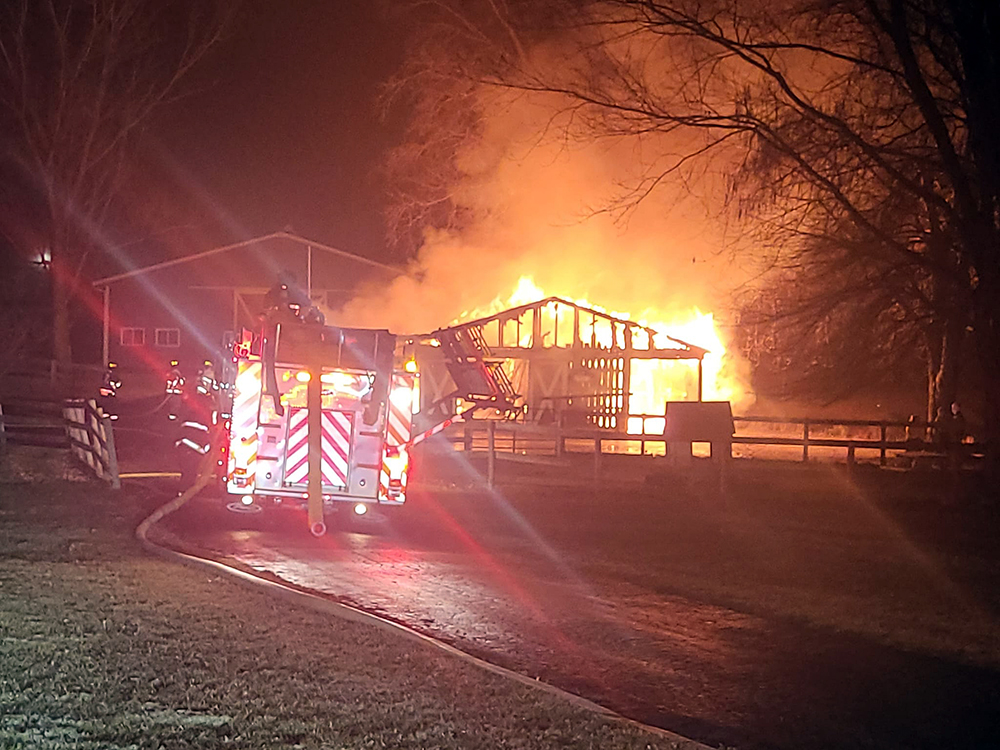
Barn Fire on Whispering Hills Lane Claims Livestock, Draws Extensive Mutual Aid Response

Will County Public Works Committee Shelves License Plate Reader Agreement Amid Bipartisan Privacy Concerns

Will County Planning and Zoning Commission Overrides Staff to Approve New Lenox Accessory Building Variance

Will County Sheriff’s Office Welcomes Remi, First Electronic Scent Detection Dog
Will County Transportation Department Announces Open House for Manhattan-Monee Road Expansion
Will County Community Mental Health Board Faces $5 Million Shortfall in 2026 Grant Requests
Meeting Summary and Briefs: Public Health & Safety Committee for March 5, 2026

Will County Officials Warn of Zoom Court Scam Targeting Defendants for Fraudulent Dismissal Fees

Will Land Use Committee Evaluates Multi-Million Dollar Buyout for Flooded Harris Drive Homes
Behavioral Health Division Drops Wait Times, Reports Zero Opioid Deaths in February

Harris Drive Residents Plead for County Intervention Amid Failing Septic Systems and Flooding

Will County Sheriff’s Office Investigates Fatal Hit-and-Run in Homer Glen