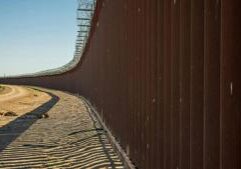
Arizona looks to legal immigration with Trump’s border security
As President Trump approaches the one year mark in office, apprehensions at the southern border have dropped significantly. States along the southern border, including Texas, Arizona and California have seen significant reductions.
In 2025 so far, Customs and Border Protection has reported 443,671 land border encounters compared to more than two million encounters each year in 2022, 2023 and 2024.
In Arizona, state and local leaders have called on the federal government to enforce illegal immigration more strictly for years.
In 1994, Arizona was one of several states that sued the federal government over costs related to illegal immigration. The state argued the federal government failed to control illegal immigration, which led to state expenses for public education for undocumented children, incarceration costs and medical care. The lawsuit was later rejected by a circuit court.
However, several years later, Arizona legislators pushed Congress to develop an additional legal immigration pathway in the state.
In 2007, the Arizona House of Representatives called on the United States Congress to develop “market-based visa programs for essential workers.”
Immigration advocates who push for market-based solutions are typically looking to avoid annual caps placed on visa programs by Congress and give certain areas more visa availability than others.
One year later, representatives in Arizona pushed for a guest worker program in the state that would allow employers to recruit and hire Mexican workers. The program was never implemented.
Even as some legislators pursued legal immigration pathways, in 2010, the state passed a law designed to crack down on illegal immigration by expanding the power of state and local law enforcement.
The law required state and local police to verify immigration status during routine stops or arrests if they had “reasonable suspicion” of a person’s unlawful presence in the country.
The law also made it a state crime for undocumented immigrants to apply for or hold jobs, and prohibited local governments from creating “sanctuary” policies. Additionally, the law required immigrants to carry federal registration papers with them.
The law gave state and local officers power to arrest, without a warrant, anyone believed to have committed an offense that would make them deportable.
“The provisions of this act are intended to work together to discourage and deter the unlawful entry and presence of aliens and economic activity by persons unlawfully present,” the law reads
The law was quickly challenged and heard in the U.S. Supreme Court. The nation’s high court struck down three provisions of the Arizona law in a 5-3 decision.
The U.S. Supreme Court struck down Arizona’s provision to prevent undocumented immigrants from obtaining jobs and it struck down the provision requiring immigrants to keep documentation on hand. The high court also struck down the provision in the law that allowed local law enforcement to arrest someone without a warrant.
“It is fundamental that foreign countries concerned about the status, safety, and security of their nationals in the United States must be able to confer and communicate on this subject with one national sovereign, not 50 separate states,” Justice Anthony Kennedy wrote in the court’s majority opinion.
Since this landmark case, state-based immigration proposals in Arizona have been few and far between. However, immigration advocacy groups throughout the state now provide legal, financial and educational services to immigrants throughout Arizona.
Arizona Justice for our Neighbors, an advocacy group founded in 2018, partners with the mayor of Tucson, local churches and volunteers to offer free or low-cost legal services for immigrants.
“We ensure that the people we serve are treated with dignity and respect,” the website reads. “Our advocacy work includes education, training, and technical assistance in the efforts to dismantle oppression by restoring belonging and justice within the immigration justice system.”
In 2022, Arizona voters passed a resolution allowing undocumented immigrants in-state tuition for colleges and universities throughout the state.
Earlier this year, U.S. Sen. Ruben Gallego, D-Ariz., proposed increasing legal pathway options and allowing providing a pathway to citizenship for dreamers and long-term undocumented residents.
“We don’t have to choose between border security and immigration reform. We can and should do both. Americans deserve the right to feel safe and know their border is secure, but for decades, Congress has tried and failed to take action because politics got in the way. It’s time to push forward and enact a plan that works,” Gallego said.





Showers And Thunderstorms Likely
Latest News Stories

GOP lawmakers silent on Trump’s EO punishing state AI guardrails

Gabbard: 2,000 Afghan refugees in U.S. have ties to terrorism

Op-Ed: No more CDL mills: Trump’s DOT puts safety back in the driver’s seat

Illinois Gov. Pritzker signs assisted suicide bill

Hochul weighs AI regulations as Trump sets federal rules

EXCLUSIVE: First Nation police chiefs want to participate in border security efforts
Justice Department sues Fulton County over election records

USPS electric fleet push sparks cost, security and job concerns

WATCH: Use of Guard debated; Trump singles out Pritzker on AI; Property tax ruling

Illinois quick hits: Chicago Fed president explains vote; Treasurer encourages Bright Start gifts
EXCLUSIVE: Canadian groups, First Nation police support stronger border security

More than 9,500 commercial truckers taken off U.S. roads nationwide