Trump’s ACA tax credit extension proposal delayed after GOP pushback
After facing backlash from Republican leaders, the White House is backing away from its proposal to extend the enhanced Obamacare Premium Tax Credit for two more years.
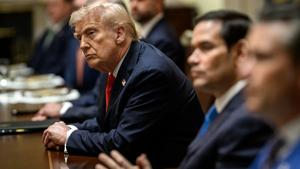
President Donald Trump is leaving for the Thanksgiving holiday without rolling out the official plan – the details of which leaked over the weekend – due to pressure from House Speaker Mike Johnson, R-La., in particular, the Wall Street Journal scooped.
The administration’s sudden pivot in favor of extending the enhanced subsidies blindsided many Republican lawmakers. Johnson and others had lambasted Democrats during the 43-day government shutdown for refusing to reopen the government unless Congress renewed the temporary enhancements to the credits.
Trump’s plan, which may never be released now, reportedly includes a two-year extension of the enhanced credits, but it caps eligibility at 700% of the federal poverty level and requires all enrollees to pay a minimum premium, rather than lower income enrollees paying nothing.
It also includes two policies which Republicans are generally in favor of: restoring legal funding streams for Obamacare cost-sharing reductions, and allowing ACA marketplace enrollees on less expensive plans to invest a portion of the Obamacare tax credit into Health Savings Accounts, or HSAs.
The compromise proposal still isn’t enough to gain sufficient Republican votes for it to pass the House, Johnson reportedly told Trump over a phone call.
The speaker, however, may have underestimated Republicans’ appetite for a health care policy win ahead of the 2026 midterm elections. The House Main Street Caucus, composed of more than 85 Republicans, came out in support of Trump’s ideas Tuesday.
“Main Street supports President Trump’s ongoing efforts to address the ACA tax credit cliff with an extension,” Chairman Mike Flood, R-Neb., said. “Any effort to address this cliff needs to include income caps and make serious reforms to the credits, including addressing the rampant fraud and abuse in the program.”
Republican leaders argue that the expansion of the credits was always intended as a COVID-19 measure, that it incentivized fraud, and that it will cost tens of billions to extend just in the short-term.
Notably, Republicans who oppose extending the enhanced credits based on cost are pivoting from the fiscal philosophy they adopted in June in order to permanently extend expiring tax cuts and credits from 2017.
To pass their budget reconciliation bill in July – the “one big, beautiful bill” that codified most of the 2017 Tax Cuts and Jobs Act – Republicans used the current policy baseline to paper over the cost.
Republicans argued then that maintaining existing tax rates should not be treated the same as authorizing new federal spending, and therefore set the price tag of permanently extending the TCJA to $0 instead of trillions.
But now that the expiring Obamacare subsidies are up to bat, not a single Republican is holding the same view.
Fiscal hawk Rep. Thomas Massie, R-Ky., one of the few Republicans who rejected Republicans’ utilization of the current policy baseline, also opposes any sort of Obamacare subsidy extension.
“Oh boy, more 4D chess? A vote to extend Obamacare… that’s the Republican solution to health care?,” Massie quipped on X.




Slight Chance Rain Showers then Mostly Cloudy
Latest News Stories

Administration presses law school accreditor over DEI policies
Speaker’s response to staffer assault complaint draws questions on his own conduct
Republicans’ $95B budget resolution passes House
$1.15T Pentagon funding authorization bill passes U.S. House
Lawmakers debate GLP-1 regulation, expansion
Illinois news in brief: Ex-Big Ten Network staffer gets 2 years in embezzlement case

New quantum tenant gets $1.8 million in tax credits
Proposal would term-limit Supreme Court justices without amendment
Pritzker says felon was unlucky to land in his back yard

Chicago council approves ballot question to recoup costs from ICE operations
Anti-ICE ‘extremist’ charged with arson in attack outside NYC federal building

World Cup events safe; terrorism, antisemitism concerns don’t materialize