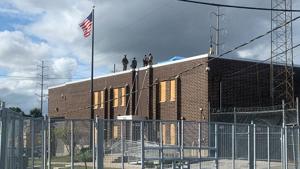
Texas leaders propose solution for northern border, national security
A coalition in Texas, including law enforcement, policy experts and lawmakers, is working on solutions for northern border security.
The effort is being spearheaded by the Texas Public Policy Foundation, working with Canadian-U.S.-Future Borders Coalition, Canadian Center of North American Prosperity and Security, and others to develop national security solutions.
They’re doing so after President Donald Trump for the first time in U.S. history declared a national emergency at the U.S.-Canada border.
The longest international border in the world of 5,525 miles has been largely unmanned and unprotected with increased threats of terrorism and systemic lack of operational control, The Center Square reported. Unlike the 1,954-mile U.S.-Mexico border, there’s no border wall, significantly less technological equipment exists and far fewer agents are stationed there.
National security threats increased during the Biden and Trudeau administrations as the greatest number of illegal border crossers and greatest number on the terrorist watch list were apprehended by U.S. officials at the northern border, The Center Square first reported.
Some Canadians have expressed concerns about terrorism threats, pointing to visa policies facilitating entry to those with alleged ties to Islamic terrorist organizations, including granting citizenship to an Egyptian connected to ISIS who was arrested after planning a terrorist attack in Toronto.
Canada “has become a hotbed of radicalization, fanaticism, and jihadism,” after the Oct. 7, 2023, Hamas terrorist attack against Israel, although major Islamic terrorist incidents date to 2006, CNAPS argues. Last year, there were eight Islamic terrorism-related incidents in Canada or involved Canadians living abroad, CNAPS said. Nearly 6,000 antisemitic incidents were reported in 2023 alone, it notes, adding that “Canada’s antisemitic terrorism crisis should solidify the fact that Canada is a national security risk of the U.S.”
Getting border security right “is not optional – it’s essential,” Future Borders Coalition, which has proposed solutions, argues. “Canada and the United States share the longest undefended border in the world. Two-thirds of Canadians live within 100 kilometers of this border, more than 400,000 people and $3.6 billion CAD in goods move across it. The integrity of this border directly impacts the safety and prosperity of both nations.”
This month, CNAPS and First Nation police chiefs joined Texas sheriffs in the first international border security operation in south Texas, The Center Square exclusively reported. The police chiefs are on the front lines of border security, underfunded and understaffed, hoping the Trump administration will help them get the resources they need to combat Mexican cartels, MS-13 and transnational criminal organizations targeting their reservations. Reservations straddling the border are suffering from human, drug and weapons smuggling and trafficking, The Center Square reported.
Despite claims by the Canadian government to surge $1.3 billion for border security, First Nation police have received none of it, they argue. Canada’s Department of Public Safety plans to eliminate funding for some altogether in March, Dwayne Zacharie, president of First Nations Chiefs of Police Association, told The Center Square.
A lack of Canadian government resources has enabled organized criminal networks to infiltrate reservations, “taking advantage of our lack of resources, and that affects national security in Canada as well as in the United States,” Zacharie said.
“The Canadian government refuses to understand the threats” of transnational crime in Canada and on First Nation reservations, TPPF senior fellow Ammon Blair said at a TPPF event on northern border security. Blair, a 20-year Army veteran and 10-year Border Patrol veteran, is working with lawmakers on solutions. First Nation police organizations are being “left behind to deal with foreign terrorist organizations without giving them the resources. And that is all because Canada refuses to understand the threat,” he said.
It’s not just the government, but public perception, Jamie Tronnes with CNAPS said. “If you tell Canadians we have a cartel problem, they’ll laugh at you. They don’t believe it,” she told The Center Square. According to a recent survey, only 28% of Canadians cite immigration as a top concern; border security isn’t even listed as a topic.
“Organized crime is very agile; it adapts very quickly. When it sees a weakness, that’s what it exploits. It’s like water finding a crack. Right now, indigenous policing in Canada is a gap because we’re not properly funded and we’re not properly resourced,” Zacharie said. “There’s no such thing as national security without including all the partners, and that means First Nation policing is a huge part of the national security picture.”
Canadians and Americans need to understand that “we’re at war,” Blair said, similar to insurgents controlling territories that U.S. troops fight overseas.
Transnational criminal organizations are using “unconventional, hybrid warfare,” tactics former active duty Navy JAG Jonathan Hullian witnessed in Afghanistan, he told The Center Square. “In Afghanistan, insurgents didn’t wear national military uniforms. They waged irregular guerrilla warfare” like cartels are doing in the U.S., he says.
Transnational criminal organizations are taking over communities nationwide in the U.S., and placing bounties on federal agents, The Center Square reported. “Once an area is controlled, it’s controlled just like a foreign army” Blair said.
“They’re going to find an area where there’s very little law enforcement, including illegal alien enclaves to control, especially since we had a massive invasion over the last four years, well so did Canada,” he said.





Mostly Sunny
Latest News Stories

Illinois quick hits: Woman charged in Metro East murder; taxpayer funded homeowner relief fund announced

WATCH: Former state lawmakers endorse, donors support GOP candidate Dabrowski

Louisiana native awaits Senate confrmation
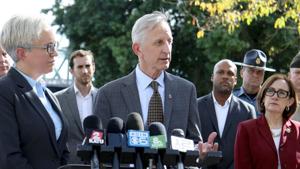
Portland protests Trump’s plan to send federal troops to protect ICE facilities
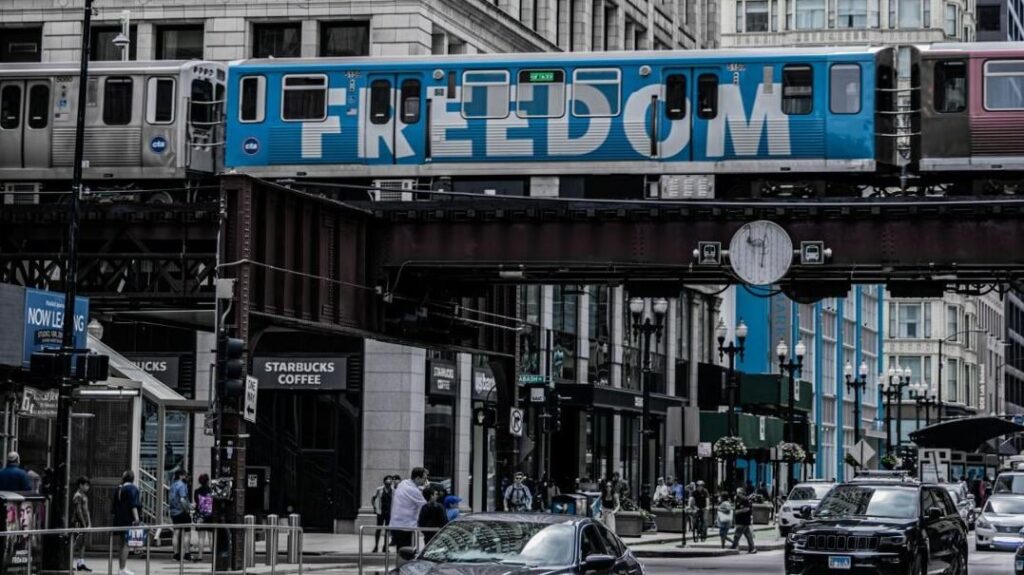
With potential mass transit service cuts looming, IL legislators seek reforms
Trump asks Supreme Court to review birthright citizenship case again

Trump’s limited drug tariffs might not bring back U.S. manufacturing
Government shutdown deadline days away, but Dems don’t budge on demands

Report: 25 state governments don’t have enough money to pay their bills
Officials react to DOJ voter roll lawsuit

Defense says more time needed for Tyler Robinson case

Tribal members want 15 minutes for oral arguments in tariff case

Welfare reform pilot to reduce government dependency is ‘step forward’, scholar says