Colorado adopts first-of-its-kind water protections in U.S.
Colorado environmental leaders approved landmark water protections in reaction to a U.S. Supreme Court decision that they believed weakened regulations in Western states.
The bipartisan Water Quality Control Commission convened to pass stream and wetland protections that come as the Trump administration’s Environmental Protection Agency pushes for further federal deregulations.
“These rules create a robust program for protecting Colorado waters – including wildlife habitat, recreation opportunities, the role that waters play in flood mitigation, cleaning water and actually increasing water supplies,” said Joro Walker, senior attorney at Western Resource Advocates. She also represented wildlife hunting and angling groups in the WQCC process.
“All those values that Colorado waters bring to the citizens of the state are essentially being protected by this program,” Walker told The Center Square.
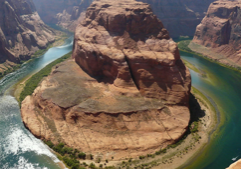
The WQCC meeting comes in the middle of a years-long scramble to address critical threats to the Colorado River’s supply. The river provides water to an estimated 40 million people between Colorado, California, Nevada, Arizona, New Mexico, Utah, Wyoming, Mexico and tribal nations. The water is used primarily for agriculture, as well as municipal needs.
The nine-person WQCC summit was organized by a 2024 state law, House Bill 1379, which passed the Arizona Senate unanimously with two excused votes and the House with 80% approval. The bipartisan mandate nearly fell apart after nearly 16 months of meetings and public hearings with industry leaders, water providers, farmers and environmental advocacy groups. Just days before the Dec. 8-10 meeting, industry leaders argued the environmentalists were trying to manipulate the law.
The new water regulations came in reaction to a landmark 2023 U.S. Supreme Court decision, Sackett v. EPA. It found that the 53-year-old Clean Water Act, foundational to water protections across the U.S., only applied to streams or wetlands that flowed year-round.
The specifically worded rule had huge impacts in Western states, such as Colorado, where most water flows seasonally, largely due to snowmelt.
“That understanding of the Clean Water Act promises to have a significantly profound effect on particularly western states, or let’s say states in the interior West, like Nevada,” said Walker.
Under Trump’s second term, the EPA has pushed to dissolve environmental regulations, putting Western water under further pressure. Walker told The Center Square that an estimated 97% of Colorado wetlands and 68% of stream miles will no longer be protected under the updated Clean Water Act.
But Colorado’s new state-level regulations would almost entirely cover what the federal government dropped.
“The Colorado legislature recognized how important it is to protect waters of the state,” Walker said.
Regulation exceptions for waters related to farming and industry, similar to existing regulations before the Sackett decision, will remain.
“By ‘protect,’ it does not mean that there’s no development allowed in these waters,” said Walker.
Despite the threat to states across the interior West, Walker said she was not too confident most states would follow Colorado’s lead.
“Some states won’t expand their permitting programs,” said Walker. “Some states don’t have the resources or the expertise to do that.”
New Mexico has begun the process to adopt similar state-level water regulations, with rule-making set for summer 2026.
“I hope that other states will follow suit when they recognize just how important this level of regulation is to the interests of its citizenry,” said Walker. “I mean, what kind of economic activity or quality of life can you have without water?”
While sometimes only seasonal, waterways connect. In Colorado, many find their way to the Colorado River.
“One of the things that this Colorado program is helping to secure is that the water that eventually makes its way into the Colorado River will be cleaner,” said Walker. She added later, “Wetlands also improve flows, not just water quality – but also water quantity. Colorado is doing its part to protect the Colorado River with this program.”
The Colorado River, as the region’s main water source, currently faces an historic 25-year drought that threatens many major Western cities. Roughly half of Denver’s water comes from Colorado River tributaries, according to Denver Water.
The drought has been characterized by low river flows – 30% lower than a century ago – and excessive water consumption by the seven states and Mexico that the river runs through.
One month prior to Colorado’s WQCC summit, the seven Colorado River states missed a federal deadline in November to submit a first draft plan for new, reduced water usage guidelines. The federal government has told the Colorado River parties they must now reach a preliminary decision by Feb. 14.
“We will find a way forward; long-term partners always do, but the path ahead may require us to evolve,” said Gene Shawcroft, president of the Colorado River Water Users Association.
Colorado River states met at the annual CRWUA conference this week in Las Vegas to work on the soon-approaching deadline. Again, no decision was made on the Colorado River’s future.





Chance Rain Showers
Latest News Stories

Administration presses law school accreditor over DEI policies
Speaker’s response to staffer assault complaint draws questions on his own conduct
Republicans’ $95B budget resolution passes House

$1.15T Pentagon funding authorization bill passes U.S. House
Lawmakers debate GLP-1 regulation, expansion

Illinois news in brief: Ex-Big Ten Network staffer gets 2 years in embezzlement case
New quantum tenant gets $1.8 million in tax credits

Proposal would term-limit Supreme Court justices without amendment

Pritzker says felon was unlucky to land in his back yard

Chicago council approves ballot question to recoup costs from ICE operations
Anti-ICE ‘extremist’ charged with arson in attack outside NYC federal building

World Cup events safe; terrorism, antisemitism concerns don’t materialize