Supreme Court ruling allows Bost to challenge Illinois election law
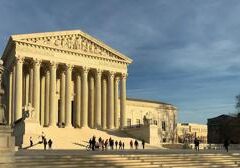
(The Center Square) – A U.S. Supreme Court ruling clears the way for U.S. Rep. Mike Bost to challenge Illinois’ law allowing mail-in ballots to be counted weeks after Election Day, a dispute that lower courts had previously refused to hear.
In a decision issued Tuesday, the high court ruled that federal candidates have legal standing to sue states over election laws governing their races, rejecting lower-court rulings that said Bost failed to show a sufficient injury to bring the case.
Bost, a Republican from Murphysboro, sued Illinois election officials over a state law that allows mail-in ballots to be received and counted for up to two weeks after Election Day. Russell Nobile is Bost’s attorney.
“Yes, we won,” Nobile told The Center Square. “Before 2020, it was really uncontroversial that federal candidates could bring challenges to state laws affecting their elections. Something happened in 2020 where suddenly courts said maybe that wasn’t the case. This opinion makes clear that federal candidates have standing to sue over electoral practices affecting their federal elections.”
The decision sends the case back to lower courts, where judges may now be required to consider the merits of Bost’s challenge. Nobile said next steps have not yet been finalized and could depend on developments in a similar case pending in Mississippi.
“If the [U.S.] Supreme Court says ballots received after Election Day [in Mississippi or Illinois] violate federal law, that should apply elsewhere,” Nobile said. “Ballots arriving after Election Day are largely a recent phenomenon. While some states experimented with it in the past, the widespread practice has really only been implemented over the last ten years or so.”
Nobile says the court’s decision allowing Bost to challenge Illinois’ mail-in ballot law is being misunderstood by critics who warn it could be used to overturn election results.
“This is a pre-election suit, not a post-election suit,” Nobile said. “The standards are different, and the Court made that clear.”
Nobile said the case was filed before any votes were cast and is not about invalidating past elections, but about whether courts should hear challenges to election laws before an election takes place.
“The criticism that this will be used to overturn elections is misplaced,” he said. “The question here is whether courts are open to hearing legitimate disputes about election rules before an election happens.”
The ruling reaffirmed that federal candidates have standing to sue states over election laws governing their races, a threshold issue that had prevented Bost’s challenge from being heard on the merits in lower courts.
According to Nobile, that access to the courts is essential for maintaining public confidence in the electoral process.
“It’s important that courts are open to hear legitimate disputes,” he said. “When there’s an electoral practice that’s controversial or raises serious legal questions, courts need to explain to the public why that practice is allowed to occur.”
Nobile argued that public skepticism surrounding ballots counted after Election Day underscores the need for judicial clarity, not political rhetoric.
“When roughly 80% of the public thinks ballots should arrive by Election Day, and you have a practice that allows ballots to come in late, people deserve an explanation from the courts,” he said. “That’s how you increase the legitimacy of elections.”
The high court’s decision was backed by a majority of justices, including some from the court’s liberal wing. Justices Sonia Sotomayor and Ketanji Brown Jackson dissented.






Showers And Thunderstorms Likely then Chance Showers And Thunderstorms
Latest News Stories
Land Use Committee: ‘Clean Fill’ Proposal Stalls After Unauthorized Tree Removal Sparks Environmental Concerns

Physicians assistants leave for Iowa due to licensing wait times in Illinois
Illinois quick hits: Chicago debt deal pushes payments down road
Republican candidates for governor, U.S. Senate discuss energy, SCOTUS
Illinois Quick Hits: Indiana governor signs Bears stadium bill
Meeting Summary and Briefs: Will County Planning and Zoning Commission for February 17, 2026
Ad-Hoc Committee: Liquor Ordinance Stalls Over Drafting Errors; Debates License Cap Policy

Board Approves New Chief of Staff and Dean Roles; Trustees Clash Over Hiring Transparency
Green Garden Township Residents Threaten Incorporation to Block 6,000-Acre Solar Farm
Microsoft hit with IL biometric class action over Teams call transcriptions
Amended Bears megaproject bill could have major impact on property tax payers
Illinois Quick Hits: Police report drop in homicide rates in East St. Louis