Police group urges White House to convene law enforcement officials to work together
Following a second fatal shooting in Minneapolis involving immigration officials, a prominent law enforcement organization is urging the White House to bring together local, state and federal law enforcement to identify a “constructive path forward” amid rising tensions.
The International Association of Chiefs of Police argues that rising tensions among federal law enforcement officials in communities like Minneapolis are putting a “significant strain on public safety systems.”
The organization is calling on the White House to exercise “its convening authority” to bring together officials from local, state and federal law enforcement agencies to discuss current policies in hopes of lowering tensions between civilians and law enforcement.
IACP underscored the need for proper training in accordance with the law to build community trust.
“In times of uncertainty, officials at all levels play a critical role in de-escalating tensions by using measured, responsible rhetoric that reinforces lawful processes and public trust rather than deepening division,” according to a release from the organization.
The Center Square reached out to the White House to request information on whether the administration planned to convene a discussion with law enforcement leaders. They underscored the desire to coordinate with all law enforcement to remove “criminal aliens.”
“President Trump has made it clear he wants to work with state and local governments to remove dangerous criminal illegal aliens from American cities. The Administration has had tremendous success doing so in states that cooperate. Democrat leaders in Minnesota should cooperate with the federal government to remove criminal illegal rapists, murderers, and pedophiles instead of providing them sanctuary.” Abigail Jackson, White House spokeswoman, told The Center Square.
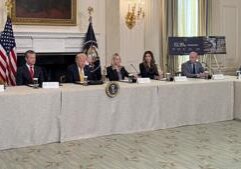
The IACP request preceded a conversation between President Donald Trump and Democratic Minnesota Gov. Tim Walz on Monday, which the president described as “very good” as the two leaders try to find common ground.
During a press briefing at the White House Monday, Press Secretary Karoline Leavitt expanded on the Trump administration’s demands for Walz and Minneapolis Mayor Jacob Frey to cooperate with immigration officials.
Leavitt said the White House is demanding that the Democratic leaders “turn over all criminal illegal aliens currently incarcerated in their prisons and jails,” in addition to “any illegal aliens with active warrants or known criminal history of immediate deportation.”
The second demand is that local and state law enforcement “must agree to turn over all illegal aliens who are arrested by local police.” The third calls on local law enforcement to assist federal authorities in “apprehending and detaining illegal aliens who are wanted for crimes.”
“If Governor Walz and Mayor Frey implement these commonsense cooperative measures that I would add have already been implemented in nearly every single other state across the country, Customs and Border Patrol will not be needed to support ICE on the ground in Minnesota. Ice and local law enforcement can peacefully work together, as they are effectively doing in so many other states and jurisdictions,” Leavitt said during the briefing.



Sunny
Latest News Stories

WATCH: Commission makes ICE accountability referral; Rep says Pritzker wrong on prices

Illinois quick hits: DOJ sues over voters lists; CTA security surge
Trump administration pauses visa program after Brown U shooting suspect found dead

Meeting Summary and Briefs: Will County Committee of the Whole for Dec. 2025

JJC Board Approves 2025 Tax Levy and Bond Abatement

Pape’s 18 Points Power Peotone Past Wilmington in 35-32 Thriller

BREAKING: Milwaukee judge guilty of felony obstruction during ICE arrest

GOP opposes California tuition aid for Illegal Immigrants
Texas reps launch new Sharia Caucus

Legislator demands DCFS set record straight on child welfare interns

Illinois energy costs expected to increase as Pritzker considers bill
Plaintiff in redistricting lawsuit predicts Supreme Court fight