U.S. Supreme Court to define decades-old consumer law
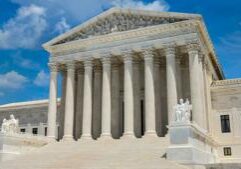
The U.S. Supreme Court agreed on Monday to decide how a 1988 video privacy law applies to the modern age.
Salazar v. Paramount Global seeks to challenge the 1988 Video Privacy Protection Act’s definition of “consumer” in reference to all goods and services or only audiovisual goods and services provided by a video tape service provider.
Michael Salazar subscribed to Paramount’s online newsletter to view videos. According to Salazar’s lawyers, Paramount shared his Facebook ID and video-watching history to Meta.
The primary issue in litigation is how the VPPA defines the term “consumer.” In the legislation drafted by Congress, “consumer” is defined as “a subscriber of goods or services from a video tape service provider.”
The argument lies in whether the statute refers to all goods and services or specifically audiovisual goods or services.
“The VPPA broadly prohibits a video tape service provider—like Paramount here—from knowingly disclosing ‘personally identifiable information concerning any consumer of such provider,’” lawyers for Salazar wrote.
Lawyers for Paramount Global argue that Salazar had access to content on its 247Sports platform, which was available to anyone on the internet.
“All Salazar allegedly did was sign up for a free, written email newsletter. That is not a ‘video cassette tape or similar audio visual material,’ so he is not a ‘consumer’ under the statute,” lawyers for Paramount wrote in a brief to the Supreme Court.
The law originated after a journalist obtained the video rental records of Robert Bork, a nominee to the U.S. Supreme Court. Congress cited privacy concerns as technology evolved and “revolutionized our world.”
In an era of streaming and video rentals, justices on the nation’s highest court will likely provide clarity for consumer privacy protections through this case.





Mostly Sunny
Latest News Stories

Committee: Facilities Department Reports $92,000 in Energy Savings, Completes Veterans Assistance Commission Buildout

Green Garden Solar Farm Approved in Split Vote; Battery Storage Component Rejected

Chicago mayor to push for local funding, keeping Bears
Senate Republicans unveil $72 billion budget package to fund ICE, CBP

Illinois AI regulations have mild industry support, could draw federal ire

DOJ files complaint to block Minnesota climate lawsuit

Hegseth: Ceasefire holds despite Iranian aggression

Illinois Quick Hits: Mayors to visit capitol urge protection of local funding

Despite tax revolt, Lower Merion keeps administrator pay high
Supreme Court allows Louisiana to immediately move on drawing new map

After Fifth Circuit ruling on TX border security law, ACLU sues to stop it from going into effect

Colorado legislators back psychedelic drug research