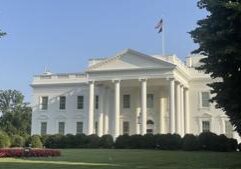
White House seeks to end IL illegal alien college benefits
Saying Illinois’ laws giving illegal immigrants discounted college tuition “flagrantly” violates federal law, the Justice Department has asked a southern Illinois federal judge to close the book on the state’s bid to toss the White House’s lawsuit seeking to end the state’s practices.
“There is no doubt that the challenged Illinois laws … are directly contrary to federal law,” the Justice Department wrote in a brief filed Jan. 16.
“… If Illinois wishes to provide access to postsecondary education benefits to aliens not lawfully present on the basis of their residence in the State of Illinois, such benefits cannot be denied to United States citizens because of residence. Illinois’ laws flagrantly violate this provision.”
The filing came as the latest step in a court battle that began last year, as part of the legal campaign launched by the Justice Department under President Donald Trump to clamp down on programs and policies in states led by Democrats providing a host of benefits to illegal immigrants, despite federal laws ostensibly prohibiting them from doing so.
In this case, the Justice Department filed suit in federal court in the Southern District of Illinois to secure orders declaring the state of Illinois must end practices ensconced in a series of pro-immigrant state laws which work to require Illinois state colleges and universities to provide college education to illegal immigrants at reduced tuition rates.
The lawsuit against Illinois is similar to another legal complaint also filed against the state of California, leveling similar accusations and seeking similar orders.
In both cases, the Justice Department argues the state laws illegally discriminate against U.S. citizens.
Under the Illinois program, the state provides tuition benefits to illegal immigrants and their children based on “residency” in the state, similar to those benefits provided to U.S. citizens and immigrants who reside legally in the U.S. and Illinois.
By contrast, people living outside of Illinois must pay higher tuition rates to attend Illinois’ state colleges and universities.
In the complaint, the Justice Department argues federal law forbids such residency-based benefits to be extended by the state to illegal immigrants. Specifically, they point to Section 1623 of the Immigration and Nationality Act (INA) which states illegal immigrants “shall not be eligible on the basis of residence within a State … for any postsecondary education benefit unless a citizen or national of the United States is eligible for such a benefit … without regard to whether the citizen or national is such a resident.”
In response, however, Illinois has argued the state has a constitutional right to ignore that provision and offer any educational benefits to illegal immigrants it wishes to.
The state asserts that under the federalist system of government established under the U.S. Constitution, the federal government is prohibited from enacting such laws.
In a motion to dismiss filed in November, Illinois Attorney General Kwame Raoul cited the so-called “anti-commandeering doctrine” to argue Section 1623 is unconstitutional. Raoul argued Section 1623 amounts to an unconstitutional “direct order” to the state of Illinois and other states.
Raoul and other Democratic state attorneys general throughout the country have used the “anti-commandeering” argument repeatedly in court filings amid long-running court battles with the Trump administration over immigration.
Particularly, they have asserted the “anti-commandeering” doctrine prevents the federal government from attempting to end so-called “sanctuary” or “welcoming” laws and policies intended to help extend government benefits to illegal immigrants and to resist efforts by the federal government to remove illegal immigrants from the U.S.
Raoul argued the “anti-commandeering” argument should also allow Illinois to thumb its nose at Section 1623, as well, because, the Democrat attorney general argues, that provision was enacted without constitutional authority.
“This litigation is yet another attempt by the federal government to commandeer Illinois officials and force them to toe the line on its preferred immigration policies,” Raoul wrote in his motion to dismiss brief. “Our Constitution forbids this.”
In response, however, the Justice Department said Raoul’s arguments don’t hold up.
It is Illinois, they said, that is violating the Constitution’s so-called federal supremacy clause. Under that provision, any state laws which conflict with federal laws enacted in support of federal governance are preempted.
In this case, the Justice Department said, Congress in 1996 enacted Section 1623 in support of federal immigration law enforcement, an area of governance delegated by the Constitution to the federal government.
So, Illinois’ state laws cannot stand, the Justice Department said in its new brief.
“Illinois does not even dispute that its laws conflict with Section 1623,” the Justice Department wrote. “Their desperate attempt to avoid preemption by appealing to anti-commandeering principles fails. Every valid exercise of federal preemption necessarily constrains state legislative freedom; that is the very definition of preemption under the Supremacy Clause.
“When Congress, acting within an enumerated or plenary power, enacts a law that occupies a field or directly conflicts with state law, the inevitable and intended result is that states may no longer legislate in the manner they otherwise could have. The Supreme Court has never treated this ordinary consequence as ‘commandeering.’ To the contrary, it has repeatedly upheld federal statutes that left states with no choice but to alter or abandon their own legislative schemes.
“… By violating Section 1623, Illinois’ laws run afoul of the Constitution, which has established federal law as the supreme law of the Nation.”
The Justice Department further noted no court has ever found Section 1623 to be unconstitutional “commandeering” in the 30 years since the law was enacted.
“The United States was built on principles of federalism, with certain powers granted to the federal government, like immigration, and other powers reserved to the states,” the Justice Department wrote. “(Illinois seeks) to undermine the basic principles of federalism by declaring control over immigration to be a state power because they disagree with federal immigration laws, policies, and priorities.
“But that is not how our country works and, regardless of the state legislature’s intentions, is an assault on our constitutional order.”
The case is assigned to U.S. District Judge David W. Dugan.






Mostly Sunny
Latest News Stories

Lincoln-Way Board Weighs Community Solar Program Promising $155,000 in Annual Savings
Will County Reverses Zoning on Peotone Farmland to Facilitate 10-Acre Sale

Meeting Summary and Briefs: Joliet Junior College Board of Trustees for September 10, 2025
Lincoln-Way 210 Board Approves $172.7 Million Budget with Planned Deficit for Bus Purchases
Lawmakers push for transit reform, funding despite delayed fiscal cliff

Miller files ‘parental rights’ constitutional amendment, blasts Illinois’ policies

Will County to Pay Enbridge $82,000 to Relocate Pipeline Equipment for Exchange Street Improvements

Laraway Road Widening Project in New Lenox and Frankfort Gets Additional $468,000 for Redesign

“Federal Policy Uncertainty” Blamed for Delay of Peotone Solar Farm; County Grants Second Extension
Will County Grants Extensions to Five Solar Projects Sold to New Developers
Will County Board Approves Controversial Drug Recovery Retreat in Crete Township

Champaign stabbing raises concerns over Illinois mental-health law