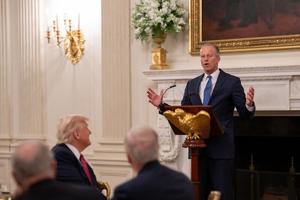
Senators weigh American privacy risks in FBI Investigations
The Senate Judiciary Committee heard testimony on Wednesday to consider the reauthorization of a surveillance tool that has improperly collected citizens’ private conversations.
The Foreign Intelligence Surveillance Act was first established by Congress in 1978 to mitigate foreign terrorist threats.
Section 702, established in 2008 to amend FISA, only permits the targeting of non-U.S. citizens for surveillance purposes and does not require a warrant. However, accusations of civilians’ privacy being invaded by the FBI have continued.
“It appears that Americans don’t care for that any more than they did at the time of the British controlling this country,” said Sen. Dick Durbin, D-Ill. “It appears that people want to know, ‘By what right are you doing this to me?’ And that is a legitimate question when it comes to questions of privacy.”
U.S. Sen. Mike Lee, R-Utah, said that issues regarding Section 702 have been repeatedly discussed with similar arguments being made without real progress in protecting U.S. citizens.
“The arguments go something like this: Yes, there have been problems in the past. Yes, there have been abuses of FISA 702, but you need not worry, because we now have procedures in place, administrative procedures, that will fix the problem once and for all. We now have to have even more layers of administrative approval within the agencies charged with administering this framework, and so you need not worry. What you ought to be worried about is another 9/11. What you ought to be worried about is that we are all going to die unless the US government has the ability to collect content of private communications involving US citizens without a warrant,” Lee said. “I find this rather troubling, because that’s that’s not what the Constitution sets up.”
Adam Klein, a professor at the University of Texas in Austin, argued that requiring warrants for queries, which are searches through government databases for information the government already collected, may delay investigations that could potentially prevent future terrorism. He also said American citizens could find comfort if queried, as they are not the subjects of investigation, despite their private conversations being observed by the FBI to investigate foreigners.
Sen. Josh Hawley, R-Mo, rebuffed this idea, arguing that just because U.S. citizens are not the primary targets of investigation does not mean their privacy was not improperly targeted and abused.
“The idea that we would renew 702 without some sort of reforms to protect U.S. citizens, I think, is just totally irresponsible,” Hawley said.


Showers And Thunderstorms Likely
Latest News Stories

Policy experts unimpressed with SBA’s ‘record’ capital delivered to small businesses

City taxpayer burden swells, as Chicago pension debt rises

Poll: Voters like candidates supporting war on Alzheimer’s

U.S. LNG exports at new record in September on strong Louisiana shipments

Conservatives push Union Pacific–Norfolk Southern merger

Hamas agrees to release hostages; demands further negotiations

Report: Bipartisan support for K-12 open enrollment policy
‘End the political idiocy’: Republicans lambast Dems for tanking funding bill again

WATCH: U.S. military strikes another suspected drug boat, killing four

Des Moines Public School system hired superintendent with extensive criminal history

Pro-life group calls FDA’s approval of generic abortion pill ‘unconscionable’
USDOT puts $2.1 billion of taxpayer funds for CTA under review