
Report: Patchwork state food laws could raise grocery prices 12% nationwide
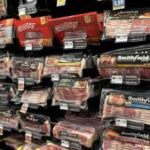
Differing state laws banning certain food ingredients or requiring new warning labels could raise grocery prices by about 12% in affected states and, potentially, nationwide if similar proposals spread, a new economic analysis warns.
Americans for Ingredient Transparency commissioned the report, and Policy Navigation Group conducted the analysis. The study examined laws passed in Louisiana, Texas and West Virginia. It concluded that such measures would increase grocery costs in those states by a combined $12.2 billion annually compared to a uniform federal framework. The analysis also warns that regional distribution networks could increase costs in neighboring states.
“If these laws are enacted, consumers across the country could face at least a 12 percent increase in annual grocery costs in the coming years,” the study states.
Lawmakers in dozens of states have advanced bills to ban specific food ingredients or require new labeling for products the federal government already regulates. The debate has raised questions about federal preemption and whether Congress should establish a national standard instead of allowing states to impose separate rules.
Differing state ingredient laws force manufacturers and distributors to adjust packaging, sourcing and compliance systems, and companies pass those costs on to consumers, the report argues. Laws in Louisiana, Texas, and West Virginia “will create an effective tax increase of 12% on groceries for their states with significant spillover effects in some neighboring states,” the analysis concludes.
In Louisiana, for example, a new law will require manufacturers to place a QR code on products containing any of 44 specific artificial ingredients, dyes or additives beginning Jan. 1, 2028. Texas passed a law last year that will require warning labels on packaging of products containing similar artificial ingredients by Jan. 1, 2027. West Virginia’s law seeks to ban seven artificial food dyes and two preservatives.
Nearly 1 million consumers in neighboring states, including New Mexico, Oklahoma and Arkansas, could face higher grocery prices due to regional supply chains, the report found.
If other states adopt similar legislation, a “50-state regulatory patchwork” would drive comparable price increases nationwide, the study warns.
Americans for Ingredient Transparency is urging Congress to create a single national standard governing ingredient safety and disclosure requirements.
“At a time when President Trump is delivering on his promise to make life more affordable for American families, the proposed patchwork of conflicting state ingredient laws threatens to undo that progress with an effective tax increase of 12% on groceries nationwide,” Andy Koenig, senior advisor to AFIT, said in a press release. “The only way to prevent this massive cost hike is for Congress to take the lead on the issue instead of the states and pass a uniform national standard for ingredient safety and transparency that keeps food affordable.”
The study marks the first attempt to estimate consumer cost increases tied to the recent surge in state ingredient regulation bills introduced in 2025 and 2026.
A survey of registered voters in 28 competitive House districts found that 87% believe ingredient regulation and labeling should operate under a national standard rather than a state-by-state system, AFIT said.
Policy Navigation Group, a Virginia-based consulting firm whose analysts previously worked at the Office of Management and Budget, said it followed federal analytic standards when conducting the economic evaluation.
Congress has not advanced legislation establishing a national framework, though AFIT said federal officials have put a national food standard “on the table for discussion.”





Mostly Clear
Latest News Stories
Will County Coroner Reports Nearly 8,000 Death Investigations in 2025

Lawmaker says Pritzker reacted too quickly to Grant Park cross burning

Sanders bill would give U.S. stake in AI companies; analyst calls idea ‘nutty’

Poll: Most Americans don’t trust AI for news
Poll: 6 in 10 voters say country headed in wrong direction
Will County Committee Advances Three New Assistant State’s Attorneys

Will County Committee Advances $75,000 for U of I Extension

Trump shares look at Qatari aircraft for AF1

Feds plan for student loan interest rates could cost taxpayers

Altadena residents upset about multiple homes on lots

WATCH: GOP lawmaker voices opposition to gas tax increase
Experts comment on bill banning U.S. lawmakers from insider prediction bidding