International Monetary Fund says U.S. federal debt ‘too big’
A report from the International Monetary Fund warns that U.S. debt is likely to remain elevated in the coming years, a risk for the U.S. and the global economy.
“The conclusion is that the current account deficit is too big,” IMF Managing Director Kristalina Georgieva said.
The warning comes as Congress mulls a non-binding resolution to limit deficits to 3% of gross domestic product, or GDP, a measure of total economic activity.
The IMF said that the U.S. government deficit is expected to remain in the 7% to 8% of GDP range annually. That would cause government debt to hit 140% of GDP by 2031, IMF officials wrote in their first Article IV review of the Trump administration’s policies.
“While the risk of sovereign stress in the U.S. is low, the upward path for the public debt-GDP ratio and increasing levels of short-term debt-GDP represent a growing stability risk to the U.S. and global economy,” the Article IV report noted.
U.S. debt stands at about $38 trillion, according to the U.S. Treasury Department, highlighting the scale of the financial challenges discussed in the IMF report.
The IMF report also said some of President Donald Trump’s tariffs are working against his pro-growth policies.
“The reduced taxation of tips and overtime pay, combined with increases in the child tax credit, should boost household incomes,” according to the report. “However, staff models suggest that reductions in Medicaid and food assistance, combined with higher tariffs, will act in the opposite direction, resulting in materially lower real disposable incomes for the bottom third of the income distribution and an increase in the poverty rate.”
IMF officials said the U.S. needs a plan to address its financial challenges.
“A clear, frontloaded fiscal consolidation plan is needed to put debt-GDP on a downward trajectory,” the report said.
“Achieving this needed realignment of the fiscal position will require going beyond the ongoing efforts to identify efficiencies in discretionary, non-defense federal spending (which makes up only 15% of total federal outlays),” according to the report. “Rather, the bulk of this adjustment will need to be borne by increases in federal revenues and a rebalancing of entitlement programs (notably social security and Medicare).”
Bipartisan support continues for House Resolution 981, which would limit yearly deficits to 3% of GDP by 2030 or sooner. Last year’s budget deficit was about double that at 6% of GDP.
The resolution sets a target of reducing the deficit to 3% of GDP or less. After reaching that goal, Congress will then aim for a balanced budget. Congress has not achieved this in more than two decades.
House Resolution 981 directs the House Budget Committee to recommend enforcement options within 180 days. These options include procedures for when the target is unmet. The Rules Committee must suggest rule changes to help meet the target. These changes could make it harder to waive budget rules and require the Congressional Budget Office to analyze major bills. The resolution also urges Congress to avoid budget gimmicks.
The last budget surplus was in 2001. Since then, spending has outpaced revenues, and annual deficits grew sharply during the COVID-19 pandemic. The fiscal year 2025 deficit was $1.7 trillion, or about 6% of GDP.
Congress last passed a budget below the 3% target in 2015.
The growing national debt, which is nearing $39 trillion, is largely the result of Congress spending more money than it collects, along with rising costs for Medicare and Social Security as the U.S. population ages and healthcare costs continue to increase.




Sunny
Latest News Stories

Everyday Economics: A stalled labor market and why the next data points matter

Assaults against ICE up 1300%, vehicular attacks up 3200%, death threats up 8000%
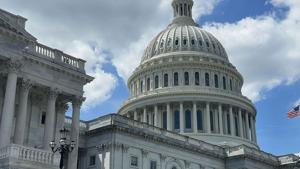
Bipartisan bill to cap annual deficits at 3% could curb debt growth

One year in, a ‘ho-hum’ jobs report

Five battleground governor’s races for 2026

Chicago Flips Red calls for audit after public schools report

Capital Imp Committee: Begins Drafting Policy to Regulate Artificial Intelligence in County Government

Public Health Committee Chair Demands Animal Control Agreements for Crete, Monee

Public Works Committee Considers Taking Over Kankakee County Line Road to Expedite Bridge Repairs
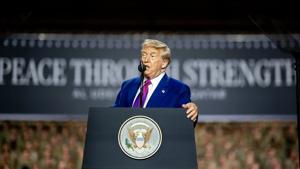
Trump signs order protecting Venezuelan oil revenue from legal claims
Retirements and resignations to impact midterms as balance of power at stake

Peotone Man Charged With Disorderly Conduct, Criminal Damage at New Lenox Target

U.S. Supreme Court to hear anti-oil cases with energy costs on the line

Constitutional concerns raised over Illinois’ first civil hate crime case