Ahead of Iran strikes, CBP, DOJ taking action against Iranian influence in US
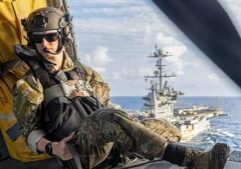
Ahead of the U.S. strikes against Iranian leaders on Saturday, federal agents had already been addressing Iranian threats in the U.S. and on the high seas.
On Friday, the U.S. District Court for the District of Columbia sought to forfeit the Motor Tanker Skipper, a crude oil tanker seized by U.S. forces on the high seas last December carrying approximately 1.8 million barrels of crude oil supplied by Petróleos de Venezuela, S.A. (PdVSA), Venezuela’s state-owned oil company. The ship was part of a shadow fleet connected to the Islamic Revolutionary Guard Corps (IRGC), including the IRGC-Qods Force (IRGC-QF), a designated Foreign Terrorist Organizations (FTO), authorities allege.
The ship left the José Terminal in Venezuela with 1.1 million barrels scheduled to be delivered to Cubametales, the Cuban state-run oil import and export company. The Treasury Department’s Office of Foreign Assets Control (OFAC) sanctioned the Cuban company in July 2019. It also sanctioned the Skipper in 2022, which was previously named Adisa. After it was sanctioned, the ship’s name was changed to avoid detection, investigators found.
Last December, U.S. forces seized the Skipper on the high seas pursuant to a seizure warrant. At that time, the crew were flying a false Guyanese flag, rendering the ship stateless. The Skipper and its cargo were transported to waters off the coast of Texas.
The charges allege that since at least 2021, PdVSA was facilitating shipping and selling petroleum products to benefit the IRGC and IRGC-QF. This involved the Skipper moving crude oil from Iran and Venezuela through ship-to-ship transfers worldwide. False flags were flown to disguise its alleged illicit activities to evade detection and sanctions.
In 2024, the Skipper delivered approximately three million barrels of crude oil from Iran to Syria and was transporting illicit oil from Iran and Venezuela last year, investigators allege.
Revenue from selling the illicit petroleum supported IRGC activities, including “the proliferation of weapons of mass destruction and their means of delivery, support for terrorism and both domestic and international human rights abuses,” the Department of Justice says. Ghost fleets play an essential role in generating revenue for despotic regimes by moving Iranian and other illicit oil around the world, the DOJ says.
The Trump administration has also brought justice to an Iranian journalist and human rights activists, Mashi Alinejad, who’s been seeking refuge in Brooklyn, New York. The IRGC and Iranian intelligence service have been hunting her for years. Last year, two Georgian nationals and members of a Russian mob faction were sentenced to 25 years in prison for attempting to kidnap and murder her, The Center Square reported.
After the Russian mobsters’ attempts failed, the IRGC hired a convicted murderer in New York to kill her, Carlisle Rivera, known as “Pop.” He was inmates with an Iranian, Farhad Shakeri, who was also serving time for manslaughter. After Shakeri was released and returned to Iran as an IRGC asset, he offered Rivera $100,000 to find and kill Alinejad, according to the charges. His efforts also failed. Shakeri remains at large.
Last month, Rivera was sentenced to 15 years in prison for his role in an IRGC murder-for-hire scheme.
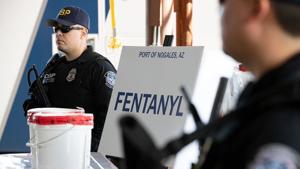
In Philadelphia, U.S. Customs and Border Protection officers also confiscated a shipment of ancient artifacts that had been shipped out of Iran to the U.S. in a major antiquities’ theft case.
Officers seized 36 copper-alloy short swords and 50 copper-alloy arrowheads that date to the Bronze Age, CBP said.
The shipment initially arrived on an express delivery flight from the United Arab Emirates in October but took several months for archaeologists to determine their origin.
CBP officers initially X-rayed the shipment, discovered the cultural artifacts and held them to be investigated by the National Targeting Center’s Antiquities Unit. Working with archaeologists affiliated with a local Philadelphia university, they authenticated the short swords and arrowheads dating to between 1600-1000 BCE.
They believe they originated from an area along the southwestern Caspian Sea near the lush Talish Mountains region of Iran and were illegally excavated from ancient burial sites.
Multiple federal agencies were involved in the seizures and investigations.
Federal authorities are also searching for more than 700 Iranians who were released into the country by the Biden administration, The Center Square reported.






Slight Chance Rain Showers then Mostly Cloudy
Latest News Stories

U.S. Senate passes landmark bipartisan housing bill, sends to House

POLL: Majority of voters believe U.S. should stay in NATO

Nonprofits: Los Angeles schools need to do better following Carvalho’s resignation

Chicago anti-violence department proposed; activist dismisses Trump post
Pritzker plans to sign social media law despite criticisms

Illinois Quick Hits: IDOT says all 102 counties to have transit

Poll: Taxes, economy top voter concerns

Murphy, Dhillon go to bat for players in baseball’s Pride Night black eye

Republicans compete to face Neguse in congressional race

Vance says ‘progress’ made in talks with Iran

Report: Eight Michigan counties among most vulnerable to Social Security cuts

Los Angeles schools superintendent resigns after FBI probe