Everyday Economics: The Fed’s labor-market reality check
Last week wasn’t about a single data point. It was about a shift in tone from policymakers: the labor market may be weaker than the headlines imply, and the economy is increasingly being supported by a narrower set of households and sectors. This week, that narrative gets tested in two places: the February jobs report on Friday, and markets’ evolving assessment of geopolitical risk involving Iran – an oil producer in a region where worst-case scenarios can change the global macro outlook fast.
What Fed speakers said last week: Waller put the labor market in the crosshairs
The most important Fed remarks last week came from Governor Christopher Waller, who delivered a substantive economic outlook speech on Feb. 23. His message was sobering on the labor market.
First, Waller highlighted the annual benchmark revisions to payrolls, which dramatically changed the story of 2025. The revisions turned last year into one of the weakest years for job creation in decades outside of a recession: 181,000 jobs added in total – about 15,000 per month. That’s essentially stall speed for an economy of this size.
Then he went further. Waller argued the revised numbers likely still carry an upward bias – suggesting payroll employment may have actually fallen in 2025, a rare occurrence outside of a recession. The implication is straightforward: don’t anchor on month-to-month volatility. The relevant signal is the trend.
On the broader economy, Waller noted that Q4 2025 real GDP growth came in at 1.4%. But he argued that the government shutdown likely distorted both Q4 and Q1, so a better read is the combined six-month window – where he expects growth to average above 2%.
He also flagged a K-shaped spending dynamic that matters for 2026: higher-income households remain resilient – helped by wealth effects tied to last year’s stock-market gains – while lower- and middle-income consumers are trading down. Demand is still there, but it is becoming more price-sensitive and more unequal.
The broader Fed message remains patience. But Waller’s emphasis on labor-market fragility effectively raises the sensitivity of the reaction function to downside labor surprises: if jobs weaken, the threshold for a rate cut falls – even if inflation is merely drifting lower rather than rapidly converging to 2%.
What to expect from the February jobs report
January reset expectations. Payrolls came in at +130,000, above consensus, and the unemployment rate ticked down to 4.3%. Wages rose 0.4% month over month and 3.7% year over year. After a surprise like that, markets want to know whether January marked stabilization – or noise.
For February, the key is not just the headline payroll number. It’s whether the report confirms breadth and durability, especially given a major comparability break in the household survey.
Three things to watch:
(1) Population controls: a comparability break in the household survey
The BLS delayed the annual population control adjustments that usually appear with January household-survey estimates. Those updated population controls will instead be introduced with the February 2026 release. That means unemployment and labor force participation will reflect a methodological break, and January household estimates will also be revised. Translation: don’t over-interpret a one-tenth move in the unemployment rate this month.
(2) Breadth vs. narrow strength
January’s gains were concentrated. If February job growth broadens across sectors – especially cyclicals and private services – it signals genuine stabilization. If it’s narrow again, it raises questions about durability and reinforces Waller’s argument that the trend is weaker than the monthly prints may suggest.
(3) Hours and wage momentum
In a low-hire environment, hours worked and wage growth can be more informative than payroll counts alone. Softer payrolls with steady hours is a very different signal than softer payrolls with hours rolling over.
Policy implications remain straightforward: the Fed is firmly on hold for March. A weak February print would accelerate market pricing for a June cut. A solid, broad-based number keeps the Fed comfortable staying put well into the summer.
The Iran shock: why the oil market has a buffer — and why yields may still fall in a risk-off episode
Geopolitical risk involving Iran is the type of shock markets price quickly because energy supply risks are nonlinear. But it is equally important to understand what has changed about the oil backdrop relative to past Middle East shocks – and what markets actually did the last time the Strait of Hormuz was in the headlines.
Start with today’s setup: the oil market has a cushion. Supply has been running ahead of demand, inventories have been building, and that inventory accumulation provides an initial buffer against disruptions. Add in potential shock absorbers – OPEC+ spare capacity, emergency reserves, a more flexible U.S. supply response, and shipping and logistics that have proven more resilient through recent stress tests – and the base case looks more like a risk-premium episode than an immediate physical shortage.
That buffered starting point matters because it changes the borrowing-cost story. A key point investors sometimes miss is that an oil shock does not automatically push Treasury yields higher. In past Hormuz-risk flareups, the first move has often been oil up but yields down – because investors rotate into safe havens.
During the June 2019 tanker-attack episode near the Strait of Hormuz, oil rose while Treasury yields fell as markets treated the event as risk-off and growth-negative. Even in September 2019, when attacks on Saudi facilities triggered an outsized intraday oil spike, the bond-market response again reflected competing forces rather than a mechanical rise in yields – safe-haven demand and growth fears can offset inflation optics.
So the real question for markets – and for corporate borrowing costs – is not simply “did oil jump on the headline?” It is whether the shock becomes persistent enough to lift inflation compensation and term premia, or remains a temporary episode that tightens financial conditions mainly through risk-off behavior.
Historically, oil and gasoline price shocks tend to be front-loaded, with limited persistence in headline inflation and muted effects on core inflation and long-run expectations – unless the shock becomes sustained enough to generate second-round effects.
Where the risk gets serious is in the tail scenarios: a broader regional conflict that threatens Strait of Hormuz shipping flows, or internal destabilization within Iran that curtails production or exports for an extended period. Those are the paths that can overwhelm buffers and turn a headline risk premium into a true supply constraint.
If you want one clean scoreboard before overreacting to crude, watch real-time indicators of whether shipping is actually tightening: AIS (Automatic Identification System) signals for tanker transits, speeds, and anchorage “loitering” through Hormuz (MarineTraffic is one widely used source), plus tanker freight rates via the Baltic Exchange (BDTI/BCTI). For the “risk price,” monitor insurance stress through Lloyd’s Joint War Committee Listed Areas updates and market reporting on war-risk premia.






Slight Chance Showers And Thunderstorms
Latest News Stories
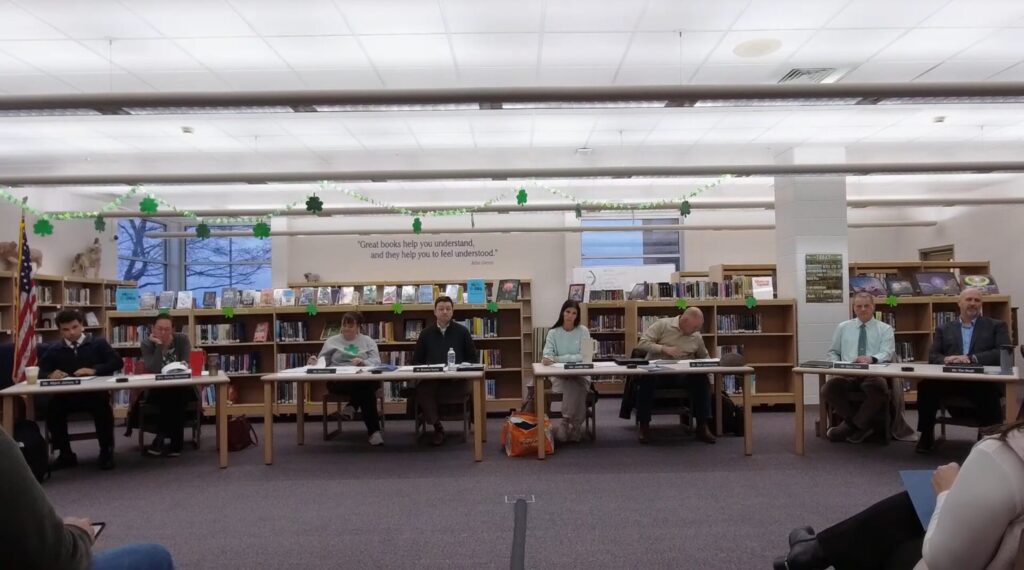
Peotone 207U Board Confronts Budget Pressures, Facility Needs at March 16 Meeting

Ad-Hoc Committee: Will County Sheriff’s Office to Acquire Decibel Meters for Noise Complaints

Crest Hill Homeowner Granted Side Yard Setback Variance for Accessible Addition

Will County Public Works Approves Access for 56-Acre Truck Services Hub on Manhattan-Monee Road
Committee Approves $317K Guardrail Maintenance Contract Amid Discussion on Installation Dangers

State Update: County Officials Raise Alarms Over Pritzker’s ADU Zoning Push and Data Center Tax Breaks
Federal Update: DHS Shutdown, War Powers, and Housing Legislation Dominate Washington

Will County Approves Diamond Enterprise Zone Expansion to Support $355 Million Energy Investment

Will County Corporate Revenues Surpass Expectations, Igniting Debate Over Delinquent Tax Sales

Will County Grants Extensions for Seven Solar and Commercial Projects Amid Permitting Delays
Meeting Summary and Briefs: Will County Public Works and Transportation Committee for March 3, 2026
Will County Committee Postpones Liquor, Ad-Hoc Committee: Gaming, and Tobacco Ordinance Updates Amid Extensive Revisions

Green Garden Township Board Opposes Earthrise Solar Project, Begins Exploring Incorporation
Land Use Committee Approves 4.98-Megawatt Solar Facility on Eagle Lake Road Near Peotone