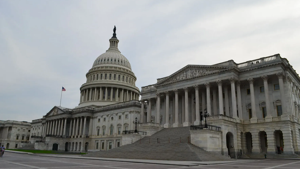
Supreme Court to hear gun possession for drug users case
The U.S. Supreme Court will hear arguments on Monday in a consequential case over whether regular drug users can possess firearms.
The case, U.S. v. Hemani centers around a Texas man who was charged with a felony after FBI agents found a pistol, marijuana and cocaine in his home after obtaining a search warrant, a petition to the court read.
The Trump administration petitioned the high court to hear the case after a lower court struck down the law barring people who use drugs such as marijuana from possessing firearms.
Lawyers for Ali Hemani argue that the federal law barring a person who “is an unlawful user of or addicted to any controlled substance” violates the Second Amendment.
“An individual’s Second Amendment rights are not restricted until a judge makes a finding of a credible safety threat to the safety of others,” lawyers for Hemani wrote in a brief to the court.
The government argued that analogous laws in the founding-era align with the decision to restrict unlawful users of controlled substances from possessing firearms. It pointed to laws restricting drunkards from possessing weapons.
“They did have laws on the books to deal with habitual drunkards. Individuals who were habitually drunk, abused alcoholic beverages, which were well known at the founding era,” said Zack Smith, a legal fellow at the Heritage Foundation.
However, Hemani’s lawyers argued that founding-era law did not specifically prevent drunkards from possessing firearms.
“The government fails to identify any relevant Founding-era tradition or regulation disarming ordinary citizens who consumed alcohol,” Hemani’s lawyers wrote, citing a lower court’s decision.
Smith argued that the problem of controlled substances was not widely known before the late 19th and early 20th centuries. He said once the issue was more widely understood, laws restricting firearm possession became more common.
“States pretty uniformly enacted some type of restriction on users of controlled substances and firearms, and that has remained an unbroken tradition essentially for the past 100 plus years,” Smith said.
Hemani’s lawyers have argued that the language of the statute barring unlawful users of controlled substances is vague. They pointed out that the law does not include a quantity or time limitation on the controlled substances use.
“The temporal nexus is most generously described as vague – it does not specify how recently an individual must ‘use’ drugs to qualify for prohibition,” Hemani’s lawyers wrote.
The lawyers also argued that Hemani was only an unlawful user of marijuana, not cocaine, even though it was found by the FBI at his home.
The Trump administration argued that regular drug users can simply stop their use to regain access to firearms under the law.
“By disqualifying only habitual users of illegal drugs from possessing firearms, the statute imposes a limited, inherently temporary restriction – one which the individual can remove at any time simply by ceasing his unlawful drug use,” Trump administration lawyers wrote.
“This could have far reaching implications, obviously because many states have moved to decriminalize or legalize marijuana usage in some instances, even though it still does remain a controlled substance under federal law,” Smith said.






Chance Rain Showers then Partly Sunny
Latest News Stories

Bill advances to prevent local governments from clearing homeless camps
Bonta’s anti-Exxon emails may have run afoul of CA corruption law: Claim
Expulsion votes for two members of Congress could happen next week, Luna says

NAACP sues xAI over air pollution near Memphis data center

Trump says he’s ready to nominate up to three Supreme Court justices
Military hostilities in Iran continue after Senate tanks War Powers Resolution

WATCH: Detransitioner battles to revive landmark malpractice and fraud lawsuit

Iran economic fallout is temporary, Hassett says

Illinois Quick Hits: NFIB says biz deduction will bring jobs, benefit to Illinois

Soaring costs and short supply shut millennials out of housing market
Vought testifies before lawmakers on Trump’s $2.1T budget request

SNAP eligibility changes spark debate on gap for impacted recipients