
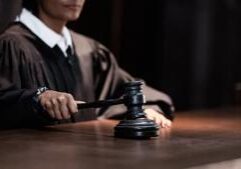
Maryland climate ruling tees up U.S. Supreme Court case
The Maryland Supreme Court, in a 3-2 decision, rejected a lawsuit on Tuesday by climate activists seeking damages from energy companies over their perceived contributions to climate change. The judges specifically referenced an upcoming U.S. Supreme Court case on a similar topic.
The state’s highest court said the cities of Baltimore and Annapolis and Anne Arundel County tried to use state and local nuisance laws to punish energy companies BP, ExxonMobil and Chevron. The case is remarkably similar to one that will be heard in the fall by the U.S. Supreme Court based out of Boulder, Colorado.
In the majority opinion, justices of the Maryland Supreme Court referenced the Boulder case. Justice Brynja Booth said the court especially decided to strike down climate activists’ lawsuits before the consequential hearing in the U.S. Supreme Court’s case.
“We believe that it could be useful to have a benefit of the high court’s analysis that is different from that expressed by our colleagues on the high courts of Colorado and Hawaii,” Booth wrote.
Officials in Boulder County, Colorado, claimed fossil fuel companies should be liable for damages resulting from emissions that cause climate change across the globe, based on nuisance laws.
State nuisance laws are typically used between disputes with neighbors, where an individuals claims an activity is harming their personal property.
The Supreme Courts of Hawaii and Colorado argued that climate change activists’ lawsuits did not relate to reducing global emissions, rather, it was over deceptive tactics to sell products. The Maryland Supreme Court said those arguments were not central to this case.
The Clean Air Act also took a central place in Maryland’s decisionmaking. The justices said the Clean Air Act supersedes claims made by climate activists to address concerns over climate change.
The Clean Air Act is a federal law that allows the Environmental Protection Agency to set standards for air pollution emissions. Lower state agencies are expected to comply with the EPA’s standards and policies.
“The Clean Air Act does not authorize the broad state law claims under its saving clause,” Booth wrote. “To the extent that the local governments seek recovery for harms caused by foreign emissions, foreign policy concerns would foreclose a federal common law action targeting emissions emanating from beyond our borders.”
Advocates for fossil fuel companies said Maryland’s denial in this case sets the stage for the U.S. Supreme Court to issue a decision limiting climate activists from pursuing these kinds of lawsuits in the future.
“Public nuisance and other state laws are simply inapplicable to the production and sale of energy worldwide,” said Phil Goldberg, special counsel for the Manufacturers’ Accountability Project.
“This ruling also comes at a critical moment by sharpening the split among state and federal courts just weeks after the U.S. Supreme Court announced it would consider these very issues in response to a similar case brought by Boulder, Colorado,” Goldberg wrote in an email shared with The Center Square.
Maryland’s decision reveals areas the Supreme Court could rule in the fall once it hears this case. Justices in the U.S. Supreme Court are expected to hear the Boulder case in the fall and will likely issue a decision in 2027.





Showers And Thunderstorms Likely
Latest News Stories

Artemis II mission breaks records Monday as astronauts observe far side of the moon
Illinois quick hits: Illinois House speaker’s son to attend private school; AFSCME workers set strike date at Illinois State University; IDOT urges public to avoid distracted driving
Federal-state showdown looms over regulation of prediction markets
No-knock warrant legislation brings Chicago victim, Illinois gun group together
Trump promises ‘complete demolition’ in Iran as deadline looms

‘We leave no American behind’: President Trump details Easter rescue of downed airman

Michigan charges dentist in alleged ‘massive’ Medicaid fraud scheme

Illinois bill sparks debate over police privacy vs. public access

Signature process begins to ban large data centers in Ohio

U.S. Supreme Court agrees to hear veteran’s benefits challenge
Supreme Court declines to hear challenge to Illinois public transport gun ban

Illinois Quick Hits: Report says Pekin Bowling Center ‘taxed out of business’
Tiffany vows to end subsidies for data centers in Wisconsin

Firefighter age bill stalled despite union backing
