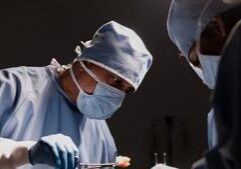
National medical school accreditor drops remaining DEI requirements
The largest and only national accrediting body for medical schools has dropped its remaining diversity, equity and inclusion language from its accreditation standards.
The Liaison Committee on Medical Education recently released its 2027–2028 standards, having quietly removed a previous requirement that medical curricula include instruction on biases that may exist in students, in others, and in the “healthcare delivery process.”
That standard, Standard 7.6, no longer contains reference to diversity, bias or inequities as it did in the 2026-2027 standards.
The committee had removed a separate standard last May that required medical schools to have diversity programs after the Trump administration had issued an executive order calling for accrediting institutions to drop DEI from their accreditation criteria.
The LCME is the only federally recognized body that accredits M.D. programs and most medical schools need its accreditation to be eligible for federal financial aid. The order warned against “unlawful discrimination” and threatened to withhold “federal recognition” from accreditors it determines engage in such practices. It named the LCME specifically, and it’s one of many executive orders issued by President Donald Trump aimed at eradicating DEI from government and institutions that receive federal funding or support.
Even though the 2023 Supreme Court ruling in Fair Admissions v. Harvard determined that race-conscious affirmative action admissions programs at Harvard College/University and the University of North Carolina violated anti-discrimination laws and the Constitution, accrediting bodies have kept broader statements targeting inequities in their standards. But the LCME and The Accreditation Council for Graduate Medical Education are two established bodies that have removed or announced plans to remove DEI requirements following efforts by the current administration.
Advocacy group Do No Harm welcomes this change, after pushing for it since 2023. Do No Harm lobbies for removing “identity politics from health care,” specifically from medical education and practice.
“Now, for the LCME, the era of prioritizing ideological training over rigorous clinical preparation is over, replaced by a renewed emphasis on critical thinking and genuine professional development,” said Kurt Miceli, chief medical officer at Do No Harm, in a statement to The Center Square.
“This shift is a major step forward, and other accreditors – such as the Commission on Collegiate Nursing Education and the Committee on Social Work Education – should follow suit by removing comparable DEI mandates from their standards,” Miceli added.
Other groups believe the Fair Admissions ruling and the administration’s quest to eradicate DEI policies will only lead to less diverse schools and workplaces.
“Without protected and equitable pathways for students of color, we risk returning to a higher education system defined by exclusion rather than opportunity,” wrote Adewale Maye, a policy and research analyst for the Economic Policy Institute, last year.
The Wall Street Journal was the first to report on the new change in the LCME’s standards.




Mostly Sunny
Latest News Stories

Spokane leaders mount one-of-a-kind effort to reaffirm treatment-first approach
GOP senators call for restrictions on generic abortion drugs

Federal judge grants Illinois restraining order against Trump for Guard deployment

Illinois quick hits: Another quantum company announced for incentives

WATCH: Noem says DHS ‘doubling down’ in Chicago

Illinois gas price drop sparks mileage tax talk, road fund healthy

Biden deal with activists limits Trump’s ability to arrest illegal immigrants

WATCH: US DHS looking to buy more property in Chicago for Trump law enforcement efforts

Hundreds of National Guard activated in Illinois

Illinois quick hits: Texas Guard arrives in Broadview; former governors join case against Trump

Officials, police criticize Chicago ICE stand-down; CPD says officers responded

WATCH: Pritzker tells Trump ‘come and get me;’ SCOTUS hears ballot counting case