
U.S. Supreme Court rules against automatic prison release punishments
The U.S. Supreme Court, in an 8-1 decision, decided an individual on supervised release is not automatically extended when that person absconds from their release.
The case, Rico v. US, focuses on Isabel Rico who absconded her supervised release while she was on probation after being detained in federal prison. During her probation period, Rico was convicted of a state drug offense.
A judge charged her with time in prison and several months of supervised release.
Justices on the court said Rico cannot be automatically considered for an extension of supervised release just because she violated her previous release.
“The government seeks not a rule that stops the clock or ensures a defendant takes no advantage of abscondment, but one that imposes new punishment by automatically extending supervised release,” Justice Neil Gorsuch wrote in the court’s majority opinion.
The justices argued that the Sentencing Reform Act protects Rico from automatic additional punishment, even though she absconded her supervised release.
In 1984, Congress passed the Sentencing Reform Act, which created mandatory uniform national guidelines to increase transparency and unity in federal sentencing practices.
“The Act already provides many ways to ensure defendants do not profit from violations without automatically extending the period beyond what a judge ordered,” Gorsuch wrote.
Justice Samuel Alito provided the lone dissenting opinion. He argued the Sentencing Reform Act was used by the judge to determine Rico’s punishment after she absconded supervised release.
“It seems strange to regard a crime committed after the expiration of “unsupervised supervised release” as a non-event,” Alito wrote. “By that logic, if petitioner had gone on a murder spree after the expiration of the period of unsupervised supervised release, the sentencing judge would have been required to put that out of his mind.”






Mostly Sunny
Latest News Stories

Supreme Court blocks ICE contractor immunity appeal

Report: Patchwork state food laws could raise grocery prices 12% nationwide
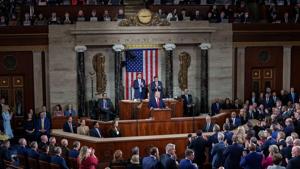
Trump calls out Minnesota in State of the Union, prompting Democrat protests

Parents could gain access to school discipline evidence under proposed bill
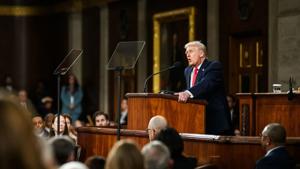
State of the Union highlighted political fracture between Democrats, Trump
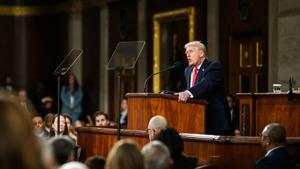
Illinois Democrats dispute Trump statements during State of the Union

Illinois Quick Hits: State taxpayers to help restore historic Chicago hotel
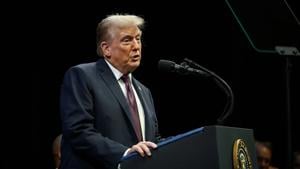
Trump moves ahead with tariff plans after Supreme Court ruling

Illinois racial wealth gap among largest in country

Judge: Right to sue under IL biometrics law too important to end suit vs Meta

Executive Committee: Tension Rises as Republican Whip Removed from Panel

Ad-Hoc Committee: County Stripped of Power to Regulate Motor Races, Must Drop Solicitor Fees Due to State Statutes

Commission Overrides Staff Recommendation, Approves Manhattan Township Barn Expansion

Chicago could owe $100M+ in refunds for excessive city tickets