Report: U.S. added $1.2 trillion to national debt in six months
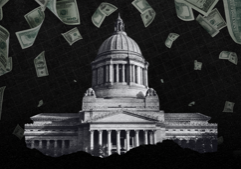
The U.S. government added $1.2 trillion to the national debt over the past six months, borrowing $163 billion during March alone, the Congressional Budget Office reports.
At the current rate of borrowing, federal deficits are on track to top $2 trillion by October, the end of the current fiscal year.
But the president’s recent budget request – which lawmakers will use as a blueprint for the 12 fiscal year 2027 appropriations bills – calls for $2.1 trillion in discretionary spending alone, without touching entitlement program spending.
“Both Congress and the President continue to ignore the urgent need to get our borrowing under control,” Maya MacGuineas, president of the Committee for a Responsible Federal Budget, said in a statement.
“As lawmakers consider the budget process for the upcoming fiscal year, we hope that they come up with plans to reduce deficits from the too-high 6% of GDP to a more sustainable 3% of GDP; secure our nation’s ailing trust funds for Social Security, Medicare, and highways; and ultimately fix the broken process that got us into this mess.”
Though CBO’s latest deficit estimate is $139 billion less than the amount recorded during the same time period last year, that is in large part due to increased tariff revenues and individual income or payroll taxes.
Federal spending, on the other hand, increased by $84 billion, mostly due to growing entitlement programs like Social Security, Medicare and Medicaid.
The government also collected 28% less in taxes from U.S. corporations over the last six months due to Republicans’ budget reconciliation bill – the “One Big Beautiful Bill” – which expanded deductions for certain corporate investments.
Yet despite repeated warnings from budget watchdogs, congressional action on soaring federal deficits and the over $39 trillion national debt ultimately hasn’t progressed past vigorous handwaving from a small group of Republicans.
Although the OBBB reduced federal spending by roughly $1 trillion over the next decade via entitlement program reforms, the savings only offset about a third of the bill’s $3.4 trillion ten-year cost.
Congress then sidestepped the automatic spending cuts to Medicare and other programs that are triggered by unpaid-for federal borrowing by wiping the Pay-As-You-Go (PAYGO) scorecard in November.
As House lawmakers return next week to begin hashing out appropriations funding and a second budget reconciliation bill, CRFB, the Cato Institute, and other budget watchdog groups are urging them to find at least $600 billion in savings.






Sunny
Latest News Stories
Forecasters split on midterms, but a sweep is possible, maybe likely

Group behind tariff challenge calls Pritzker’s refund check demand irrational

Abbott: Flooding worse in Kerrville this year than in 2025
House Oversight to examine Medicare fraud, Smithsonian, DEI policies

Judge delays merger between Paramount and Warner Bros.

Illinois news in brief: Ammons House investigation hearing set; IDOT requests public feedback; Duckworth reacts to service member’s death

Text messages aren’t ‘phone calls’ that can trigger class actions: Appeals panel
Darline Graham will file for full term succeeding brother Lindsey

Election 2026: Prisoners in historic release by Cooper consistent in pattern
Secretary of State says insurance reforms are not political
Details show speaker delayed lawmaker misconduct action

Man suspected of using ‘incendiary device’ arrested outside NYC immigration court

Gubernatorial candidate calls for leadership overhaul, prison reforms

U.S. Supreme Court to hear Alaska plane confiscation case