

Competency evaluation delays federal case against suspect in Zarutska’s death
DeCarlos Brown Jr., the suspect in the stabbing death of Iryna Zarutska on a Charlotte light rail, says he has been misdiagnosed with schizophrenia and lawmen refuse to investigate his contention “someone has full access to my body, and they are controlling me wrongfully.”
Judge Kenneth Bell, in the U.S. District Court for the Western District of North Carolina, instead on Tuesday said a “preponderance of evidence” shows Brown is suffering from a mental disease and unfit for his federal trial for at least four months. The North Carolina murder case against him already is in a six months wait until an Oct. 27 hearing.
Bell ordered Brown into the custody of the attorney general for hospitalization and “treatment in a suitable facility and for further evaluation to determine whether the defendant can attain, or has attained, competency to proceed.”
Russ Ferguson, federal prosecuting attorney, agreed to the competency hearing request by Brown’s lawyers.
Zarutska, 23, died Aug. 22 by stabbing. Chilling video released by the Charlotte-Mecklenburg Police Department of the Charlotte Area Transit System surveillance footage shows Brown and Zarutska in the last moments of her life.
Brown faces a first-degree murder charge from the state, and a federal charge of committing an act causing death on a mass transportation system. He had been arrested 14 times previously including for assault, armed robbery and felony larceny.
Zarutska and her family had fled worn-torn Ukraine.
The tragedy became national news with the video release. It’s become a campaign point in the U.S. Senate race between Democrat Roy Cooper and Republican Michael Whatley, focal point for legislation on the state and federal levels, even part of an infamous blunder for U.S. Rep. Deborah Ross, D-N.C.
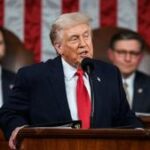
And in February it was part of the 108-minute State of the Union address from second-term Republican President Donald Trump.
“Last summer, 23-year-old Iryna was riding home on the train when a deranged monster, who had been arrested over a dozen times and was released through no cash bail, stood up and viciously slashed a knife through her neck and body,” Trump said, acknowledging her mother Anya as his guest in the gallery. “No one will ever forget – there were people on that train, no one will ever forget the expression of terror on Iryna’s face as she looked up at her attacker in the last seconds of her life. She died instantly.
“She had escaped a brutal war only to be slain by a hardened criminal set free to kill in America, came in through open borders.”
There’s been no evidence Brown has ever been out of America, much less entered at the border. He was born in Charlotte and graduated from West Charlotte High.
“We have made incredible strides, yet dangerous repeat offenders continue to be released by pro-crime Democrat politicians again and again,” Trump said.
He told her mother, members of Congress and the nation, “Mrs. Zarutska, tonight, I promise you we will ensure justice for your magnificent daughter Iryna. I’m asking this Congress to pass tough legislation to ensure that violent and dangerous repeat offenders are put behind bars and, importantly, that they stay there.”
His release in January by a magistrate triggered the General Assembly in Raleigh to create Iryna’s Law. Multiple congressmen also called for her removal as an adjudicator.
Iryna’s Law requires consideration of full criminal history by judges and magistrates before setting a suspect’s pretrial release conditions. Violent offenses draw stricter conditions.
There is an expected increase in mental health evaluations coming because of the new law.
The law ended the unwritten moratorium on the death penalty as well. Those convicted could be eligible for punishment by death should the aggravating factor of a crime being on public transportation be involved.
Death penalty appeals will no longer wait indefinitely; rather, they must be heard within two years of filing. Continuances are only in the case of extenuating circumstances.



Sunny
Latest News Stories

Will County Finance Committee Hits Impasse on 2025 Tax Levy, Postpones Budget Votes

Federal Lobbyists Brief Will County on Government Shutdown, Warn of SNAP and TSA Disruptions

Will County Committee Advances Gougar Road Bridge Project with Over $540,000 in Agreements

Commission Approves Mokena-Area Garage Variance Over Village’s Objection

Residents Clash on School Funding, Citing Low Tax Rate vs. “Wasteful” Spending at Committee Meeting
JJC Receives Surprise $1.9 Million from IRS Employee Retention Credit
JJC Advances ERP Modernization with New Vendor and Two-Year Budget

Will County Committee Shapes 2026 Legislative Agendas on Housing, Energy, and Health

JJC Authorizes Land Buy for Grundy County Expansion, Secures Site in Morris

Commission Grants Green Garden Solar Farm Project Variance Extension

Peotone School Committee: Issue $4.85M Bond to Cover Deficit, Maxing Out Debt Capacity

Will County Committee Advances Phased Takeover of Central Will Dial-A-Ride Service


