
Washington high court: State will strip gun rights after two DUIs
The Washington State Supreme Court has ruled that individuals convicted of two driving under the influence offenses within seven years will be stripped of their Second Amendment rights, which the dissenting opinion blasted as a blatant violation of the U.S. Constitution.
In a split 5-4 decision filed Thursday in Geoffrey G. McLellan and Jackson W. Holloway v. Nicholas W. Brown, the court reversed a lower court ruling and held that the Washington Legislature acted within its constitutional authority by categorically disarming repeat drunk drivers in the interest of public safety.
Under Thursday’s ruling, Washingtonians convicted of a second DUI or related crime within seven years cannot own or possess a firearm under a 2023 state statute.
Firearm rights can only be restored after a petition is filed following five consecutive years of “law-abiding behavior in the community.”
Respondents Geoffrey McLellan and Jackson Holloway challenged the law after their applications for concealed carry permits were denied following multiple DUI convictions.
They argued that a blanket, categorical ban on their fundamental right to self-defense, absent any history of weapon misuse or physical violence, violated the Second Amendment.
A Spokane County Superior Court judge initially allowed their case to move forward, citing the U.S. Supreme Court’s landmark United States v. Rahimi precedent. The trial court ruled that factual development was necessary to determine whether these specific men posed a “credible threat to public safety.”
The state appealed, arguing that because the limitation follows criminal convictions, the state does not need to prove individualized dangerousness.
Writing for the majority, Justice Steven González ruled that under the historical framework established by the U.S. Supreme Court in N.Y. State Rifle & Pistol Ass’n v. Bruen, the state met its burden to prove the restriction aligns with America’s “historical tradition of firearm regulation.”
Because modern regulations do not require a perfect “historical twin” to pass constitutional muster, the majority pointed to three enduring historical principles: the tradition of disarming groups deemed dangerous by legislatures, the tradition of restricting firearm possession for serious crimes, and founding-era regulations restricting firearm use by presently intoxicated individuals.
González concluded that taken together, the Legislature was within its rights to address a “uniquely modern problem” by linking chronic alcohol abuse behind the wheel with a statistical risk of future violence.
“Consequently, when the State proves beyond a reasonable doubt that a person has driven under the influence, twice within seven years, our legislature may temporarily disarm them to prevent future violent behavior,” González wrote.
Joining González in the majority ruling were Justices Debra Stephens, Barbara Madsen, Colleen Melody and Raquel Montoya-Lewis. Madsen retired in April and was replaced by Theodore Angelis.
Dissent blasts overstep
The ruling provoked a sharp dissent from Justice G. Helen Whitener, who warned that the majority had overreached by using speculative statistical correlations to strip citizens of fundamental liberties.
Whitener emphasized that individual self-defense is the “central component” of the Second Amendment, and under federal precedent, disarmament requires a clear threat of physical violence.
Because a DUI lacks an intent requirement to cause physical harm, she argued it cannot be categorically defined as a crime of violence.
“The State is depriving individuals of their Second Amendment constitutional right to bear arms before they commit a violent crime on the assumption that one day they might,” Whitener wrote, calling the 2023 state law an unconstitutional “outlier.”
“It violates the respondents’ constitutional rights under the Second Amendment to the U.S. Constitution,” she wrote.
Joining Whitener in the dissenting opinion were Justices Charles Johnson, Sheryl Gordon McCloud and Salvador Mungia.



Chance Showers And Thunderstorms then Showers And Thunderstorms Likely
Latest News Stories
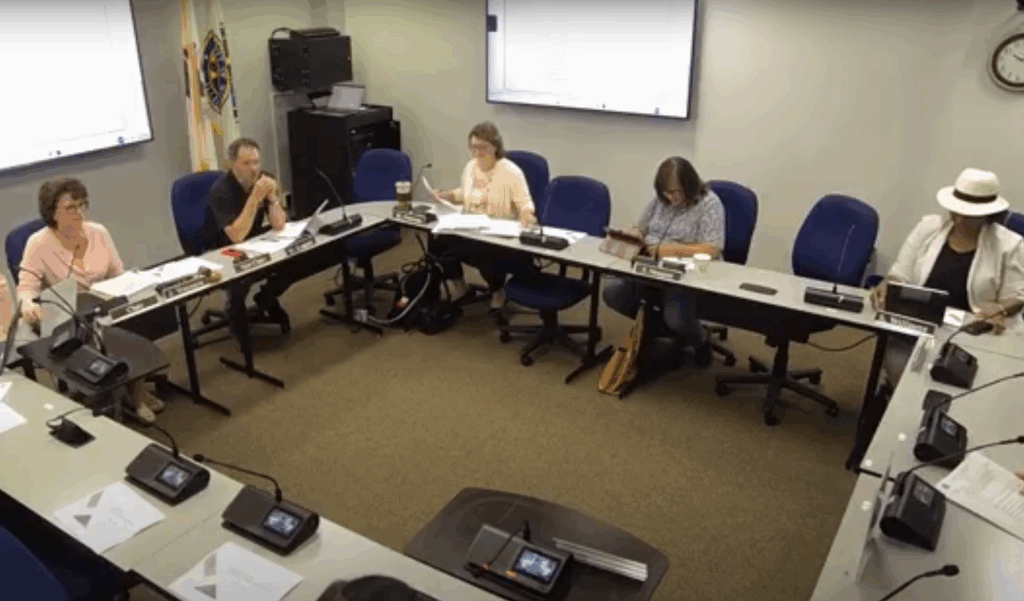
Will County Committee Forwards Overhauled Purchasing Code Amid Debate on Local Contractor Preference
Finance Officials Clarify How Will County Tracks Assets, From Vehicles to Desks
Will County Treasurer Confirms Free Online Tax Payment Option, Warns Against High Credit Card Fees
Committee Highlights ‘Lack of Teeth’ in County Code Enforcement Process
Committee Highlights ‘Lack of Teeth’ in County Code Enforcement Process

Meeting Briefs: Will County Ad-Hoc Ordinance Review Committee for July 22, 2025
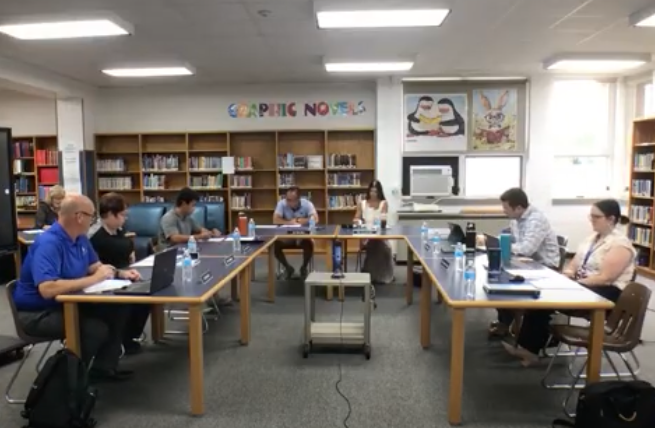
Peotone School Board Approves Sweeping Personnel Changes, Fills Key Vacancies
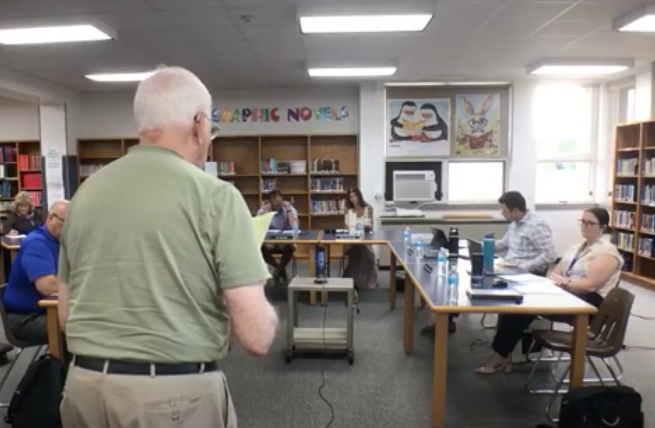
Resident Alleges Financial Mismanagement, Underused Buildings at Peotone Board Meeting
Meeting Briefs: Peotone School District 207-U for July 21, 2025
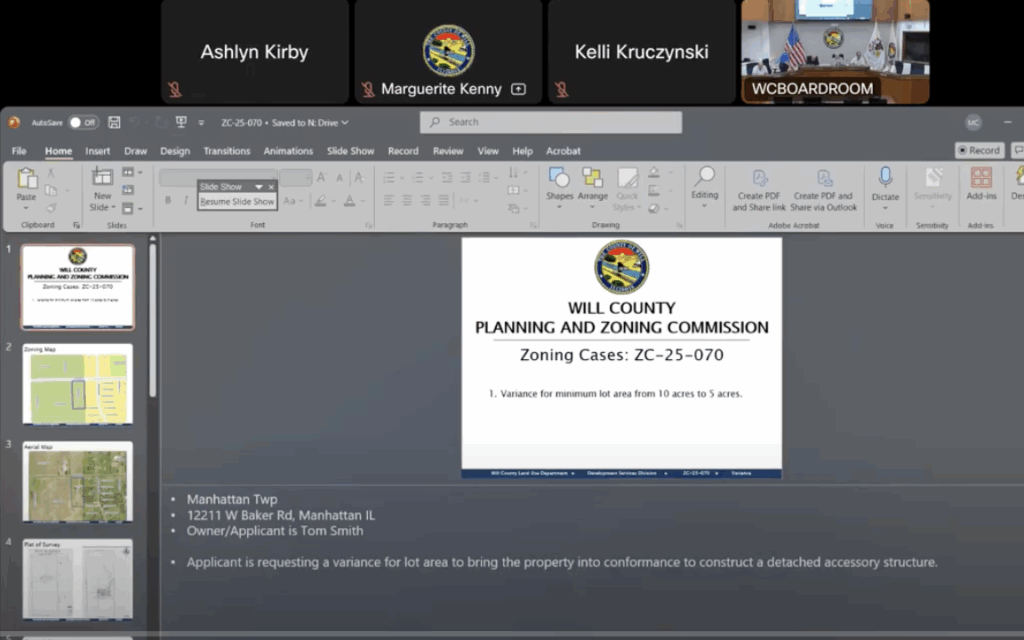
Crete Township Wins Approval for New Digital Sign at Community Center
Will County Planners OK Oversized Garage Near Naperville, Overriding Staff Recommendation
Green Garden Landscaping Business Gains Permit Amid Strong Neighbor Support