

America 250: National Archives bringing founding documents to cities nationwide
Multiple events are being held in the nation’s capital on July 4 celebrating the 250th anniversary of the United States. Not everyone will be able to travel there or view founding documents on display at the National Archives and national museums.
In an effort to bring Independence celebrations nationwide, the National Archives is transporting founding documents to major museums nationwide through the Freedom Plane National Archives Tour.
The traveling exhibit is transporting nine original founding documents to eight U.S. cities.
“While America looks different than it did 250 years ago, the principles enshrined in these documents still guide our lives and continue to shape our country,” the National Archives states. “To preserve our American history for another 250 years,” it’s bringing the exhibition to the American people to celebrate the U.S. Semiquincentennial, it says.
Inspired by the Bicentennial Freedom Train, which brought historic documents to Americans in 48 states from 1975 to 1976, this year’s exhibit is being transported by a Boeing 737.
The first stop was Kansas City, Missouri, where Americans stood in lines for several hours waiting to see the documents. The second was Atlanta, where lines reached as long as six hours, staff at the Houston Museum of Natural Science told The Center Square. The third stop was Los Angeles; the fourth was Houston, where lines averaged roughly one hour. For weeks, 2,000 tickets were sold out at the HMNS every day. It was the only location in the southwest for Americans to view the documents.
The exhibit is currently on display at the History Colorado Center in Denver through June 14. The next stop is the Museum of Miami, where the documents will be on display from June 20 through July 5. Floridians will have the opportunity to celebrate Independence Day observing key founding documents.
The final stops will be at the Henry Ford Museum of American Innovation in Dearborn, Michigan, from July 9 through July 26, and the Museum of History and Industry in Seattle from July 30 through August 16.
The nine original, historic documents from the National Archives – traveling together for the first time in history – include:
Articles of Association, 1774
In September 1774, the leaders of the 13 colonies met in Philadelphia to address their grievances with the British government. On Oct. 20, 1774, the First Continental Congress adopted the Articles of Association, “a nonimportation, nonexportation, and nonconsumption agreement between the colonies urging all colonists to boycott British goods,” the National Archives explains. It’s the first documented coordinated U.S. policy statement. On display is the document, which shows 53 signatures.
Oaths of Allegiance signed by George Washington, Alexander Hamilton and Aaron Burr
During the harsh winter of 1777-1778 when troops led by George Washington were encamped at Valley Forge, Penn., and near death, the Continental Congress instructed all Continental Army officers to swear an Oath of Allegiance. They pledged allegiance to “the United States of America, to be Free, Independent and Sovereign States, and declare that the people thereof owe no allegiance or obedience to George the Third, King of Great Britain.”
The oaths were signed and witnessed. Approximately 1,200 are preserved at the National Archives. On display are those signed by Washington, Hamilton and Burr.
Treaty of Paris, 1783
After eight years of war, the American colonists defeated the British Army and ended British rule in the United States forever. The leaders of the new United States of America and Great Britain signed the Treaty of Paris on Sept. 3, 1783, formally recognizing the United States as an independent nation.
The treaty was negotiated by Americans John Adams, Benjamin Franklin and John Jay. The treaty also delineated U.S. land boundaries, allowing for U.S. westward expansion.
The last page is on display, bearing the signatures of the American negotiators and the signature of David Hartley, representing Great Britain.
David Brearley’s Secret Printing of the U.S. Constitution, 1787
In 1787, a Constitutional Convention was called to address challenges the nation was facing. Delegates met at Independence Hall in Philadelphia and replaced the Articles of Confederation with a new system of government established by the U.S. Constitution.
They were given two printings of a draft that would become the U.S. Constitution. The document on display belonged to New Jersey delegate David Brearley Jr., which bears his handwritten notes.
Document of votes of state delegates approving the U.S. Constitution, 1787
For four months, convention delegates discussed what they thought their new government should look like. “Their debates, arguments, and resolutions are reflected in the convention’s voting records,” the National Archives explains. The page on display is the text of the final vote for the final text of the U.S. Constitution.
The document was ratified because congress couldn’t reach a quorum. Only 11 of 13 states voted because Rhode Island didn’t send delegates and two of New York’s three delegates left by the time of the vote, the National Archives notes.
The U.S. Constitution was ratified on June 21, 1788, and went into effect March 4, 1789.
U.S. Senate markup of the Bill of Rights, 1789
After the Constitution was ratified by the states, U.S. Rep. James Madison, who would later become the fourth president, proposed a series of amendments, which he authored.
The document on display is the U.S. Senate’s “markup” of what became the Bill of Rights. On Sept. 25, 1789, Congress passed 12 amendments. They were sent to the states for approval. Two years later, only 10 were ratified: Articles 3 through 12.
William Stone engraving of the Declaration of Independence, 1823
Decades after the Declaration of Independence was signed, Secretary of State John Quincy Adams, who would later become the sixth president, commissioned engraver William J. Stone to make an exact replica of the document. Roughly 200 copies were produced by 1823. Less than 50 are known to still exist, including the one on exhibit on loan from David M. Rubenstein.




Showers And Thunderstorms Likely
Latest News Stories
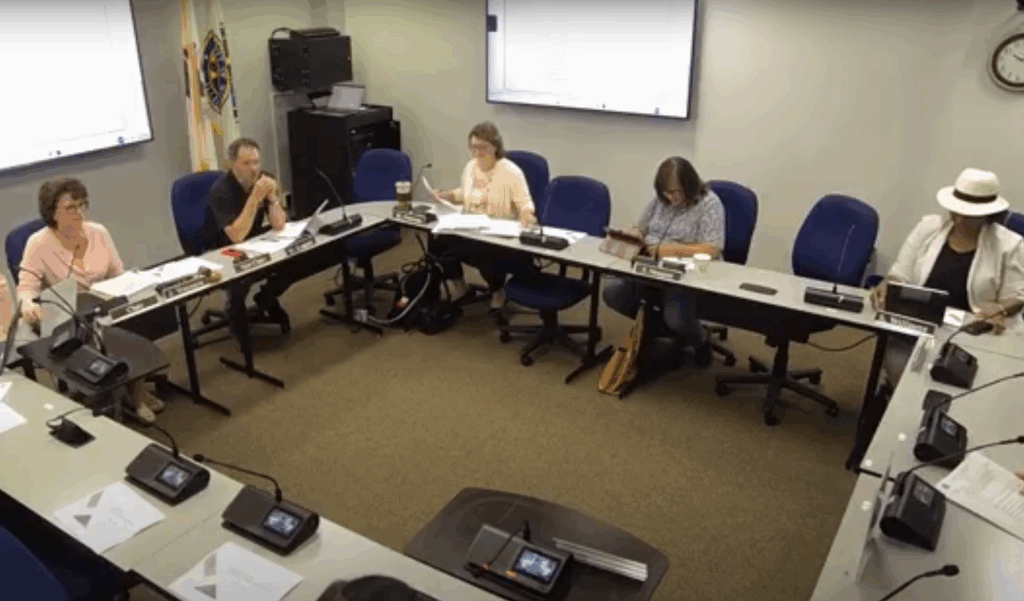
Will County Treasurer Confirms Free Online Tax Payment Option, Warns Against High Credit Card Fees
Committee Highlights ‘Lack of Teeth’ in County Code Enforcement Process
Committee Highlights ‘Lack of Teeth’ in County Code Enforcement Process

Meeting Briefs: Will County Ad-Hoc Ordinance Review Committee for July 22, 2025
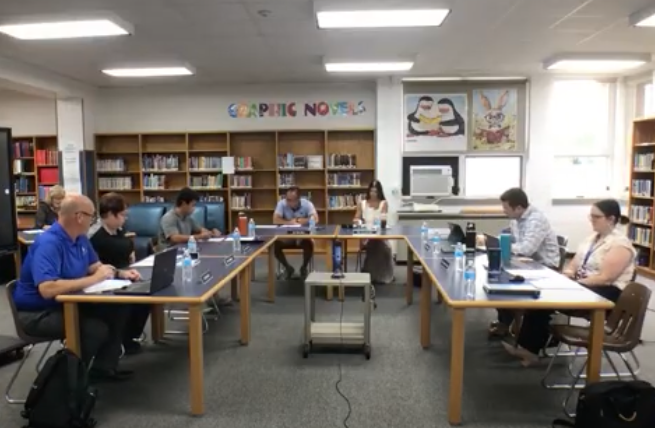
Peotone School Board Approves Sweeping Personnel Changes, Fills Key Vacancies
Resident Alleges Financial Mismanagement, Underused Buildings at Peotone Board Meeting
Meeting Briefs: Peotone School District 207-U for July 21, 2025
Crete Township Wins Approval for New Digital Sign at Community Center
Will County Planners OK Oversized Garage Near Naperville, Overriding Staff Recommendation
Green Garden Landscaping Business Gains Permit Amid Strong Neighbor Support
Meeting Briefs: Will County Planning and Zoning Commission for July 15, 2025

Frankfort Approves ‘Whisk & Flame’ Culinary Studio, Slashes Parking Requirement for Downtown Property