Illegal immigrants across U.S. get financial aid for college
(The Center Square) – State financial aid continues to expand within higher education, allowing money to go to eligible illegal immigrant students.
The increased spending is heating up debate over who should receive state taxpayers-funded higher education benefits.
Currently, around 21 states and the District of Columbia offer in-state tuition eligibility to certain illegal immigrant students, and 18 states and D.C. provide access to state financial aid programs, according to Higher Ed immigration.
For example, at a University of California school, the base in-state tuition is roughly $15,000 annually. For nonresidents, the base tuition is over $31,000, which means eligible illegal immigrants are essentially receiving $16,000 a year in aid.
The policies are part of a broader effort that has expanded over the past two decades to increase college access for immigrant students, including recipients of the Deferred Action for Childhood Arrivals program. DACA provides temporary protection from deportation and renewable work permits to certain immigrants who were brought to the U.S. as children.
More than 900,000 of these individuals are estimated to be eligible for DACA. In addition, over 500,000 illegal immigrant students are enrolled in U.S. colleges and universities.
Critics argue that the programs impose costs on taxpayers and divert limited higher education resources away from U.S. citizens.
A 2025 report by the Federation for American Immigration Reform estimated that education-related expenses associated with illegal immigration total $5.7 billion nationally.
Ira Mehlman, media director for FAIR, pointed to the 1996 Illegal Immigration Reform and Immigrant Responsibility Act, which specifically created a provision requiring any state offering in-state tuition rates to illegal immigrants to make the same benefit available to U.S. citizen students, regardless of which state they happen to live in.
States keep “finding new ways to provide benefits to illegal aliens,” Mehlman told The Center Square. “A lot of American students are being shut out of those state universities because those seats are now occupied by illegal aliens, and then taxpayers are being forced to pay for it.”
Texas pioneered this loophole that conditioned in-state tuition on having completed three years of high school in the state rather than looking at immigration status, Mehlman added.
Texas became the first state to adopt such a policy in 2001 through what became known as the Texas Dream Act.
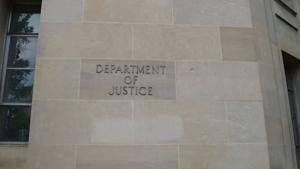
In June 2025, the U.S. Department of Justice sued Texas, arguing the program violated federal law. A federal court subsequently blocked enforcement of the Texas Dream Act. The lawsuit is currently on appeal at the U.S. District Court for the Northern District of Texas.
Advocacy groups have sought to intervene, arguing the case was resolved without sufficient judicial review.
In Texas, state records show that colleges and universities distributed $635.2 million in state-funded gift aid to 133,989 students in 2023. According to a report by Every Texan, 3,566 Texas Dream Act students received $17.5 million in state-supported grants, accounting for less than 3% of total state gift aid distributed that year.
The taxpayer cost associated with the Development, Relief and Education for Alien Minors or DREAM Act program and others varies by state.
Lance Izumi, senior director of education studies at Pasadena-based Pacific Research Institute, argued that taxpayer-funded aid for illegal immigrant students raises concerns about fairness and state spending priorities.
“Government financial aid to illegal immigrant students is wrong on three counts: fairness, fiscal policy and planning for higher education’s future,” Izumi told The Center Square.
Izumi noted that American students collectively hold roughly $1.8 trillion in student loan debt and argued that taxpayer-funded scholarships for illegal immigrant students may reduce resources available for citizens.
“It is also not fair to give lower in-state tuition to an illegal immigrant who broke the law to enter this country, while denying that lower tuition to a law-abiding American citizen in another state,” he said.
Izumi also questioned whether colleges facing enrollment declines have expanded outreach to Illegal immigrant students, partly to offset falling student populations.
“In reality, pushing illegal-immigrant enrollment is a way for adults in higher education to save their jobs by finding a new pool of potential students rather than addressing the core reasons for falling college enrollment: politicization of courses, economic irrelevance of many courses and majors, and deteriorating academic rigor,” Izumi said.
Kassandra Gonzalez, senior attorney with the Texas Civil Rights Project’s Beyond Borders Program, working on the Texas lawsuit, told The Center Square that the issue is complicated because there is a distinction between immigrants who are “lawfully present” and those who have “lawful status.”
“The misinformation and the frankly wrong narrative of this idea that dreamers or students who are able to take higher education with the Dream Act are taking opportunities from others is not the reality of economics,” Gonzalez said.
Immigrant students contribute to local economies and give back to their communities, Gonzalez added.
“I think the fiction that we hear in the immigration debate in general, like, ‘Oh, well, they’re taking something from someone else,’ I always go back to, well, this idea that they don’t pay taxes, or that these students aren’t contributing. It’s like there’s actual data that they are giving back to the economy of Texas,” Gonzalez added.
According to Every Texan, immigrants in Texas who hold bachelor’s degrees earn substantially higher incomes than those with only high school diplomas. The organization estimates that the higher earnings associated with a college degree generate additional state and local tax revenue.
The Every Texan report estimated that Texas Dream Act students enrolled in 2023 could ultimately generate more than $43 million in additional annual state and local tax revenue through higher educational attainment and earnings.
According to the California Budget and Policy Center, illegal immigrants paid an estimated $8.5 billion in state and local taxes in 2022.
That same year, California residents paid an average of $3,734.82 in state income taxes. With roughly 19.6 million taxpaying residents, that equates to about $73.2 billion in state income tax revenue, not including sales taxes or higher-income tax brackets.
Mehlman told The Center Square that tax payments do not place illegal immigrants with citizens when it comes to public benefits.
Just because illegal immigrants pay taxes, “that doesn’t put them on an equal footing with legal residents and citizens,” Mehlman said.
Along with Texas, several other states have expanded access to higher-education assistance in recent years.
California, Colorado, Connecticut, the District of Columbia, Hawaii, Illinois, Maryland, Massachusetts, Minnesota, Nevada, New Jersey, New Mexico, New York, Oregon, Rhode Island, Utah, Vermont, Virginia and Washington are among the jurisdictions that provide broad access to state financial aid and grant programs for illegal immigrant students who meet applicable eligibility requirements.
In New York, lawmakers enacted the José Peralta New York State DREAM Act, expanding access to state financial aid for eligible illegal immigrant students. The DREAM Act allows immigrant students to apply for state financial aid for undergraduate or graduate study at eligible colleges and universities.
The state’s 2019-20 budget, when it was first enacted, included $27 million to support implementation of the DREAM Act.
New York is home to an estimated 21,250 Deferred Action for Childhood Arrivals, or DACA, recipients.
Through the DREAM Act, eligible illegal immigrant students may receive awards through the state’s Tuition Assistance Program, which provides up to $5,665 annually.
For the 2025–26 budget, TAP alone provides more than $698 million annually to roughly 255,000 New York students. DREAM Act recipients are funded through these broader aid programs rather than through a standalone DREAM Act appropriation.
A New York City fact sheet reported that individuals eligible for the DREAM Act contributed an estimated $1.3 billion to the city’s gross domestic product in 2017 and earned more than $873 million collectively, with average annual earnings of about $18,600.
In Illinois, access to state financial aid through House Bill 460 was signed into law by the Gov. J.B. Pritzker in December 2025.
The bill added in the Retention of Illinois Students and Equity Act, allowing eligible illegal immigrant students to apply for state-administered financial aid programs regardless of immigration status.
The change made illegal immigrant students eligible for state programs such as the Monetary Award Program grant, which provides need-based financial assistance for higher education.
Illinois allocated over $700 million for MAP grants during the 2024 fiscal year.
The states of Alabama, Georgia and South Carolina prohibit enrollment of illegal immigrant students into state financial aid programs, according to Higher Ed Immigration.
The Center Square reached out to the American Immigration Council and the U.S. Department of Education for comment but did not receive a response.






Slight Chance Rain Showers then Partly Sunny
Latest News Stories

WATCH: Trump, Netanyahu inch closer to peace plan for Gaza
WATCH: No deal in talks to avoid shutdown as parties blame each other

WATCH: Pritzker says 100 military troops expected in Chicago, doesn’t have details

DEA surge against cartel turns up fentanyl, millions in cash, guns

Illinois quick hits: Woman charged in Metro East murder; taxpayer funded homeowner relief fund announced

WATCH: Former state lawmakers endorse, donors support GOP candidate Dabrowski

Louisiana native awaits Senate confrmation

Portland protests Trump’s plan to send federal troops to protect ICE facilities
With potential mass transit service cuts looming, IL legislators seek reforms

Trump asks Supreme Court to review birthright citizenship case again

Trump’s limited drug tariffs might not bring back U.S. manufacturing
Government shutdown deadline days away, but Dems don’t budge on demands