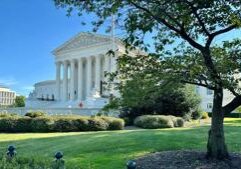
Supreme Court allows drug users to keep guns
The U.S. Supreme Court, in a unanimous decision on Thursday, agreed that a regular drug user cannot be stripped of the right to possess a firearm.
The case, Hemani v. U.S., focuses on Texas man Ali Hemani, who was prosecuted by federal authorities after the FBI found marijuana, cocaine and a pistol in his home. Under federal law, an “unlawful drug user” can be stripped of their right to possess a firearm.
Justices on the high court said the government cannot prosecute people who are unlawful drug users. Lawyers for the federal government said laws against habitual drug users are similar to founding-era laws against habitual drunkards.
Justices on the court did not agree. Justice Neil Gorsuch pointed to marijuana’s varying legal status in states across the country.
“The Department of Justice has directed federal prosecutors to curtail enforcement efforts against marijuana users, most States have legalized marijuana use to some degree, and the government recently moved some marijuana products from Schedule I to Schedule III,” Gorsuch wrote in the court’s majority opinion.
While the court sided with Hemani, Gorsuch explained the decision is still narrow. He said the court’s opinion does not address people who are currently intoxicated on illegal substances and possessing a firearm as long as prosecutors can prove that person is dangerous.
“The government could bring a prosecution under §922(g)(3) accompanied by individualized proof that the defendant’s drug use renders him a danger to himself or others, or proof that a certain drug always renders its users dangerous,” Gorsuch wrote.
Amy Swearer, senior legal fellow at Advancing American Freedom and a Second Amendment legal expert, said the decision aligns with the U.S. Constitution.
“The Court’s decision today affirms one of the most basic tenets of the Second Amendment – the government may only disarm people whom it can prove are violent and unusually dangerous, based on individualized proof presented in legal proceedings,” Swearer said in a statement provided to The Center Square. “It cannot just broadly designate entire groups of people as dangerous and disqualify them from their right to keep and bear arms. Gun control activists will inevitably claim that the sky is falling. It isn’t. This federal statute is almost never the sole avenue the federal government has to disarm a truly dangerous person. Even in this case, it could have prosecuted Hemani for illegal possession of controlled substances. And the opinion today still leaves ample room for the government to disarm addicts or prosecute those who possess arms while actively intoxicated.”
Justice Samuel Alito agreed in the court’s judgement, but maintained that federal law should still restrict mentally ill people and felons from possessing a firearm. Justice Elena Kagan joined Alito’s opinion.
“Nothing in the opinion of the Court should be read to cast doubt on the constitutionality of other provisions of §922(g), such as §§922(g)(1) and (4), the ‘prohibitions on the possession of firearms by felons and the mentally ill,'” Alito wrote.
The high court agreed with a lower court, finding Hemani can keep possession of firearms despite being found with drugs. The ruling case could extend to many other people with unlawful drug use convictions across the country.




Mostly Sunny
Latest News Stories

Ruling: Illinois Supreme Court likely overstepped in ousting of Cook County judge

Illinois passes law to restrict new federal migrant detention centers

Alcohol tax amendments may be unconstitutional

Illinois quick hits: Lawsuit filed over drunk driving deal involving noncitizen

Illinois to regulate intoxicating hemp products, loosen up on cannabis

Nevada gubernatorial candidates clash over Trump’s policies

Feds cut funding for Hawaii Medicaid fraud unit
Two Democrats, two Republicans seek attorney general seat
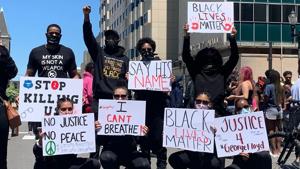
Democrats condemn Minnesota GOP convention tribute to Derek Chauvin

Questions loom after data center legislation stalls

Feds charge 14 in Ohio fraud schemes, totaling $50M

U.S. Supreme Court rules in favor of generic drug patents

Former HHS secretary tied to company that could benefit from CMS screening proposal
Supreme Court rules against Verizon, AT&T over privacy penalties