Ohio’s social media parental consent law allowed to go forward
Calling it a win for families, Ohio’s new attorney general Friday praised a federal appeals court ruling that allows the state’s social media age verification law to take effect after sitting for more than two years.
Attorney General Andy Wilson praised the ruling that came down Thursday from a three-judge panel at the Sixth Circuit Court of Appeals in Cincinnati, ending an injunction.
Social media, gaming and other internet app companies will now be required to verify a user’s age and get parental consent for children under 16 years old to use a platform.
“This ruling is a win for Ohio families,” Wilson said in a statement. ““The court agreed that parents – not social media companies – should get a say in what kids see online. We have an obligation to keep our children safe, and today, the most dangerous place for our kids is the internet.”
In a statement, NetChoice – a trade group representing apps like Facebook, Instagram and TikTok – continued to call Ohio’s law unconstitutional and believes it will eventually be struck down.
“An unconstitutional law protects no one, and we remain focused on ensuring the First Amendment rights of Ohioans are protected,” Paul Taske, director of the NetChoice Litigation Center, said.
NetChoice also said the ruling breaks with other federal rulings across the country that have blocked similar laws in Arkansas, Louisiana and Georgia.
“Parents must remain in the drivers’ seat for parenting decisions. Ohio cannot step in and make those decisions in the first instance. But Ohio’s digital-ID law discards that constitutionally required dynamic. By requiring parents to override the government’s determination, Ohio has violated bedrock First Amendment principles,” Taske said. “We are currently reviewing our options on how best to move forward.”
In January 2024, an Ohio law that required social media operators and sites that sell things or provide a service to children to get parental consent before establishing accounts for children under 16 was supposed to take effect.
NetChoice sued and won an injunction.
Chief U.S. District Judge for the Southern District of Ohio Algenon Marbley said in the ruling establishing the injunction that the law would bring financial harm to social media companies for compliance, noting those companies would face significant costs.
He also said the law’s language invited lawsuits by being “capacious and subjective.”
The federal appeals court panel disagreed.
“NetChoice has failed to establish that the act is facially unconstitutional,” the panel held.
It reversed a district court’s ruling and sent the case back to the district court with instructions to enter a judgment in favor of Ohio.
The state argued that the law was a “legitimate exercise of the state’s prerogative to regulate contracting with minors,” and did not violate the First Amendment right to free speech.
The three-judge panel in its decision held that, “For young people, who are at a pivotal stage in cognitive development, social media has been linked to issues with sleep, anxiety, body dysmorphia, depression, and bullying.”
NetChoice claimed the law was unconstitutional because it “imposes blanket parental-consent requirements for minors to access and engage in all manner of protected speech across a wide swath of websites,”
One of the judges in the three-judge panel dissented.
“The First Amendment interests of NetChoice overlap neatly with the First Amendment interests of its members’ minor users,” Appeals Court judge Kevin Ritz wrote in a dissent.






Sunny
Latest News Stories
Judge denies Trump DOJ request to unseal Ghislaine Maxwell grand jury records

FAA partners with college to train next generation air traffic controllers
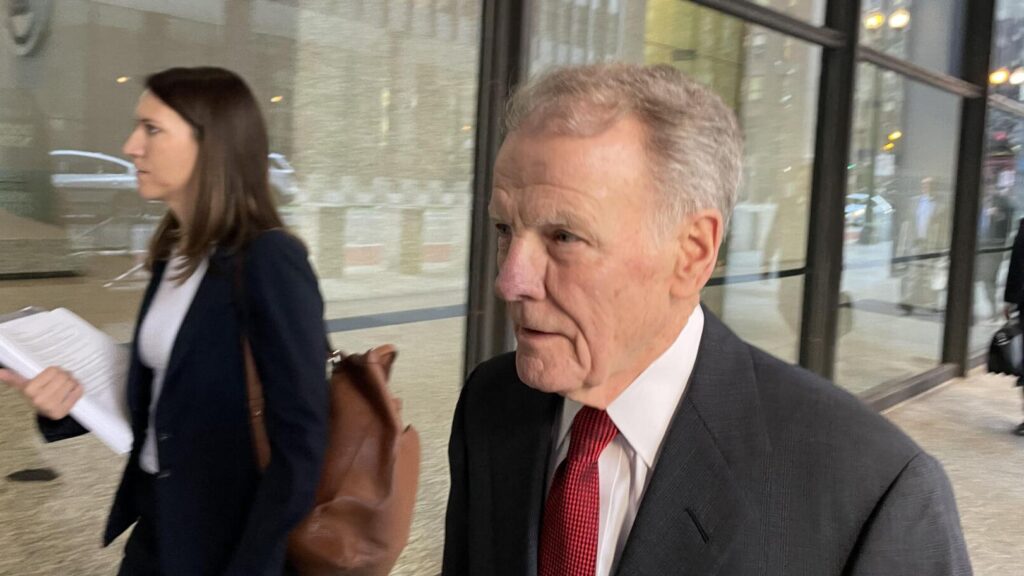
Judge denies Madigan’s motion to remain free pending appeal

The U.S. Department of Education launches nationwide tour

Trump takes aim at Chicago crime, no-cash bail while singling out Pritzker
Burrows: Only thing standing in the way of disaster relief are missing Democrats

Trump confirms Nvidia chip agreement

States challenge federal report promoting coal plants

U.S. Supreme Court could rule on Texas lawsuits brought in Democratic-led state courts

WATCH: Illinois In Focus Daily | Monday Aug. 11th, 2025

Illinois quick hits: Judge denies Madigan’s motion; legislator urges action on DCFS interns

Everyday Economics: CPI takes center stage as tariff-driven price pressures mount