Feds freeze $1B to California, Minnesota Medicaid
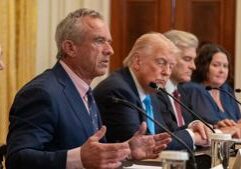
The Trump administration is pausing more than $1 billion in Medicaid payments to California and Minnesota, U.S. Health and Human Services Secretary Robert F. Kennedy Jr. said Tuesday.
The administration froze more than $867 million in Medicaid funds from California and more than $200 million in Minnesota, Kennedy said.
“They violated the social contract that makes this country strong and makes our democracy function,” Kennedy said at a news conference.
Kennedy said California and Minnesota can get those funds back if they provide documentary proof that the payments are legitimate. The administration used artificial intelligence, advanced analytics and traditional financial verification to uncover the fraud in both states, he said.
Dr. Mehmet Oz, administrator of the Centers for Medicare and Medicaid Services, said Minnesota’s fraud came from 14 high-risk programs, including personal care and home health services.
Roughly $3 million were identified as fraudulent payments tied to documentation gaps, including payment claims for treatment provided to a deceased person, Oz said.
In California, Oz said, spending on in-home services over the past two years increased by 24%, double the rate of spending in other states, which accounts for $391 million of the funds deferred on Tuesday.
He also said fraud in California came from items billed more than a year after services were provided, or billing for more than four patients at the same time. Oz said individuals with “unsatisfactory immigration status” make up a significant portion of fraud in California.
“We can’t prove that they’re supposed to be in America and that they’re eligible for these services because this is an ongoing, massive problem for California,” Oz said.
Kennedy also announced that the Department of Health and Human Services will expand its exclusion authority, which would allow the secretary to block or completely eliminate certain actors suspected of fraudulent activity.
“If Gov. Gavin Newsom or Gov. Tim Walz wants this funding released, all they have to do is provide basic documentation showing that these services are legitimate and not fraudulent,” Kennedy said.
Dan Brillman, deputy administrator of the Centers for Medicare and Medicaid Services, said the states can retrieve frozen funds if they provide documentation to validate beneficiaries eligibility, services were actually delivered and go after improper payments when they are identified.
“Right now, there are hundreds of thousands of Medicaid beneficiaries waiting on what we call home- and community-based services wait lists,” Brillman said. “Every dollar lost to fraud is $1 that cannot pay for a child with complex medical needs, an adult with intellectual disabilities, or a veteran like that I serve with, are waiting to receive services at home.”
Oz said officials in Minnesota have provided the Trump administration with documents that are being evaluated. He said the fraud issues in California are more complex.
“We’re still working many issues with California,” Oz said. “It’s a much bigger program, and lots of different kinds of issues happening.”
“We have to end the fraud, waste, and abuse, and this administration will do whatever it takes to keep your taxpayer dollars out of the hands of criminals and fraudsters,” Kennedy said.

Mostly Sunny
Latest News Stories
Clayton confirmation as new DNI delayed after Trump social media post

Federal $1.68B loan aims to lower Michigan energy costs, improve infrastructure

Illinois Quick Hits: Rockford to fill budget gap with reserve funds

Gas and fuel costs concern over 75% of voters, poll finds
Feds seek to join case to halt Evanston black ‘reparations’ payments

Mexican human smuggling rings busted nationwide
Trump-backed Moore leads Alabama Senate runoff
Hern projected to win Oklahoma GOP Senate primary
Pan criticizes Kiley as California congressional race heats up
U.S. Department of Justice investigates Newsom’s associates
G7 puts out statement on pursuing more private, ‘mutually beneficial’ international development
Advocates say price transparency alone won’t fix healthcare prices