Minnesota wildfires prompt burning restrictions as air quality improves
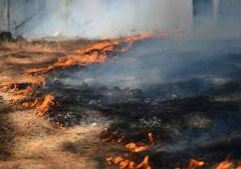
More than a dozen wildfires in northern Minnesota are adding to ongoing air quality concerns throughout the U.S., which have been primarily fueled by Canadian wildfires.
There are 16 active wildfires in Minnesota, with only one reported to have any level of containment.
The fires were primarily caused by lightning strikes and are concentrated around the Boundary Waters Canoe Area Wilderness, a vast area in northeastern Minnesota along the Canadian border.
This is according to a wildfire tracker called Wildfire Explorer, which reports more than 60,000 acres burned by the 16 fires.
The largest is the Bear Trap fire, which has burned nearly 30,000 acres since it was first detected 14 days ago. It is zero percent contained.
Hundreds of firefighters continue working to contain the fires throughout the region, which are difficult to fight due to dry conditions and the fires’ remote locations.
Beginning on Monday, the Minnesota Department of Natural Resources activated a number of burning restrictions in an effort to prevent more fires.
“Forecasts call for erratic weather, shifting winds, and the potential for isolated damaging wind gusts and thunderstorms, which will significantly challenge firefighting efforts,” Natural Resources said in a statement. “With little precipitation and above‑average temperatures expected, fire danger is likely to remain high until the area receives substantial rainfall.”
The restrictions, which include no campfires, will remain in effect until further notice.
These fires have contributed to days of very hazardous air quality throughout the U.S., with drifting smoke reaching as far south as Maryland and North Carolina. The Eastern U.S. and Great Lakes states are now experiencing “moderate” air quality.
The information comes from AirNow, a federally funded program that provides real-time air quality information and forecasts.
The Air Quality Index, or AQI, categorizes air quality on a scale from “good” to “hazardous.” A “moderate” rating means air quality is generally acceptable, though some people who are unusually sensitive to air pollution may still experience health effects.
According to AirNow, air quality in the Great Lakes region is expected to improve further Wednesday, with even most of Minnesota forecasted to have “good” air quality.






Slight Chance Rain Showers then Mostly Cloudy
Latest News Stories

JJC Authorizes Land Buy for Grundy County Expansion, Secures Site in Morris

Commission Grants Green Garden Solar Farm Project Variance Extension

Peotone School Committee: Issue $4.85M Bond to Cover Deficit, Maxing Out Debt Capacity

Will County Committee Advances Phased Takeover of Central Will Dial-A-Ride Service

Everyday Economics: Rate cut debate: Reading mixed signals in a fragile economy

Arizona looks to legal immigration with Trump’s border security

Ranchers decry beef imports from Argentina, expert says good start

Lawmakers introduce bills to slash their own pay during government shutdowns

Trump considers military action to stop Christian genocide in Nigeria

94% of sanctioned scholars suffered from free speech attacks

Illinois soybean farmers face uncertainty amid MAHA push against seed oils

Family-based visa quotas cause system backlogs