Appeals court: Serious Chicago police disciplinary hearings must be public
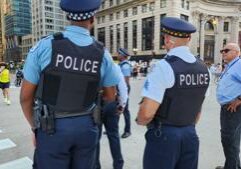
(The Center Square) – A panel of appellate court judges has ruled Chicago police officers facing serious misconduct allegations must have their hearings heard in public. A law school professor says it’s a victory, but just the beginning.
University of Chicago Law School professor and Civil Rights and Police Accountability Project founder Craig Futterman said a panel of appellate court judges made the only decision they could in upholding a lower court’s ruling stipulating that all Chicago police officers facing serious misconduct allegations must have their hearings heard in public.
“Holding these hearings in secret destroys public trust,” Futterman told The Center Square. “People don’t trust what they can’t see and a very first principle of policing is that we as police officers work for the public, serve the public and are accountable to the public. Among the lessons that have long been learned is that accountable and transparent policing is essential for public safety.”
In a move that upholds a Cook County judge’s earlier ruling, the panel of three judges cited “police accountability and transparency” concerns in rendering their decision. At the same time, the ruling allows officers to continue having their fate decided by an arbitrator as opposed to Chicago Police Board members.
If upheld, the ruling could mean big changes for the system after more than six decades of officers facing such disciplinary proceedings having their fates wholly decided by board members.
Futterman is quick to add there is still much work to be done in the name of greater transparency and accountability.
“One ruling doesn’t solve all our problems,” he said. “If the court did not stand up and speak up to protect police accountability and transparency, we’d be in a heap of trouble. We would essentially be undermining any form of police accountability and transparency in Chicago and in the state of Illinois.”
In the end, Futterman said such policy is a win-win situation for all the parties involved.
“If you protect the minority of officers who are abusive or racist and are acting as bullies or abusing their powers, people aren’t going to trust the 80-90% who aren’t doing that stuff because the message that sends to the public is the real police are those officers who are protected,” he said. “That’s not in the interest of the officers I admire and respect.”
Thus far in 2025, the Police Board has heard just one case and in two others Chicago taxpayers have been forced to pay out at least $12.75 million to resolve misconduct related lawsuits.
Latest News Stories

Everyday Economics: Rate cut debate: Reading mixed signals in a fragile economy

Arizona looks to legal immigration with Trump’s border security

Ranchers decry beef imports from Argentina, expert says good start

Lawmakers introduce bills to slash their own pay during government shutdowns

Trump considers military action to stop Christian genocide in Nigeria

94% of sanctioned scholars suffered from free speech attacks

Illinois soybean farmers face uncertainty amid MAHA push against seed oils

Family-based visa quotas cause system backlogs

Death threats against ICE officers up by 8,000%, DHS says

After 50 years of struggles to save Spotted Owl, FWS plan is to kill 500k Barred Owls
Association says housing aid to continue through December
WATCH: Father of Housing First points to success; We Heart Seattle highlights failures