Large Wisconsin data center tax breaks make benefits unclear
When Microsoft announced plans for an additional $4 billion data center in Kenosha County on Thursday morning, it came with comments from Wisconsin Gov. Tony Evers and Milwaukee County Executive and governor candidate David Crowley about the benefits.
But many of the usually benefits of a business entering the state – property taxes, sales tax and employment – have already been conceded by the state while questions remain about the impact of energy and water use at the facilities.
It’s why groups like Good Jobs First examine the deals surrounding data centers and provide the public with information about the deals and tax breaks, showing how these deals differ from what other businesses in Wisconsin receive.
“There are probably not a lot of benefits,” Good Jobs First Senior Research Analyst Kasia Tarczynska said. “On the tax side, if there’s any benefit it’s really difficult to know because there is so little transparency on the subsidies for these projects.”
There are six large-scale data center projects in progress in the state after Microsoft’s announcement and the state began the tax incentives for the projects in its last budget, exempting any sales tax on electricity or construction materials at any qualified data center including the water cooling systems and computing equipment. That means that much of the $4 billion Microsoft will spend on the facility will go untaxed along with the major costs of operating the data center once it is fully operational.
Tarczynska points to the Wisconsin Economic Development Corp. website, where there isn’t information on the value of those tax incentives available. Many states estimated up front the value of waving taxes on electricity but have found that the actual amount of electricity used has far surpassed any expectations as more projects have appeared and the energy required by the data centers has multiplied.
Minnesota, for instance, reinstated its sales tax on electricity at data centers in June while sales tax on equipment at the data centers was extended for up to 35 years.
“A lot of tax revenue is not materializing because things are thrown back to the company,” Tarczynska said. “And, on top of that, the problem is that data centers don’t create a lot of jobs. They create very few jobs and a lot of those jobs go to residents who live outside of a community.”
Construction jobs are needed when the facility is being built but, afterward, there are a few high-level analyst and electrician jobs but also lower pay security, maintenance and technician jobs.
The two Wisconsin data centers that have disclosed their electrical needs, Microsoft’s first data center in Mount Pleasant and the Vantage data center in Port Washington, will require a combined 3.9 gigawatts of power, enough to power 4.3 million Wisconsin homes, according to data from Clean Wisconsin. Wisconsin has only 2.8 million housing units.
“Because only two of the data center projects have disclosed their power needs, we know this is really just a fraction of what the energy use would be if all those data centers are ultimately built,” Clean Wisconsin Science Program Director Paul Mathewson wrote in the analysis.
That untaxed electricity usage is a concern with energy availability and consumer electricity prices an increased concern in coming years.
Data centers are expected to lead to the average American’s energy bill increasing from 25% to 70% in the next 10 years without intervention from policymakers, according to Washington, D.C.-based think tank the Jack Kemp Foundation.
https://www.thecentersquare.com/virginia/article_368b645e-a86e-11ef-8825-772ecfdea4b2.html
The first Microsoft data center on the former Foxconn site in Mount Pleasant is in a tax increment district, meaning the additional property taxes that would have been collected by local government from the project will instead be kept in the district for Microsoft’s use.
Wisconsin state lawmakers have approved exceptions for two large data centers in Port Washington and Beaver Dam to the state’s 12% rule related to tax increment financing districts capping the amount of property in a municipality that can be in a tax increment district.
Having a data center in a TID means that the company isn’t paying new property tax into the local community to fund things like roads, police, fire and schools.
“It’s like getting a free mortgage or free house construction,” Tarczynska said.
Latest News Stories

State defends gun ban district court ruled unconstitutional

Trump aiming for ceasefire, world awaiting news from Putin summit

Pritzker acts upon 269 bills, vetoes 2, signs ‘lawsuit inferno’ measure

Report: average American to receive $3,752 tax cut in 2026 due to OBBBA

Republican, Dem work to prevent deportation of entrepreneur

Nevada superintendent says ICE won’t enter schools

Will County Updates Solid Waste Ordinance, Increases Fines and Reporting to Landfill Committee

Citing Liability Concerns, Will County Committee Postpones Vote on Septic System Ordinance
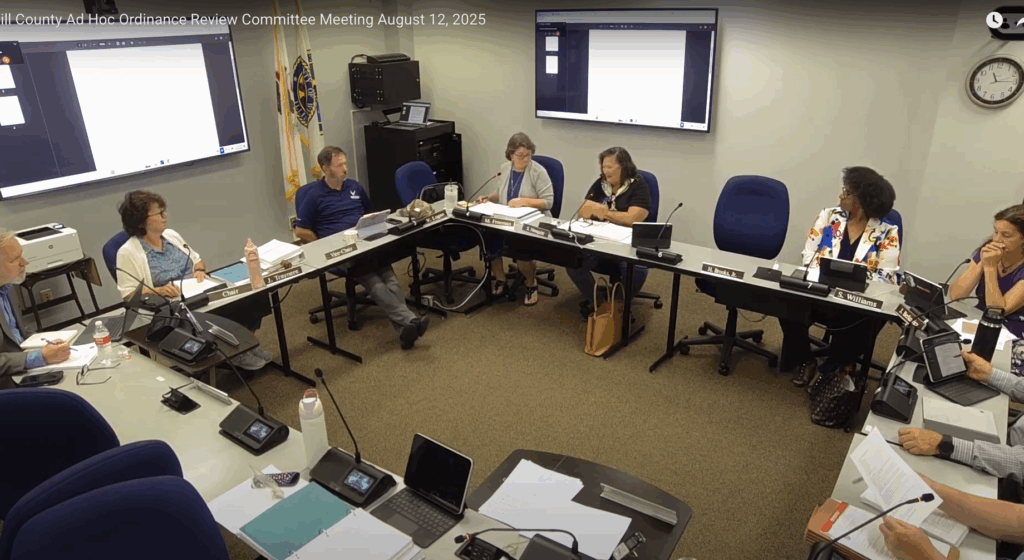
Will County Moves to Repeal Obsolete 1972 Fire Hydrant Ordinance

MAHA-style bill would close food additive safety loophole
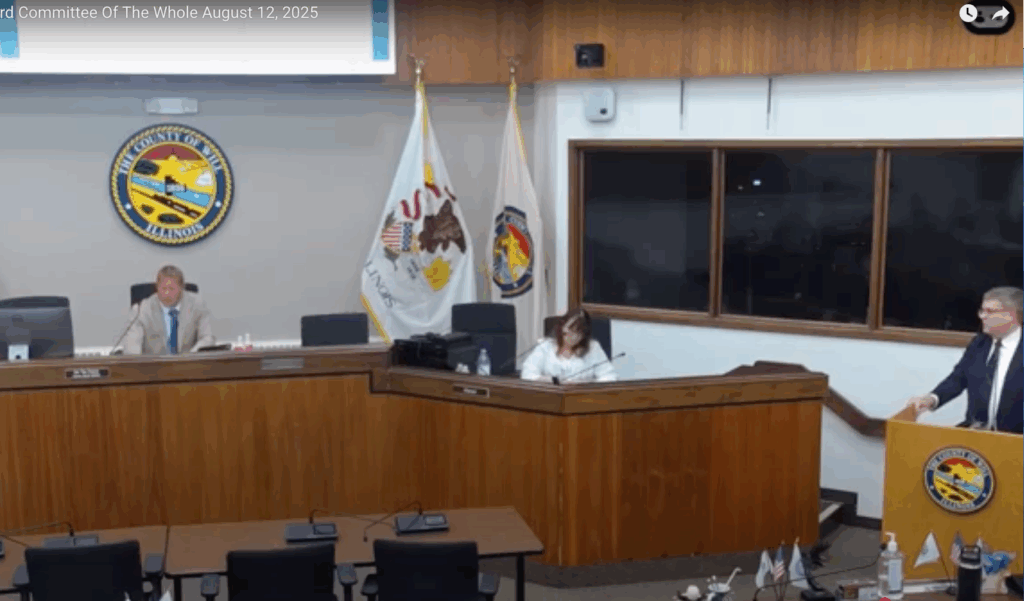
Will County Board Gets Back to Basics with Robert’s Rules of Order Training
Executive Committee Approves Amended Houbolt Bridge Agreement to Settle Litigation