
No UPCODE Act could be part of shutdown solution … and more
Days into the federal government shutdown, health care funding is perhaps the key issue in talks to end the partisan stalemate.
A veteran health insurance industry watchdog says one bill could play an important role in not only ending the shutdown but also fixing the health care system.
The No UPCODE Act (No Unreasonable Payments, Coding or Diagnoses for the Elderly Act) was introduced in March by Sen. Bill Cassidy (R-Louisiana) and Jeff Merkley (D-Oregon). The bill would improve how Medicare Advantage plans evaluate patients’ health risks, reduce overpayments for care and save taxpayers money by removing incentives to overcharge Medicare.
The bill, according to several experts, could save $124 billion in Medicare waste.
“I think it’s a very good bill,” said Wendell Potter, an advocate for health insurance payment reform and former health insurance industry communications director. “It addresses some really wasteful spending in the Medicare Advantage program that Congress, unfortunately, and some administrations have turned a blind eye to.”
Potter is a critic of HMOs and tactics used by health insurers. He also is a leading advocate for major reforms in the health insurance industry.
“The Medicare Advantage program was created in 2003 by the Medicare Modernization Act,” Potter told Legal Newsline. “It included a provision that sought to end some bad behavior on the part of private insurance companies. Prior to that, those companies had gone out of their way to avoid signing up people with pre-existing conditions, and they’d dump a lot of their enrollees when they got sick. Congress decided to fix that with the act, saying it would pay the insurers more to treat people with health conditions.
“Suffice it to say that the industry I worked in for 20 years never saw a bill where they couldn’t find loopholes or workarounds. So they’ve created the impression their enrollees are sicker than they are, and they get billions and billions from the fraudulent behavior.
“This bill (the No UPCODE Act) is vitally important, and it has bipartisan support. I’ve been to Washington several times, and I always have talked this bill up to Democrats and Republicans.”
While he said it won’t fix all of the problems with the federal budget or health care insurance issues, Potter said the possible $124 billion in savings over 10 years is significant.
“This legislation wouldn’t address all of the overcharges,” he said. “MedPAC estimates the federal government is overpaying health insurance companies $84 billion this year alone.
“But the $124 billion over 10 years obviously is a significant amount of money. It would cover a lot of people’s premiums and health care. It would keep the Medicare program solvent for a bit longer.
“There are other things that need fixed in health care, but this should be at the top of the list. It’s our money being wasted and going to these giant corporations that dominate the Medicare Advantage business.”
Potter said a lot has changed since the 2003 passage of the Medicare Modernization Act.
“At that time, there were more Medicare Advantage companies,” he said. “There were more nonprofits in the business. Since then, there has been a huge amount of consolidation in the health care insurance business. United and Humana and Aetna now grab the lion’s share of new enrollees every year.
“What we’re seeing now is that these insurers still are able to dump a lot of people who are not profitable. They do it, for example, by leaving markets they think are costing them more money than they had estimated. So, there are hundreds of thousands of Medicare Advantage enrollees who are going to have to figure out what to do. And that includes a lot of seniors, who are not the most internet savvy. It’s going to be confusing for them. It can be bewildering.”
Potter says the No UPCODE Act could relieve a lot of pressure for Republicans, whose party has a close relationship with the insurance industry.
“It ought to at least,” he said. “But the insurance companies spent a boatload of money on lobbying, advertising and other efforts.”
Potter used a political action committee called Medicare Advantage Majority as an example. On its website, the PAC says it is an organization “dedicated to protecting and strengthening the Medicare Advantage program for 34 million American seniors and people with disabilities – more than half of all eligible Medicare beneficiaries – who depend on it.”
The PAC says it is “powered by the support of local advocates across the country, including beneficiaries, caregivers, health care providers and community leaders.” In a recent blog post on the site, it says the No UPCODE Act “will only disrupt care and affordability for seniors in Medicare Advantage” and calls it “a significant rollback of benefits and protections for over 34 million seniors and individuals with disabilities who rely on Medicare Advantage for affordable, coordinated care.”
Potter says the money behind the PAC is from big insurance companies.
“They’re trying to intimidate lawmakers,” he said, noting it is running advertising in D.C. “I’m wouldn’t be surprised if those ads aren’t running in Louisiana (Cassidy’s home) as well. It’s intimidation, pure and simple. The industry has long had friends in both parties, and it’s why this thievery has gone on as long as it has.
“It’s certainly not what Republicans wanted when they created the Medicare Advantage plan.”
Potter said the No UPCODE Act would cap insurance payments and shouldn’t hurt Medicare beneficiaries.
“What it should do is protect taxpayers and Medicare enrollees whether that’s regular Medicare or Medicare Advantage. It would be ensuring our money is not going to line the pockets of shareholders, which is something would be good for all of us.
“The health care insurance industry’s advertising and messaging is extraordinarily misleading. They certainly would not own up to the fact that a lot of this money is going to them unlawfully. They want to be able to continue to do that, so they’ll be fighting this legislation in any way possible.”
In addition to upcoding, Potter said another key issue to health care insurance reform is the excessive use of prior authorization, which isn’t addressed in the No UPCODE Act.
“Other bills have been introduced that would crack down on use of prior authorization,” he said. “But this act never mentions being at risk of an insurance company employee refusing something a doctor says a patient needs.
“Enrollees do not understand how restrictive the provider networks are. United Healthcare, in particular, is going to be reducing its provider networks and dropping its more generous plans. They’re trying to funnel their enrollees into their HMOs, which has a more narrow list of providers to choose from. And what that means is that you might not get coverage.”
Potter said Cassidy and other supporters of the bill are hopeful it can end up being part of end-of-year spending legislation or even a successful standalone bill.
“We’ll see about that,” Potter said. “But I know my old industry will spend an enormous amount of money to try to keep it from happening.”s
Latest News Stories

Summer Construction Projects Transforming Peotone Schools

Peotone Schools to Launch “Go Big Blue” Unity Initiative
Peotone Schools to Launch “Go Big Blue” Unity Initiative
Peotone FFA Alumni Propose Privately Funded Greenhouse to Expand Program

Peotone Schools Face Mandatory Deficit Plan, Weighs Cuts Against More Debt
Peotone Schools Face Mandatory Deficit Plan, Weighs Cuts Against More Debt
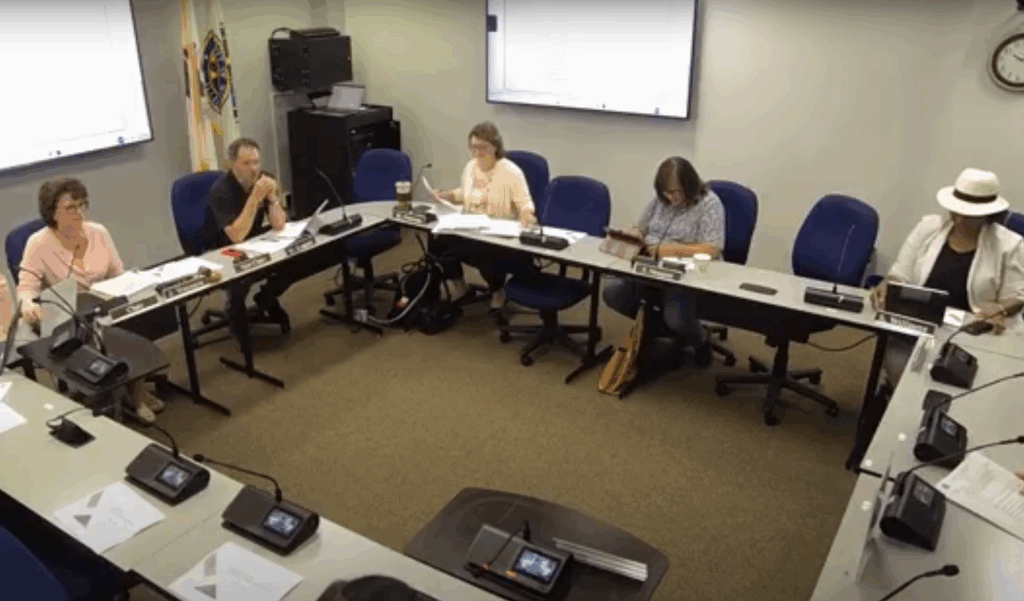
Will County Committee Forwards Overhauled Purchasing Code Amid Debate on Local Contractor Preference
Finance Officials Clarify How Will County Tracks Assets, From Vehicles to Desks
Will County Treasurer Confirms Free Online Tax Payment Option, Warns Against High Credit Card Fees
Committee Highlights ‘Lack of Teeth’ in County Code Enforcement Process
Committee Highlights ‘Lack of Teeth’ in County Code Enforcement Process

Meeting Briefs: Will County Ad-Hoc Ordinance Review Committee for July 22, 2025