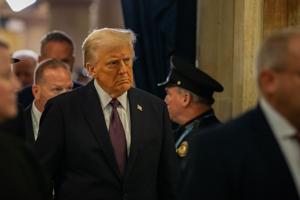
Peace on the line two years after Oct. 7 attacks
Tuesday marks the second anniversary of the Oct. 7, 2023, Hamas terror attack; the impact of that day continues to be felt worldwide.
Israel has described the bloody day as its own Sept. 11, which left nearly 1,200 dead and over 5,000 wounded. In addition to the bloody carnage, the terror group took 251 people hostage, of whom 240 were civilians, including children. Of the over 250 hostages taken, 12 of them were American citizens. Forty-eight hostages remain in captivity; however, it is unclear how many of those remain alive.
The surprise attack catapulted Israel into a war with Hamas in the Palestinian Gaza territory, which has resulted in tens of thousands of deaths on both sides, including civilians.
Israeli officials, led by Prime Minister Benjamin Netanyahu, have vowed to root out Islamic terrorism that has targeted Israel for decades.
With the support of the Islamic Republic of Iran, Hamas and the Lebanese-based terror group Hezbollah have led the attacks on Israel, including Iran itself. As a result, Israel launched multiple precision attacks on Hamas and Hezbollah with the intention of decapitating their leadership structure.
Israel carried out a sophisticated operation, called “Operation Grim Beeper,” intercepting and rigging thousands of pagers with explosives that belonged to Hezbollah members inside Lebanon. The attack was carried out simultaneously, killing 12 and injuring thousands in September 2024.
Days later, Israel conducted a targeted strike in the heart of Beirut, killing Hezbollah’s top leaders, including the group’s top leader, Hassan Nasrallah.
As Israel targeted Hezbollah, it simultaneously targeted Hamas leadership, resulting in the deaths of half a dozen leaders.
Israel’s response to the Oct. 7 attacks has triggered an adverse reaction across the globe, fueling antisemitic demonstrations and hate crimes, including in the U.S.
The pro-Palestinian movement led to protesters overtaking some universities in the spring of 2024, with Columbia University taking center stage. Rioters at the universities took control of part of the campus, including storming and occupying buildings.
The pro-Palestinian protest encampments were replicated at several prominent universities nationwide. The protests led to thousands of arrests, prompting universities to rely on law enforcement to disperse the protests.
The Anti-Defamation League says the Oct. 7 attack “triggered an eruption of antisemitism” across the country, with antisemitic attacks skyrocketing, noting the rise of incidents on college campuses.
In May, a gunman opened fire outside the Capital Jewish Museum in Washington, D.C. Two Israeli Embassy staff members were fatally shot. The gunman was charged with two counts of federal hate crime.
A month later, the U.S. would be drawn into Israel’s own war on terrorism as the two countries targeted the Iranian regime and its nuclear weapons capabilities.
The U.S., in coordination with Israel, carried out “successful” strikes on Iranian nuclear facilities. President Donald Trump touted the mission, saying it was done with “massive precision” targeting the Islamic Republic’s three major nuclear facilities: Fordow, Natanz and Esfahan.
Trump argued the strikes were necessary to stop Iran from posing a nuclear threat to the world. The president described the country as the “bully of the Middle East,” warning that they must make peace, if not, “future attacks would be far greater.”
In response, Iran targeted a U.S. military base in Qatar; however, the strikes were thwarted, with Iran alerting the U.S. of the intended strikes.
Despite Trump’s unwavering support for the state of Israel, he has longed for peace in the Middle East, especially the war in Gaza.
A glimmer of hope arose last week as the president hosted Netanyahu at the White House, with the two nations unveiling Trump’s 20-point peace plan aimed at disarming Hamas, Israeli withdrawal from the territory, and the release of remaining hostages.
Israel and several Arab leaders approved the plan, punting it to Hamas leaders. By Friday morning, the president grew impatient with the terror group, giving them a hard deadline. He echoed warnings from Netanyahu that if Hamas didn’t agree to the deal, Israel would finish the job, with the president backing the prime minister.
By Friday evening, Hamas responded, saying it agreed to a “prisoner” exchange leading to the return of the remaining surviving hostages and the remains of the deceased. The group agreed to further negotiations.
As of Saturday evening, the president announced that Israel has agreed to an “initial withdrawal line” in Gaza. If agreed to by Hamas, Trump hopes it will lead to an immediate ceasefire followed by the exchange of hostages and Palestinian prisoners.
Latest News Stories

Economic index shows reduced uncertainty, more stability in Midwest

New law sparks debate over Illinois school mergers, communities fear loss
Illinois in Focus: Rest area burglary arrests made; overdose awareness events planned
Nonprofit files complaints against Trump attorneys but almost no public discipline
Everyday Economics: Softer tape, PCE in focus, and the Fed’s next move

Marine’s mother takes on troop transport duties for family visits

Trump plans to clean up Democrat-run cities over local objections

Energy advocate applauds oil and gas commingling updates
Texas legislature passes redistricting map, governor to sign into law
Dow hits record high after Fed Chair hints at September rate cuts

WATCH: Newsom optimistic about redistricting despite poll

Newsom meets with Danes, talks about Trump but not 2028