Pipeline expansion touted as key to U.S. energy dominance
Pipeline expansion across the Appalachian Basin holds the key to solving the nation’s energy crisis, according to industry experts, though state policies and regulatory hurdles continue to restrain development.
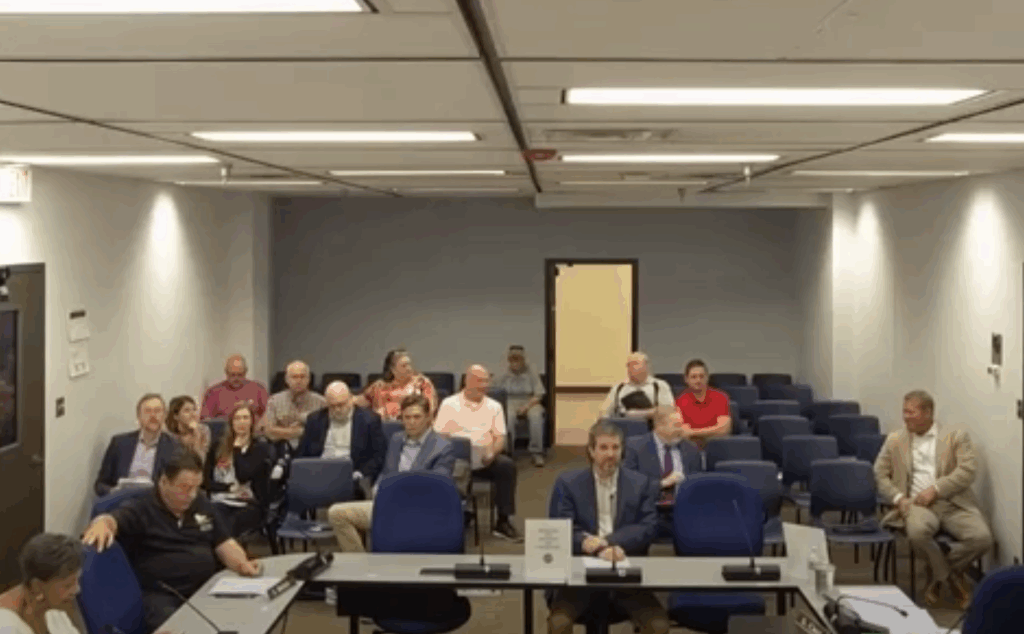
The issue, as well as other natural gas production issues and solutions, took center stage in Erie as industry leaders and policymakers gathered for Shale Insight 2025, a multi-day conference hosted by the Marcellus Shale Coalition.
Participants widely agreed that natural gas is the cornerstone of U.S. energy, while highlighting overlapping concerns over grid reliability, affordability, and infrastructure bottlenecks.
Marcellus Shale Coalition President Jim Welty welcomed attendees and introduced Republican U.S. Sen. Dave McCormick, praising his commitment to the state’s energy future for hosting the inaugural Pennsylvania Energy and Innovation Summit in July.
Unable to attend in person, the first-term lawmaker representing Pennsylvania in the U.S. Senate addressed the crowd via video, emphasizing the state’s pivotal role in America’s energy future and highlighting its vast natural gas reserves and position as a top energy producer.
“Of all the blessings and gifts that Pennsylvania has, natural gas is the long pole in the tent,” he said.
McCormick called for meaningful permitting reform at both the federal and state levels to expand drilling and export opportunities. He also linked the state’s energy resources to broader economic and technological advancements, noting that affordable, abundant natural gas is essential for powering AI data centers and supporting national defense reindustrialization.
Overall, speakers emphasized the industry’s strength and potential while painting a picture of rising demand colliding with outdated regulations and stalled pipelines.
Nick Dell’Osso, CEO of Expand Energy, the nation’s largest natural gas producer, spoke about efficiency gains and a flexible production strategy.
He also noted that Appalachian Basin production plateaus because it’s maxed out on pipeline capacity.
“If we had more pipelines evacuating gas, this would be an easy problem to solve,” Dell’Osso said.
Others echoed that message and spoke favorably about the federal Pipeline and Hazardous Materials Safety Administration streamlining of processes that make development easier.
Greg Floerke, executive vice president and chief operating officer of MPLX, a fuel distributor based in Ohio, explained that the company’s ability to process large volumes of gas and liquids was due to extensive investments in plants and pipelines. He discussed the unique challenges of building infrastructure in the region and the importance of collaboration with state and federal agencies to enable rapid development.
Floerke also praised the current regulatory environment for its increased clarity and support for domestic energy production, while stressing the need for continued streamlining and clear delineation of agency roles.
Ben Kochman, the administration’s acting administrator, outlined the agency’s unique role in regulating pipeline and hazardous materials safety within the U.S. Department of Transportation.
“We focus heavily our efforts on trying to cut down burdensome red tape, streamline regulations, modernize our code in order to follow through with the president’s vision,” Kochman said. “But I think the most important thing for PHMSA is that we are charged to making sure that all of the energy products that we regulate are moving through in a safe manner.”
But states with aggressive clean energy targets, which include many up and down the East Coast, make the task challenging.
Senior Energy Policy Advisor for National Fuel Gas Distribution Corp., Donna DeCarolis, offered a stark contrast in New York’s ambitious climate laws, citing the lack of cost and feasibility analysis, and the need for reliable, affordable energy.
The requirements, she said, are for 70% of all New York power to be generated by renewable sources by 2030 and 100% zero-emission by 2040. Currently, she said, the state is at 29%, with most of it coming from hydroelectric resources. Additionally, there are aggressive greenhouse gas emission requirements, which she indicated the state is also falling short on meeting.
She advocated for a balanced approach that includes natural gas, new technologies, and strong industry advocacy to ensure consumer choice and energy security.
The role of energy supply in national security and global stability was discussed at length by keynote speaker U.S. Secretary of the Interior, Doug Burgum.
He warned against energy policies that shut down base load generation, like natural gas and nuclear plants, and prioritize highly subsidized, intermittent, and renewable sources of electricity, arguing such policies have led to higher costs and less reliability.
He also argued that our existential threat is “not one degree of climate change,” but rather, it’s the proliferation of nuclear weapons and the global AI arms race.
Historically, the U.S. and its allies, Burgum explained, have heavily depended on oil and gas imports from the Middle East. This reliance made us vulnerable to geopolitical instability and allowed adversaries, such as Iran and Russia, to use energy sales to fund conflicts and exert influence.
International perspective was provided by Francesco Gea, executive managing director for Global E&P of Repsol – a Spain-based company operating in dozens of other countries.
Gea underscored the company’s commitment to U.S. shale as a part of its diversified, multi-energy strategy. He pointed to America’s open, stable market and solid investment fundamentals, while acknowledging obstacles such as infrastructure limitations.
He also stressed that natural gas is vital for both American and European energy security, noting that Repsol has doubled its U.S. purchases this year. These exports, he said, are critical to reducing Europe’s past dependence on foreign suppliers like Algeria and Russia, and he affirmed Repsol’s intent to expand its U.S. presence.
While renewables will play an important role in the future, said Gea, nations cannot depend on them alone to meet all our energy needs. Relying on other countries not only risks moving industrial capabilities out of Europe but may also simply shift emissions elsewhere, often to places with less efficient management.
“As energy producers, we have a responsibility to consider the broader societal and environmental impacts of these choices, which Europe is already experiencing,” he said.
From Pennsylvania’s energy advantages to New York’s policy struggles, the message was consistent: natural gas remains the backbone of America’s energy system. Expanding pipeline capacity, modernizing regulations, and protecting affordability were framed as essential to meeting rising demand in a rapidly changing landscape.
Latest News Stories

The U.S. Department of Education launches nationwide tour

Trump takes aim at Chicago crime, no-cash bail while singling out Pritzker
Burrows: Only thing standing in the way of disaster relief are missing Democrats

Trump confirms Nvidia chip agreement
States challenge federal report promoting coal plants

U.S. Supreme Court could rule on Texas lawsuits brought in Democratic-led state courts

WATCH: Illinois In Focus Daily | Monday Aug. 11th, 2025

Illinois quick hits: Judge denies Madigan’s motion; legislator urges action on DCFS interns

Everyday Economics: CPI takes center stage as tariff-driven price pressures mount
Details pending on billions in foreign investments coming from trade deals

Negative net migration is harmful to the economy, economists say

Will County Health Department Seeks $1 Million to Avert ‘Drastic’ Service Cuts from Expiring Grants

Will County’s “First-in-Nation” Veterans Center to House Workforce Services, Sparking Debate

Improved Vendor Service Creates $1.2 Million Shortfall in Sheriff’s Medical Budget