States challenge federal report promoting coal plants
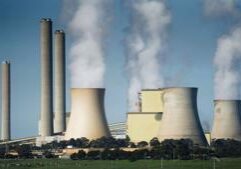
Michigan has joined a coalition of states challenging a Department of Energy report claiming the U.S. will face a significantly increased risk of power outages by 2030.
The report argues that coal and natural gas-powered plants must remain in operation to mitigate the risk. Michigan and nine other attorneys general are pushing back.
“This report is based on flawed assumptions, overstates risks, and attempts to override the authority of states and regional regulators all to appease President Trump,” said Michigan Attorney General Dana Nessel. “We cannot allow the federal government to use a manufactured emergency to prop up outdated coal plants at the expense of Michigan families and our energy future.”
The July report from the DOE argued the U.S. will face a significantly increased risk of power outages by 2030 if scheduled coal and natural gas plant retirements are allowed to proceed. The report fulfills a direction by President Donald Trump in an April executive order to “develop a uniform methodology for analyzing current and anticipated reserve margins for all regions of the bulk power system.”
The report outlined concerning results, including findings that the continued closure of plants increases the risk of power outages by 100 times in 2030.
“Our nation possesses abundant energy resources and capabilities such as oil and gas, coal, and nuclear,” the report said.
It applauded deregulation and permitting reform by the Trump administration, but argued that won’t be enough if plants continue to close.
“However, even with these foundational strengths, the accelerated retirement of existing generation capacity…undermine this energy outlook,” it said. “Absent decisive intervention, the nation’s power grid will be unable to meet projected demand for manufacturing, re-industrialization, and data centers driving artificial intelligence (AI) innovation.”
In conclusion, the report recommends keeping these plants running to maintain grid reliability. Nessel and the other attorneys general filed a request for rehearing the the DOE, arguing that the report should not be used as the basis to renew emergency orders under the Federal Power allowing for the continued operation of coal-powered plants.
“The report is deeply flawed and, if DOE is taken at its word, it will inflict significant harm on our states,” the request stated, arguing that the closure of coal plants should continue. “These retirements have been thoroughly vetted by state and regional authorities and approved only following an extensive examination of cost considerations and reliability impacts.”
It goes on to argue that the DOE is overstepping its authority and is working off of “flawed assumptions.”
Nessel was joined by the attorneys general of Arizona, Colorado, Connecticut, Illinois, Maryland, Minnesota, New York, and Washington in filing the rehearing request.
Michigan, Colorado, and Washington all have plants that could be affected by the findings.
In Michigan, Nessel is currently challenging a recent emergency order from the U.S. Secretary of Energy Chris Wright directing the Midcontinent Independent System Operator, in combination with Consumers Energy, to keep the J.H. Campbell coal-fired plant open in West Olive.
While the plant was scheduled to close in May, Wright ordered a 90-day stay to that decision, as previously reported by The Center Square.
“Today’s emergency order ensures that Michiganders and the greater Midwest region do not lose critical power generation capability as summer begins and electricity demand regularly reach high levels,” Wright said at the time. “This administration will not sit back and allow dangerous energy subtraction policies threaten the resiliency of our grid and raise electricity prices on American families.”
Nessel’s lawsuit is pushing for the plant to be closed immediately, arguing the emergency order was unlawful and that the plant’s continued operation could put “enormous costs onto utility customers who receive no real benefit.”
Under the Federal Power Act, the DOE has 30 days to respond to the coalition’s request for rehearing.
Latest News Stories

Will County Board Compromises on Mental Health Levy, Approves $10 Million After Debate
Regional Office of Education Highlights School Safety, New Learning Programs in Update
Will County Awards $10.4 Million Contract for Bell Road Widening Project

Will County Board Approves New 30 MPH Speed Limit for Frankfort Township Road

Meeting Summary and Briefs: Will County Board for October 16, 2025
New Lenox Solar Farm Proposal Advances with Conditions, Following Village and Forest Preserve Input
Frankfort Township Board Objects, but County Commission Recommends Bar with Video Gaming
Will County Committee Grapples with $8.9 Million Budget Gap After Contentious 0% Tax Levy Vote
Crete Township ‘Tiny Home’ Owner Appeals Permit Denial
Senior Shared Housing Facility Recommended for Approval in Crete Township

Will County Finance Committee Forwards 1.75% Compromise Property Tax Levy to Full Board

Americans prepare to spend $1 trillion this holiday shopping season