Trump asks Supreme Court to review birthright citizenship case again
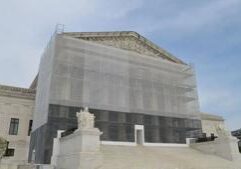
The Trump administration is asking the U.S. Supreme Court to consider legal challenges on an executive order seeking to end birthright citizenship.
The administration asked the justices of the court to hear arguments on its executive order restricting citizenship from being granted to children born in the United States.
“The Citizenship Clause of the Fourteenth Amendment provides that those ‘born in the United States, and subject to the jurisdiction thereof,’ are U.S. citizens,” a petition to the high court reads. “The Clause was adopted to confer citizenship on the newly freed slaves and their children, not on the children of illegal aliens temporarily visiting the United States.”
Trump’s order has never been implemented because four federal judges blocked the effort. Over the summer, the high court ruled on several birthright citizenship cases, but only addressed lower court’s ability to issue nationwide injunctions.
A ruling on the merits of Trump’s birthright citizenship argument could effect popular family-based visa programs, which are used to bring immigrants into the United States legally.
Family-based visa programs are divided into two categories: Immediate Relative and Family Preference visas. Both of these programs provide lawful permanent resident status to individuals who successfully complete petitions.
Immediate relative visas are available to spouses, unmarried children under 21 or parents of a U.S. citizen. A U.S. citizen child sponsoring their parents must be at least 21 years old to petition for a parent’s legal status. These visas are not limited each fiscal year.
“It typically takes the government about a year to process and approve these visa applications,” said Lighthouse Immigration Advocates.
Foreign immediate relatives must have a petition from their U.S. citizen sponsor, be physically present in the United States and undergo a security inspection by an immigration officer to receive an immediate relative visa.
Immediate relatives may be denied a visa if they have a criminal history, prior removals and fraud or misrepresentation concerns.
The family preference visa provides a broader framework for family members seeking to bring more distant relatives into legal status in the United States. Family preference is divided into four visa categories:
First preference – Unmarried children 21 years or olderSecond preference – Spouses and children of lawful permanent residentsThird preference – Married children of U.S. citizensFourth preference – Siblings of U.S. citizens
Family preference visas are capped at 226,000 per fiscal year. Some immigration advocates said this cap is restrictive and prevents family members from coming to the United States.
“Prospective immigrants are likely to have to wait anywhere from 6 to 25 years before a visa is available for them,” Lighthouse Immigration Advocates said.
The federal government has more than 1.4 million pending petitions for foreign relatives other than immediate relatives, according to March data from the U.S. Citizenship and Immigration Services dashboard.
Since U.S. citizen children have to be 21 or older to sponsor their parents for family-based visas, the impact of the Trump administration’s efforts to restrict birthright citizenship are unclear. Children born in the United States may no longer be eligible to eventually sponsor their parents for citizenship once they turn 21.
However, as he seeks a ruling on the constitutionality of birthright citizenship, it could complicate family reunification for U.S. citizen children seeking to sponsor their parents in the future.
“The plain text of the Clause requires more than birth on U.S. soil alone,” Trump’s petition reads.
Latest News Stories
Peotone Schools to Tackle $372,000 in Unpaid Fees with New Plan
Meeting Summary and Briefs: Will County Board for September 18, 2025
Illinois quick hits: Transit cliff revision criticized; Pike County shooting investigation

Pritzker open to spending on Bears infrastructure, concerns remain about debt

IL legislators weigh energy policy some say will increase costs

Analyst points to inefficiencies as Pritzker touts record spending on infrastructure

Illinois quick hits: DHS announces more than 800 illegals arrested; utility prices drop slightly

WATCH: Officials shift shutdown blame; agreed-bill process upended; GOP offers solutions

Meeting Summary and Briefs: Lincoln-Way Community High School District 210 Board of Education for September 18, 2025

States sue feds over denying grants for illegal immigrants
Pritzker blames Trump for partial government shutdown

Illinois quick hits: Record infrastructure spending planned; watchdog urges ratepayers review Ameren bills