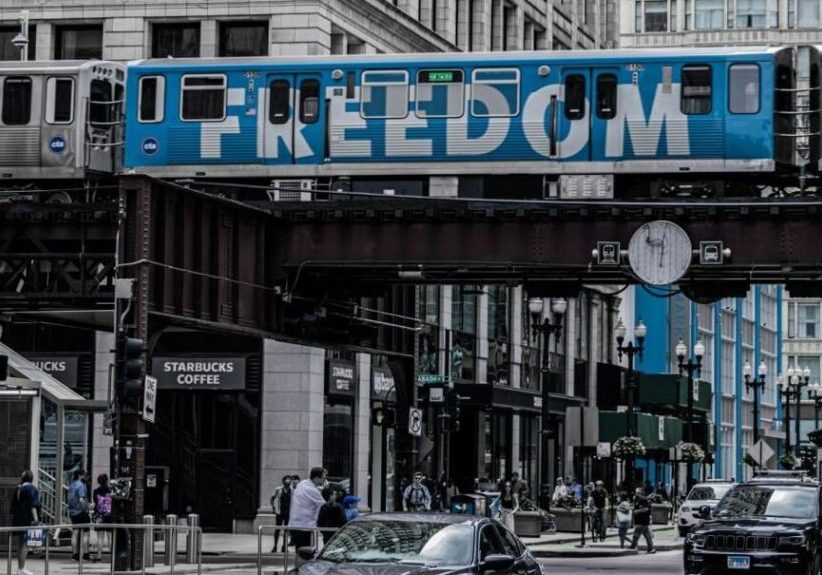
Op-Ed: Chicago-area transit needs an intervention, not another fix
If Illinois were a family, it would have 1,313 siblings – its cities, towns and villages.
One of them is a trainwreck, repeatedly in crisis, addicted and constantly asking the rest of the family for help.
Not hard to guess: the black sheep is Chicago.
The city’s schools think they are entitled to $1.6 billion from the rest of the family. Chicago’s regional transit systems faces a deficit of at least $760 million, but the Regional Transportation Authority wants $1.5 billion to get itself straight and avoid 40% service cuts and 3,000 layoffs.
Chicago bumps from one crisis to the next, never taking responsibility for its own problems or really wanting to change.
So, what’s the expert advice when there’s a family member who won’t go to rehab?
Set clear and consistent boundaries, prioritize your own well-being through self-care, limit interactions if necessary and seek support for yourself. In other words, don’t keep helping someone who won’t help themselves.
Specifically on the latest ask, the Chicago mass transit system is seeking taxes from everyone else to avoid a fiscal cliff. While the RTA may have delayed the day of reckoning by handing $74 million to the Chicago Transit Authority, this problem was years in the making and the solution is not to repeat the behaviors with no accountability.
Simply blaming the pandemic is to ignore the behaviors. RTA says people en masse worked from home, so they stopped using mass transit from the burbs to downtown. Yes, that was a trigger, but the spending is out of control – up about one-third, or over $1 billion, in just five years.
Commuters are returning, but slowly. Over 20% of the Chicago Transit Authority bus riders remain absent, as well as about 40% of the train and commuter bus riders.
But what about that big check Uncle Sam wrote? It was for $3.54 billion – a significant chunk for a system spending $4.37 billion in 2025. Pandemic money will be gone by the end of this year, so attention turns to the state.
First, state lawmakers were asked to pass a statewide sales tax on services – haircuts, lawn mowing, plumbing repair, etc. That $2.7 billion plan died at the end of the legislative session but could return like a horror movie monster.
Then, there was the $1 billion idea to charge $1.50 per delivery – Amazon, UPS, etc.
And a plan to boost taxes on real estate sales in five suburban Chicago counties – a small fix generating less than 10% of that $1.5 billion ask.
Usually tucked into these proposals is some small amount the rest of the state can share. State Sen. Ram Villlivalam, D-Chicago, offered $200 million of the $1.5 billion for “downstate” transit.
And Chicago area politicians wonder why folks south of Interstate 80 think of themselves as “Forgottonia,” woo Indiana to help them secede or put “Pritzker (Stinks)” signs in their front yards? Chicago gets a free ride, the rest of Illinois gets the smog.
And the exhaust is spreading outside of Chicagoland. Former U.S. Secretary of Transportation Ray LaHood, a proud son of Peoria, is playing the kindly uncle in favor of helping our beleaguered sibling one more time.
“We come here. We take advantage of the public transportation system. Chicago is very important to Illinois. It’s an economic engine for Illinois, and it’s a part of Illinois,” LaHood told The Center Square.
All due respect to the guy trying to fix gerrymandering in Illinois by pushing a ballot initiative for an independent legislative mapping commission, but this will not be Chicago’s last crisis.
Back to recovery: You can’t help someone who won’t help themselves.
A system in trouble has no business moving ahead with a 5.5-mile extension of the CTA’s Red Line. In 2009, the cost was estimated at $1.09 billion, then after it got $1.9 billion from the feds, the estimate rose to $3.6 billion and now magically has hit $5.75 billion – before any cost overruns, which are pretty much synonymous with “Chicago.” A Metra station recently was 15 years behind schedule and $10 million over budget.
A system in trouble has no business paying 10 workers over $300,000 to work from home at jobs that cannot be performed from their homes. What? Transit employees didn’t want to make the commute?
And a system in trouble has no business hiring a DJ for $37,800 to entertain commuters.
In other words, there is a lot the mass transit systems in the Chicago area should do before coming to the rest of Illinois with thin arguments about their value to the statewide economy and convenience when visiting. The city’s economic value is largely a result of all that corn, wheat and soybeans the rest of the state is growing, so please spare the rest of the family from any “breadwinner” entitlement.
Time for some tough love. Chicago transit needs to fix its own problems by making better decisions and breaking its spending habit.
Latest News Stories

States challenge federal report promoting coal plants
U.S. Supreme Court could rule on Texas lawsuits brought in Democratic-led state courts

WATCH: Illinois In Focus Daily | Monday Aug. 11th, 2025

Illinois quick hits: Judge denies Madigan’s motion; legislator urges action on DCFS interns
Everyday Economics: CPI takes center stage as tariff-driven price pressures mount
Details pending on billions in foreign investments coming from trade deals

Negative net migration is harmful to the economy, economists say
Will County Health Department Seeks $1 Million to Avert ‘Drastic’ Service Cuts from Expiring Grants
Will County’s “First-in-Nation” Veterans Center to House Workforce Services, Sparking Debate
Improved Vendor Service Creates $1.2 Million Shortfall in Sheriff’s Medical Budget
Will County Public Works Committee Unveils 25-Year Transportation Plan, Projects $258 Million Gap
Will County Animal Protection Services Seeks New Facility Amid “Gaping Wound” of Space Crisis
Board Confronts Animal Services Crowding, Explores Future Facility Options
Will County Board Members Demand Transparency in Cannabis Tax Fund Allocation