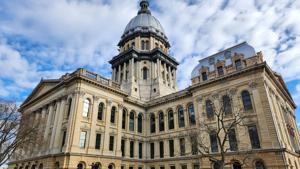
Report: 25 state governments don’t have enough money to pay their bills
Half of U.S. states don’t have enough money to cover their bills, according to a new report published by the nonprofit Chicago-based Truth in Accounting.
At the end of fiscal 2024, 25 states were unable to cover all their financial obligations, according to TIA’s 16th annual Financial State of the States report, which analyzes states’ financial health.
Half of U.S. states are carrying significant debt burdens, “driven by rising costs, inflation, and ongoing pressure on budgets to fund promised pension benefits. With COVID-related federal funding winding down, states may face more difficulty managing budget pressures without additional financial support,” it says.
Assets for all 50 states totaled $2.2 trillion; total debt was $2.9 trillion in fiscal 2024. Combined, the states needed more than $765 billion to cover their expenses at the end of the year, the report says. Most states’ fiscal year goes from July 1, 2023, to June 30, 2024.
All states except for Vermont have balanced budget requirements. In order to balance their budgets, elected officials regularly shift current costs onto future taxpayers, TIA argues. One way to do this is to “shortchange” public pensions and Other Post Employment Benefits (OPEB) funds, TIA explains. “This practice resulted in an $832 billion shortfall in pension funds and a $514 billion shortfall in OPEB funds,” it says.
The majority of state debt is attributed to unfunded retirement liabilities. Taxpayers are on the hook for their state’s debt and future debt their governments accumulate, TIA explains.
TIA ranks each state according to a Taxpayer Burden™ (dividing the number of taxpayers into the state’s budget shortfall) and Taxpayer Surplus™ (dividing the number of taxpayers into the state budget surplus.)
TIA also grades states on an A-F scale, with A-ranked states having the greatest surpluses and F-ranked states having the worst taxpayer burdens. Only five states each received A and F grades; the most, 20, received Bs; 13 received Ds and seven received Cs, according to the analysis.
States with taxpayer burdens are called “Sinkhole States;” states with surpluses are called “Sunshine States.”
The worst five Sinkhole States are led by New Jersey and Connecticut, each with taxpayer burdens of $44,500, followed by Illinois (-$38,800), Massachusetts (-$24,900) and California (-$21,800). Delaware, Louisiana, Vermont, Kentucky, Maryland, Pennsylvania, Hawaii, Mississippi, Rhode Island, New York, South Carolina, Alabama, New Mexico, Michigan, Washington, Nevada, Kansas, Ohio, Texas and New Hampshire make up the remaining 25 Sinkhole States.
The top five Sunshine State are led by North Dakota (+$63,300), Alaska (+$48,500), Wyoming (+$27,200), Utah (+$14,400) and Tennessee (+$10,900). Iowa, Nebraska, Montana, South Dakota, Idaho, Minnesota, Virginia, Arkansas, Oregon, West Virginia, Oklahoma, North Carolina, Indiana, Georgia, Florida, Arizona, Colorado, Wisconsin, Missouri and Maine make up the rest of 25 states with surpluses.
Federal subsidies primarily through COVID-19-era grants increased state income derived from federal funds from $745 billion in 2019 to $1.5 trillion in 2021, according to the report. If federal funding returns to 2019 levels adjusted for inflation, states could face a collective shortfall of more than $300 billion – nearly 10% of projected expenses, TIA warns. “Such a gap would pose major budget challenges, particularly for states that have become reliant on elevated federal support,” it says.
The analysis is based primarily on data obtained from states’ 2024 Annual Comprehensive Financial Reports and retirement system reports. Because not all states submit this information according to deadlines, 2023 data was used for six states: Arizona, Idaho, Illinois, Mississippi, California and Oklahoma. “Alarmingly, Nevada had also not yet released its 2023 report, so 2022 data was used for that state,” TIA says.
“More and more states are dragging their feet on financial reports – and taxpayers are paying the price,” Sheila Weinberg, founder & CEO of Truth in Accounting, said in a statement. “Whether it’s due to a shortage of trained accountants or confusing government accounting rules, the public deserves better.”
Because “all levels of government derive their just powers from the consent of the governed, government officials are responsible for reporting their actions and results in transparent and understandable ways to the people,” TIA says. “Providing accurate and timely information to citizens and the media is essential to government responsibility and accountability. A lack of transparency in financial information, budgets, and financial reports makes it difficult for governments to meet this democratic responsibility.”






Chance Rain Showers then Partly Sunny
Latest News Stories

DOJ: Illegal immigrant charged with assault

Manufacturing advocate: ‘Follow the actions’ with Pritzker on taxes

Illinois quick hits: National Guard restraining order extended; economic growth above trend

US and Qatar say EU climate regulations could impact LNG supplies

U.S. debt tops $38 trillion for first time

Trump defends tariffs, tells beef producers to lower prices

VA secretary pleads with Democrats to end the shutdown

WATCH: Pritzker opposes redistricting Illinois mid-cycle as other states move forward

Record-long govt shutdown threatens food, early childhood education assistance

Sen. Scott Wiener announces he’s running for Pelosi’s seat

Poll: Majority of Americans favor voter ID requirement, split on mail-in voting ban

Federal shutdown sidelines 34,000 workers in Colorado