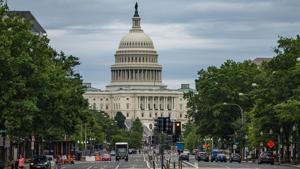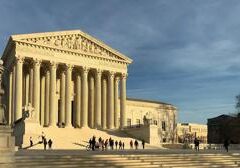
Supreme Court declines challenge to California’s congressional map
The U.S. Supreme Court declined to hear a challenge to California’s redistricting bid that would add more Democrat-majority districts in the state.
In November, California voters approved Proposition 50, a ballot measure that allowed mid-decade congressional redistricting. The measure was proposed by the Democrat-led General Assembly to add as many as five congressional districts in favor of Democrats.
The California Legislature took up the effort after legislators in Texas redrew congressional maps to add as many as five districts in favor of Republicans. However, lawyers for the Trump administration urged justices on the Supreme Court to strike down California’s map.
The lawyers argued Prop. 50, the California ballot measure to approve the new congressional district lines, made distinctions on race and should be classified as racial gerrymandering. Prop. 50 passed with nearly 65% of the vote in the Nov. 4 general election.
“An injunction effectively requiring California to return to its earlier map would be less disruptive to the State’s election apparatus than allowing the Prop 50 map to go into effect,” the lawyers wrote.
“Under the proposed lines, Democrats could gain up to 5 seats in the U.S. House of Representatives,” California Democrats wrote. “With a majority in the House, Democrats can fight back against Trump and Republicans’ MAGA agenda.”






Mostly Cloudy
Latest News Stories

Poll: Data center opposition more important than competition with China

Illinois Quick Hits: Fuel price drops below $4.25, still higher than in 2025

U.S.-Iran talks stalled after Israel-Hezbollah fighting

California’s billionaire tax officially heads to Nov. 3 ballot

Los Angeles County on track to raise sales tax to 10.25%

EXCLUSIVE: Individual targeted in foiled UFC terror plot speaks out

Disability-rights advocates sue Illinois over physician-assisted suicide law
Supreme Court backs gun rights for marijuana users in 9-0 decision
Iran deal omits terror proxies, ballistic missiles, human rights

‘No kings’ at $830 million Obama Center opening

Alleged UFC White House ringleader was in US illegally
‘Policy blunder’ or ‘pathway to peace’: Republicans divided over Iran deal